Unmanned Pump Control, Choose 3S


 Language
Language
Shanghai 3S Global Company Limited

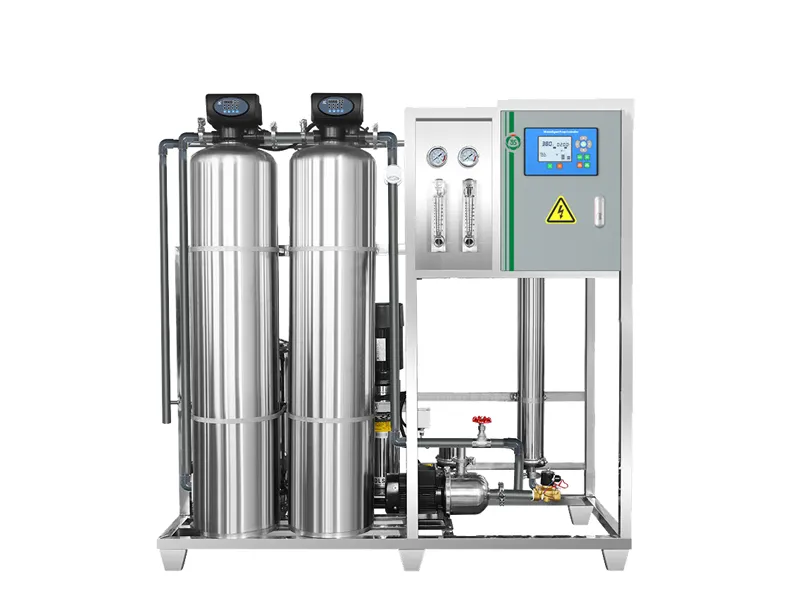
In a reverse osmosis (RO) system, the membrane provides the core separation function, while the high-pressure pump supplies the pressure needed to drive water through the membrane.
That means stable RO operation is not simply about whether the pump can deliver water. More importantly, the pump must consistently provide the right pressure and flow while responding correctly to changing operating conditions.
Pressure fluctuations, improper pump start-up, abnormal operating conditions, or inadequate protection can affect not only permeate production, but also membrane performance, energy consumption, equipment life, and overall system reliability.
So, why does an RO system place such high demands on water pump control?
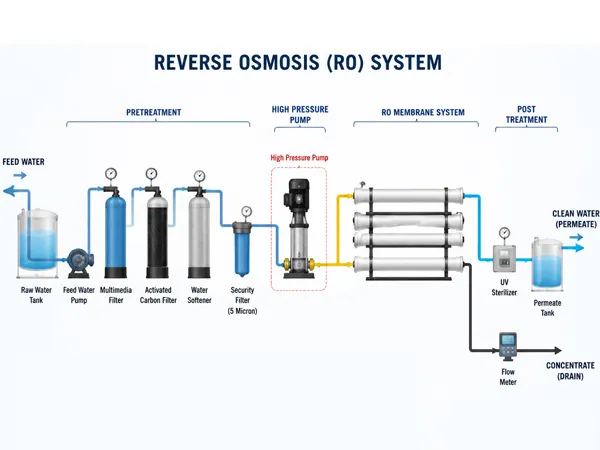
Reverse osmosis uses pressure to force feed water through a semi-permeable membrane. Water passes through the membrane, while most dissolved salts and other contaminants are rejected and discharged with the concentrate stream.
The high-pressure pump is therefore a critical source of energy for the RO process.
For an RO system, higher pressure does not always mean better performance. The pressure must remain within the appropriate design range.
The required pump pressure depends on factors such as membrane type, feed-water conditions, temperature, recovery rate, and system design. At the same time, the pressure must remain below the membrane element's allowable operating limit.
This means an RO system does not simply need “high pressure.” It needs:
Stable pressure + appropriate flow + controlled start-up + reliable protection.
This is where water pump control becomes critical.
2.1 Low Pressure Can Reduce Permeate Production
RO membranes require sufficient pressure to provide the driving force for water to pass through the membrane.
If the high-pressure pump cannot maintain the required operating pressure, permeate flow may decrease.
However, a reduction in permeate production cannot always be attributed to pump pressure alone. Temperature, feed-water salinity, membrane fouling, recovery rate, and other operating conditions can also affect RO performance.
That is why pressure and flow should always be evaluated together with the overall operating conditions.
2.2 Excessive Pressure Can Increase Equipment Risk
Every RO membrane element has a specified maximum operating pressure.
If feed pressure exceeds the allowable limit, the mechanical risk to membrane elements, pressure vessels, piping, and other components may increase.
A reliable RO system should therefore include appropriate high-pressure protection so that the high-pressure pump can be stopped when abnormal pressure conditions occur.
2.3 Rapid Pressure Changes Can Affect Start-Up
RO systems also need to control how quickly pressure rises during start-up.
A sudden increase in pump pressure can create hydraulic shock and unnecessary stress on the membrane system.
A controlled start-up allows the system to gradually reach the required flow and pressure, helping reduce hydraulic impact and improve system reliability.
So, reliable water pump control is not only about controlling pressure during normal operation.
It also needs to manage the entire start-up, operation, and shutdown process.
RO membrane fouling can result from several sources, including inorganic scaling, biological growth, colloidal particles, and organic contaminants.
As fouling develops, membrane performance may decline and the pressure required to maintain the same production rate can increase.
One common response is to increase feed pressure. However, continuously increasing pressure to compensate for declining membrane performance is not a sustainable long-term solution.
It can increase energy consumption while potentially placing additional stress on the system.
This is why water pump control should not focus on a single pressure value.
A more effective approach is to monitor changes in:
Feed pressure → Flow → Differential pressure → Operating time → Fault status
By analyzing these signals together, the system can identify abnormal operating conditions earlier and provide useful information for maintenance and membrane cleaning.
For RO applications, a reliable water pump control system can focus on several key functions.
① Pressure Control
Control the high-pressure pump according to the RO system's design requirements and help prevent operation under excessively low or high pressure conditions.
② Flow Monitoring
Monitor flow together with pressure changes to evaluate pump performance and help identify potential issues such as filter blockage or membrane fouling.
③ High- and Low-Pressure Protection
When abnormal pressure conditions occur, the controller can initiate a protective shutdown to prevent the pump from continuing to operate under unsuitable conditions.
④ Controlled Start-Up and Shutdown
Manage the pump start-up and shutdown process to reduce sudden pressure changes and hydraulic impact on the membrane system and piping.
⑤ Fault Interlocking
Integrate pump status, pressure signals, level signals, valve status, and other critical signals into the control logic.
When an abnormal condition occurs, the system can respond according to predefined logic instead of relying entirely on manual intervention.
This is where smart water pump control becomes particularly valuable.
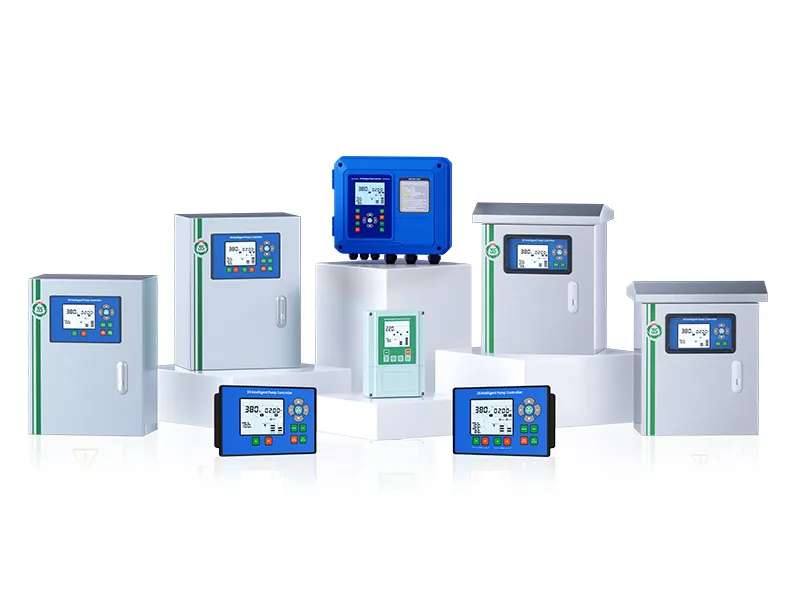
A mature RO control solution is not simply about telling the high-pressure pump to “start” or “stop.”
It should also determine:
l When should the pump start?
l Under what conditions should it start?
l What operating pressure should be maintained?
l When should the pump stop?
l What should happen when a fault occurs?
l Can the system restart automatically after the fault is cleared?
For example, if the feed pressure is insufficient, the system can prevent the high-pressure pump from operating under unsuitable conditions.
If excessive pressure is detected, the controller can initiate a protective shutdown.
During normal operation, key signals can continue to be monitored to ensure that the pump remains within the expected operating conditions.
This becomes even more important for unmanned or remotely monitored water treatment systems.
The real question is not simply: “Is the pump running?”
It is: “Is the pump running under the right conditions?”
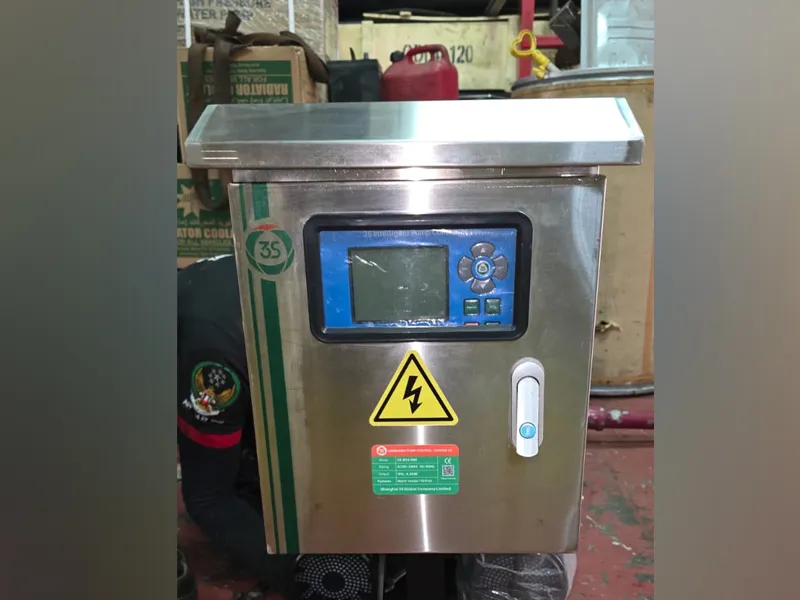
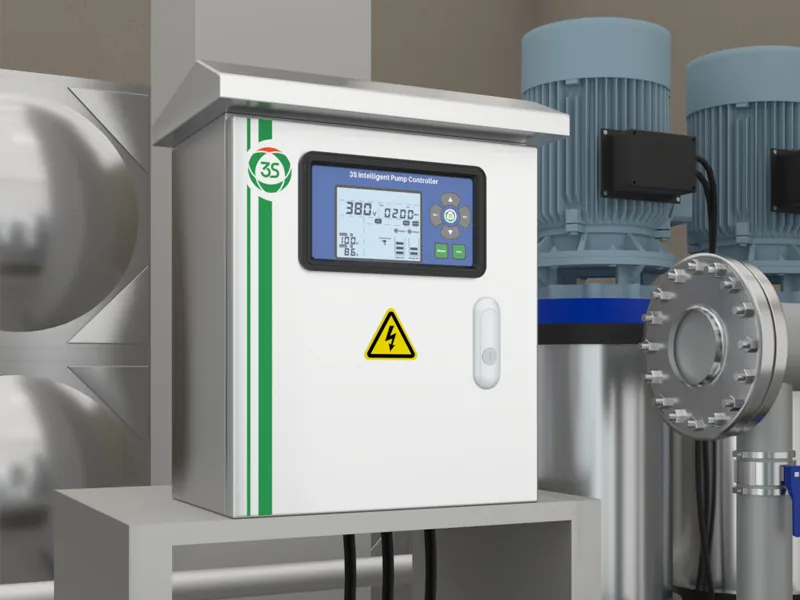
For RO and other water treatment applications, the 3S Pump Controller can use pressure, level, fault, and interlock signals to establish appropriate pump control logic.
It can support functions such as automatic pump start/stop, abnormal-condition protection, and pump operating-status monitoring, depending on the system configuration and selected control signals.
For unmanned or remotely operated systems, pump operating status and fault signals can also be integrated into remote monitoring, helping water treatment systems move from basic local control toward smarter operation and management.
In this way, a pump controller is more than a device for starting and stopping a pump.
It can serve as an important control point connecting the pump, sensors, protection logic, and overall water treatment process.
The RO membrane is at the heart of the separation process, but its performance depends on stable hydraulic conditions.
Unstable pressure can cause production fluctuations.
Rapid start-up can create hydraulic impact.
Excessive pressure can increase equipment risk.
Long-term abnormal operation can increase energy consumption and maintenance demands.
For these reasons, water pump control should not be treated as an auxiliary part of an RO system. It is an important part of maintaining reliable and consistent operation.
From pressure control and fault protection to controlled start-up and remote monitoring, stable, accurate, and protective pump control provides an important foundation for long-term RO system reliability.
For water treatment equipment manufacturers, system integrators, and RO operators, choosing the right membrane and high-pressure pump is only part of the solution.
The next question is: Does your RO system have the pump control logic it needs for reliable operation?

 English
 Español
 русский язык
 Français
 اللغة العربية