Unmanned Pump Control, Choose 3S


 Language
Shanghai 3S Global Company Limited

Dry running occurs when a water pump operates without sufficient liquid. Without adequate liquid, certain pump components may lose their cooling and lubrication, leading to overheating, mechanical seal damage, and premature equipment failure.
For pump operators, the key challenge is not only preventing water shortages but also detecting abnormal conditions before they cause serious damage. Effective dry-running protection requires a suitable detection method and correctly configured pump control logic.
Dry running can result from several problems in the water supply or pumping system. Identifying the underlying cause helps determine the most appropriate protection method.
Low Water Level
When the water level in a tank, well, or reservoir falls below the pump's required operating level, the pump may lose its water supply.
Blocked or Leaking Suction Pipes
Blocked suction pipes restrict water intake, while air leakage can interfere with the pump's ability to maintain proper suction.
Loss of Pump Prime
Some pumps, particularly non-self-priming centrifugal pumps, require proper priming before operation. If the pump loses its prime, it may run without delivering water.
Water Demand Exceeds Supply
When water consumption exceeds the replenishment rate of the source, the available water level may drop, increasing the risk of dry running.
Different detection methods identify different operating conditions. The right choice depends on the pump type, water source, installation environment, and available control signals.
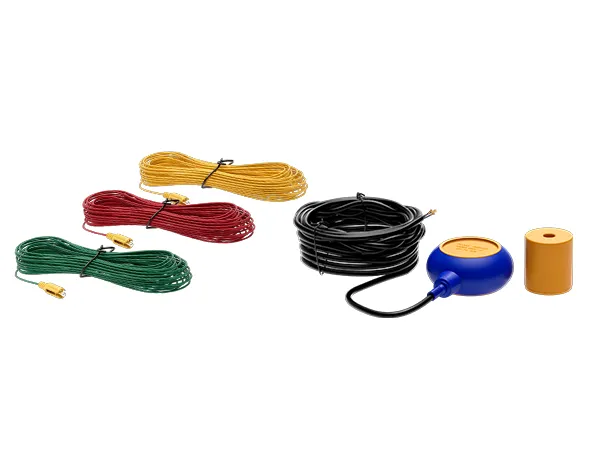
Method 1: Water Level Detection
Float switches and level electrodes monitor the water level in tanks, wells, and reservoirs. When the level drops below a predefined threshold, they send a signal to the pump control panel, which can stop the pump to prevent continued operation without sufficient water.
Suitable for: Water tanks, wells, reservoirs, and irrigation storage systems.
Limitation: This method requires correct sensor positioning and reliable signal connections. It monitors water level rather than directly confirming water flow through the pump.
Method 2: Current-Based Detection
For many centrifugal pumps, dry running reduces the hydraulic load on the motor, which may cause the operating current to decrease. A pump control panel can monitor motor current and stop the pump when the measured value meets the configured dry-running protection criteria.
Suitable for: Compatible centrifugal pump applications where motor current can be reliably monitored.
Limitation: Low current does not always indicate dry running. Pump operating points, voltage variations, and hydraulic load changes can also affect current. Incorrect thresholds may cause false trips or delayed detection.
Method 3: Pressure or Flow Monitoring
Pressure sensors monitor discharge pressure, while flow switches or flow sensors detect whether sufficient liquid is being delivered. When readings fall outside predefined limits, the pump control panel can trigger an alarm or stop the pump according to the configured logic.
Suitable for: Constant-pressure water supply, industrial circulation, and applications with defined pressure or flow requirements.
Limitation: Low pressure or flow may also result from blocked pipes, closed valves, airlocks, or pump wear. These signals alone cannot reliably confirm dry running without application-specific validation.
The most suitable method depends on how the pump receives water and which operating conditions can be monitored reliably.
|
Application |
Recommended Method |
|
Water tanks |
Float switch or level electrode |
|
Wells and boreholes |
Suitable water level detection |
|
Centrifugal pump systems |
Validated current-based detection |
|
Constant-pressure systems |
Pressure monitoring with suitable dry-running protection |
|
Industrial circulation systems |
Flow monitoring with application-specific protection |
For applications with multiple potential failure conditions, combining detection methods may provide additional protection. For example, a tank-based system can use a level sensor as the primary detection method and motor current monitoring as supplementary protection.
However, all detection signals and response settings must be properly coordinated to avoid false alarms or conflicting control commands.
Selecting the right detection method is only the first step. Incorrect protection settings can still leave the pump vulnerable to damage or cause unnecessary shutdowns.
Protection Thresholds
Set current, pressure, flow, and level thresholds according to the pump specifications and actual operating conditions.
Response Delays
Appropriate delays and signal filtering can prevent short-term fluctuations from triggering unnecessary shutdowns. However, the delay must remain within the pump manufacturer's allowable dry-running time.
Restart Conditions
The pump control panel should only permit restarting after the water supply or other required operating conditions have recovered. Automatic restart intervals and retry limits should also be configured appropriately.
Sensor Reliability
Regularly inspect sensor positioning, wiring, and signal transmission to ensure that abnormal conditions can be detected correctly.
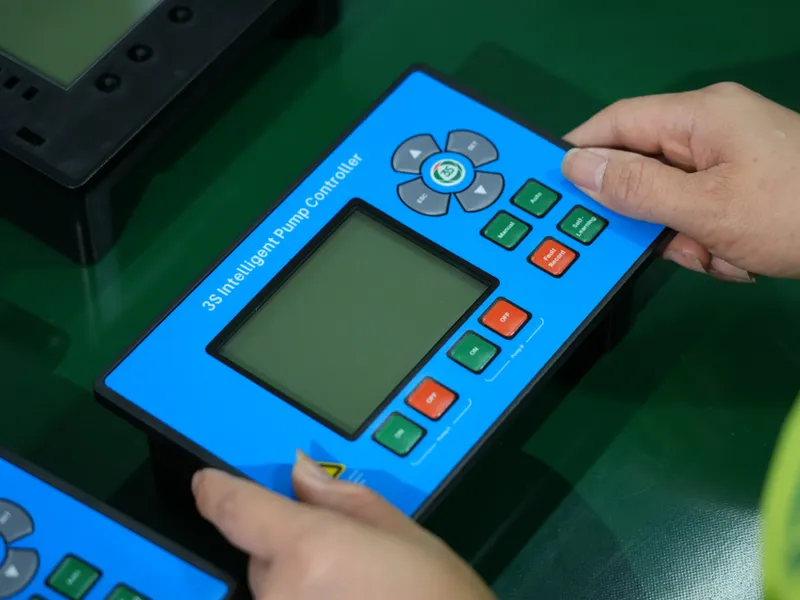
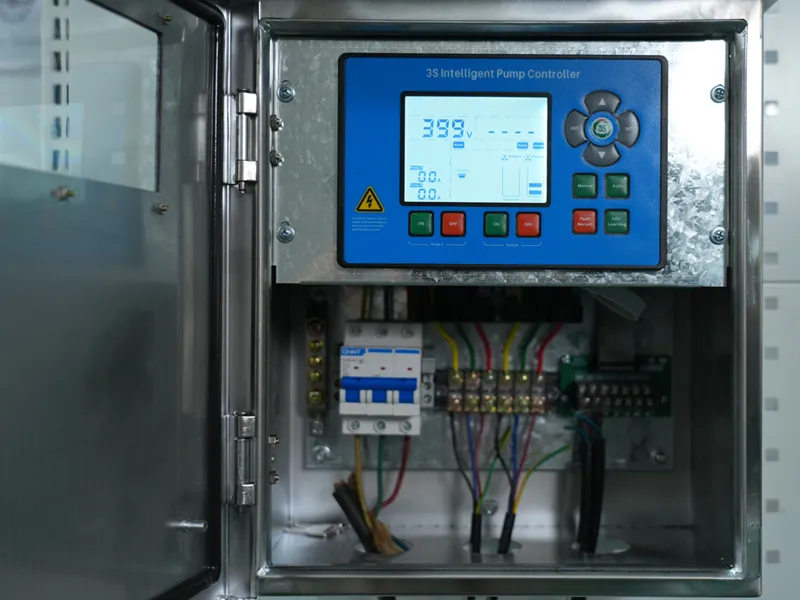
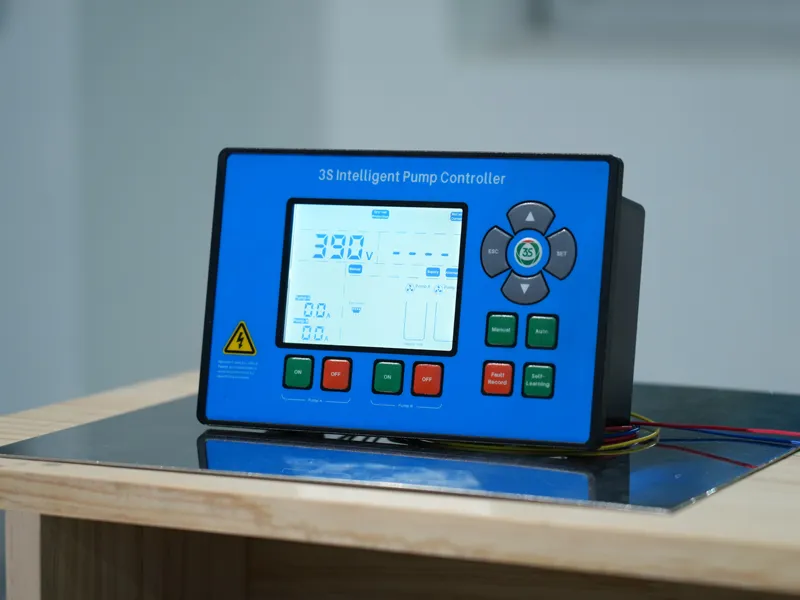
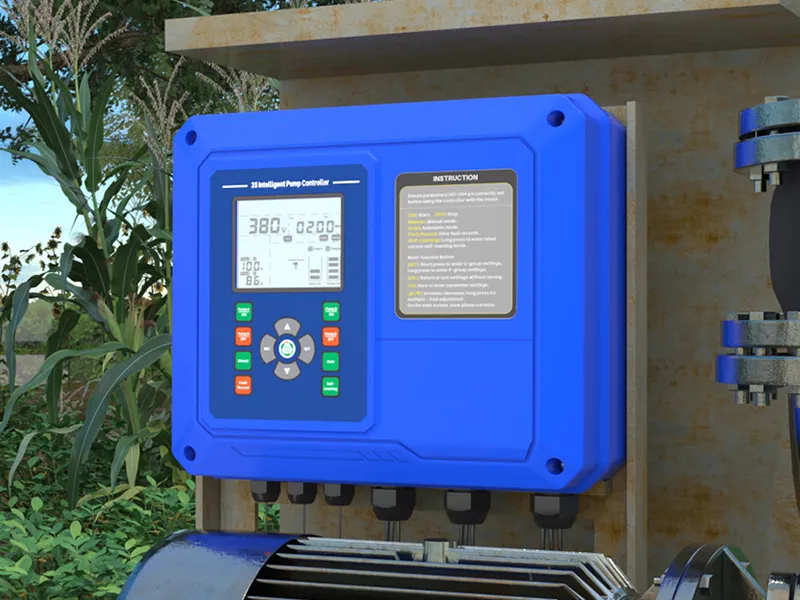
A pump control panel converts detection signals into protective actions. It monitors connected sensors and motor operating conditions, then executes the configured control logic when abnormal conditions are identified.
For effective dry-running protection, a suitable pump control panel should support:
At 3S Global, our pump control solutions support multiple protection functions and compatible detection inputs for different pumping applications. By integrating motor current monitoring, water-level signals, and configurable protection logic, 3S controllers help customers establish protection strategies that match their system requirements.
The exact protection functions and available input configurations depend on the selected controller model.
Preventing pump dry running requires more than simply installing a protection device. The key is to identify potential causes, select a detection method suited to the pump and water source, and configure the controller to respond correctly.
Water-level detection is particularly suitable for tanks and wells, current-based protection can be effective for compatible pump applications, while pressure and flow monitoring provide additional information about system performance.
Effective dry-running protection is not about using the most detection methods, but choosing the right ones for your actual operating conditions.
 English
 Español
 русский язык
 Français
 اللغة العربية