Unmanned Pump Control, Choose 3S


 Language
Shanghai 3S Global Company Limited

A dual-pump system offers greater operational flexibility and can help improve system reliability. However, installing two pumps does not automatically ensure efficient operation. The control mode determines how the pumps share operating time, respond to demand, and maintain operation when one pump is unavailable.
Choosing the wrong mode may lead to uneven pump usage, unnecessary switching, or reduced system availability. So, which control mode is right for your application?
The answer depends on your operating requirements, system design, and whether the priority is balanced pump usage, a defined backup arrangement, or continued operation with only one available pump.
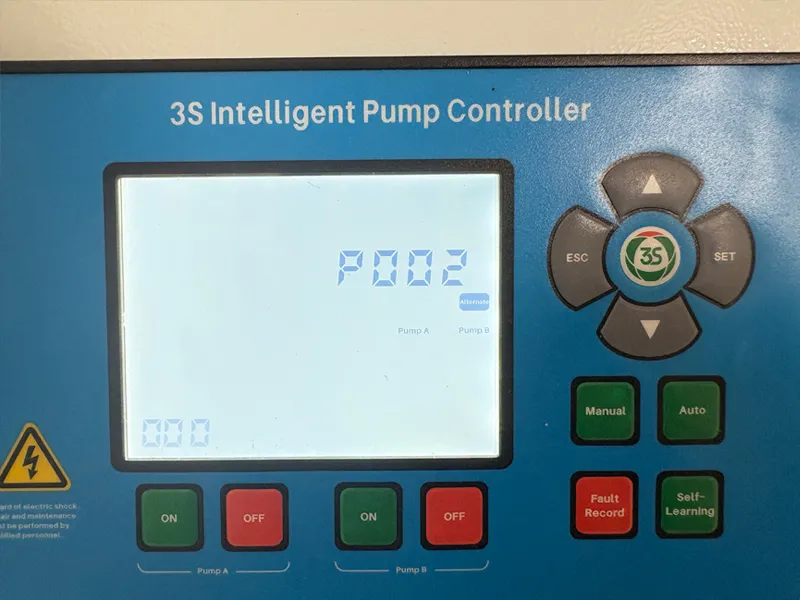
Pump alternation is suitable for systems where two pumps perform the same function and are expected to share the workload over time.
In this mode, the intelligent pump controller automatically changes the lead pump after a predefined interval or operating cycle. For example, Pump A runs first in one cycle, while Pump B takes the lead in the next. This allows both pumps to accumulate relatively balanced operating hours.
Typical applications include:
HVAC circulation systems
Water supply and booster systems
Industrial circulation systems
Applications where both pumps have similar operating requirements
Why choose this mode?
If one pump operates continuously as the lead pump, it may accumulate significantly more running hours than the other. Alternation helps distribute operating time more evenly, reducing long-term operating imbalance and allowing both pumps to remain in regular use.
It is particularly useful when both pumps have comparable capacities and the system benefits from sharing operating hours.
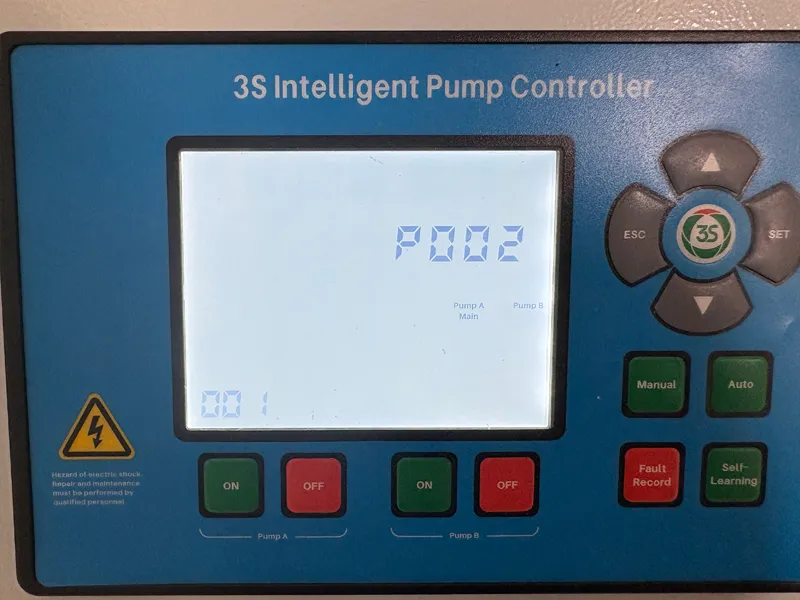
Fixed duty/standby mode is designed for applications where one pump is assigned as the primary operating unit and the other serves as a backup.
The operator can designate Pump A as the duty pump and Pump B as the standby pump, or configure the arrangement the other way around. Under normal conditions, the duty pump handles the operating demand, while the standby pump remains available for backup.
If the duty pump encounters a fault, an automatic standby takeover can be configured, provided the intelligent pump controller, protection settings, and system design support this function.
Typical applications include:
Critical water supply systems
Industrial processes requiring backup capacity(
Buildings where uninterrupted water supply is important
Systems where one pump is designated for regular operation and the other for emergency support
Why choose this mode?
Some applications prioritize a clearly defined primary pump rather than equal operating hours. Fixed duty/standby mode makes the operating arrangement predictable and provides a backup option when the primary pump becomes unavailable.
It is important to note that the standby pump must be properly maintained and periodically tested. A backup pump that is rarely operated should not be assumed to be ready for service without verification.
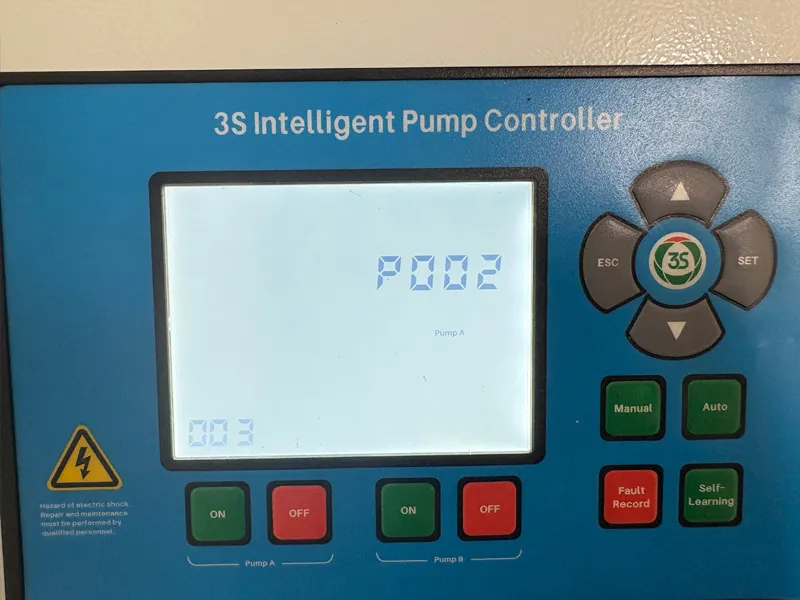
Single-pump operation is suitable when one pump is unavailable due to a fault, maintenance requirement, or other operational limitation, and the system must continue running with the remaining pump.
In this mode, the intelligent pump controller operates only the selected available pump, while the other pump remains stopped.
Typical applications include:
Temporary operation during pump maintenance
Systems where one pump has developed a fault
Situations where the second pump is temporarily unavailable
Reduced-capacity operation when only one pump can operate
Why choose this mode?
A dual-pump system may not always have both pumps available. When one pump fails or needs maintenance, single-pump operation allows the remaining functional pump to continue supplying water, provided its capacity is sufficient for the current demand.
However, this mode does not provide the same redundancy as a fully available dual-pump arrangement. The remaining pump must be capable of meeting the required operating conditions, and the system may need to operate at reduced capacity.
The three modes serve different operational purposes. Before selecting one, consider how your system is expected to operate under normal conditions and what should happen when a pump becomes unavailable.
|
Operating Requirement |
Recommended Mode |
|
Both pumps should share operating hours |
Pump Alternation |
|
One pump operates regularly while the other provides backup |
Fixed Duty/Standby |
|
Only one functional pump is available |
Single-Pump Operation |
Beyond the basic operating requirements, consider the following factors:
Selecting the correct operating mode is only part of dual-pump system design. The intelligent pump controller must also support the required switching logic, pump protection, and fault response.
A suitable dual-pump controller should provide:
There is no single control mode that suits every dual-pump application.
Pump alternation is ideal when both pumps need to share operating hours. Fixed duty/standby is more suitable when one pump is designated as the primary unit and the other provides backup. Single-pump operation is useful when one pump becomes unavailable and the remaining pump needs to maintain service within its capacity.
The right choice starts with understanding the actual operating conditions, not simply the number of pumps installed.
At 3S Global, we provide dual-pump control solutions designed to support different operating requirements, with flexible control modes, comprehensive motor protection, and configurable system logic. Whether your application requires balanced pump operation, reliable backup arrangements, or temporary single-pump operation, selecting the right control configuration helps build a more reliable and manageable pumping system.




 English
 Español
 русский язык
 Français
 اللغة العربية