Unmanned Pump Control, Choose 3S


 Language
Language
Shanghai 3S Global Company Limited

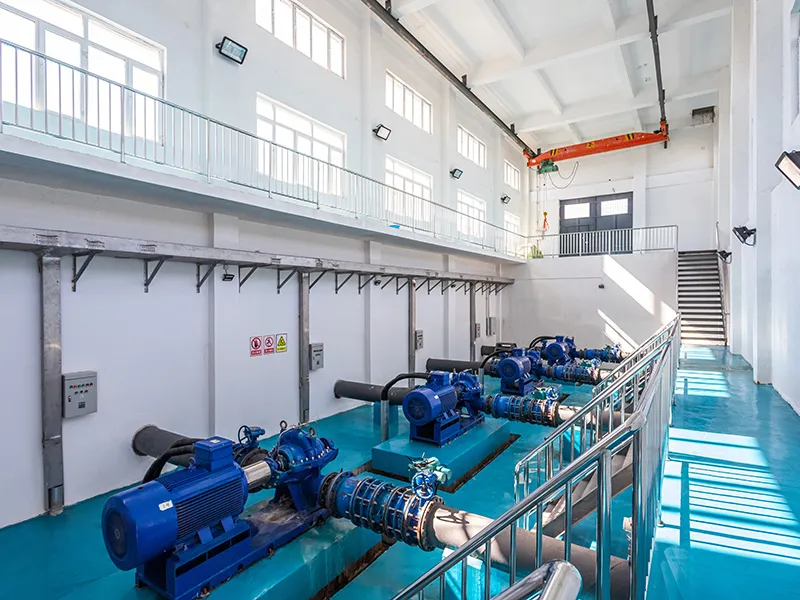
The stability, efficiency, and energy-saving performance of a building’s water supply system are key indicators of the quality of its facility management. However, in commercial buildings, residential communities, industrial parks, and public facilities, traditional water supply methods still rely heavily on manual operation and mechanical timing control. These systems face multiple challenges such as low efficiency, high energy consumption, and frequent equipment failures.
Aging Infrastructure:
Many buildings have been using their water supply networks for years. Aging pipes and leaks cause water wastage and increased energy consumption.
High Electricity Costs:
Pumps often operate at maximum head even though actual water demand rarely reaches the designed capacity, resulting in inefficiency and wasted energy.
Low Energy Efficiency:
Traditional pump systems run inefficiently and consume excessive energy, especially in high-rise buildings where pumps must overcome greater hydraulic head.
Complex Management:
Multi-pump systems require manual operation for start/stop, switching, and load balancing, leading to management difficulties and unstable water supply.
Frequent Equipment Failures:
Long-term operation in humid or high-temperature environments increases failure rates and maintenance costs.
Lack of Intelligent Monitoring:
Traditional systems lack real-time monitoring and remote pump monitoring functions, resulting in delayed fault detection and repair, which affects supply reliability.
The introduction of the 3S Smart Building Pump Controller provides an automated and intelligent solution for building water supply systems, enhancing efficiency and reliability through real-time monitoring and intelligent control.
The 3S Intelligent Pump Controller is a high-performance microprocessor-based control unit designed for water supply systems in high-rise residences, commercial complexes, hotels, hospitals, and industrial parks.
It collects signals such as water level, pressure, 4–20mA current, and 0–5V voltage, and uses intelligent logic algorithms to automatically control the start/stop and switching of single or multiple pumps to ensure continuous and stable water supply.
It supports communication with BMS, PLC, or cloud platforms, enabling remote pump monitoring, data logging, and alarm notifications—paving the way for intelligent management and unmanned operation.
3S Smart Building Pump Controller Main Functions:
Automatic Start/Stop Control: Automatically starts or stops pumps based on water level or pressure signals, reducing manual intervention.
Intelligent Multi-Pump Coordination: Supports master/backup rotation, automatic switching, and scheduled alternating operation.
Scheduled Operation Settings: Allows configuration of daily or time-based start/stop strategies according to building water usage patterns.
Remote Pump Monitoring and Alarms: Supports RS485, Wi-Fi, and IoT communication for real-time status and alarm notifications.
17 Comprehensive Protection Functions: Includes electrical protection (overload, underload, overvoltage, undervoltage, phase imbalance, phase loss, phase sequence, short-circuit protection), mechanical protection (stalling, blockage, dry run, motor water ingress, overheating, anti-rust, frequent start/stop), and signal protection (signal loss, current signal error).
Star-Delta/Soft Start Control: Reduces inrush current and water hammer, protecting pipelines and valves.
IP65 Protection: Industrial-grade dust and waterproof, suitable for harsh environments such as humid and high-temperature pump rooms.
Working Principle:
The 3S Smart Building Pump Controller monitors pipeline pressure or tank water level to
determine water demand. When pressure drops or the water level is low, it
activates one or more pumps; when the upper threshold is reached, it
automatically stops them to prevent over pressure or overflow.
In multi-pump systems, it supports intelligent rotation and automatic switching
to standby pumps when a fault occurs, ensuring continuous operation and
extending equipment lifespan.
Combined with scheduled control and remote pump monitoring, it adapts to
building water demand patterns, achieving efficient, energy-saving, and
reliable water supply control.
|
Building Water Supply Challenges |
3S Smart Building Pump Controller Solutions |
|
Aging Infrastructure and Frequent Failures: Aging pipelines and leakage issues result in significant water waste and higher energy consumption. |
Smart Leak Detection and Alarms: Multi-signal input and intelligent diagnostics monitor pressure and flow in real time. Abnormal conditions trigger automatic shutdown and alarm, reducing leakage losses and burst risks while improving reliability and stability. |
|
Low Energy Efficiency and High Operating Costs: The pumps often run at maximum head while actual water consumption remains far below the design capacity, leading to severe inefficiency and substantial energy waste. |
Smart Start/Stop and Scheduling: Adjusts operation times according to usage patterns (morning/evening peaks, night low periods). Automatically stops pumps when target levels are reached—achieving“on-demand operation and smart standby,”reducing power waste and costs. |
|
Unstable Pressure Affecting User Experience: During peak demand periods, increased flow causes a significant drop in pipeline pressure, leading to insufficient pressure for upper floors or remote users—directly impacting user comfort, such as sudden drops in shower flow or fluctuations in water temperature. |
Intelligent Single/Multiple Pump Operation: With multiple logic modes and pressure sensors, the system adjusts pump operation seamlessly to maintain constant pressure and ensure smooth water delivery during peak hours. Its pump rotation function balances the operating time of each pump, preventing standby pumps from long-term idleness and potential damage, ensuring high overall system reliability. |
|
Direct power-frequency start and stop of pumps create intense pressure surges (water hammer), which can damage pipelines, valves, and fittings, reduce system longevity, and generate significant noise. |
Includes Direct-On-Line (DOL), Star-Delta, and Soft Starter options. Through soft start/stop and signal delay start/stop functions, the pump accelerates or decelerates smoothly, effectively eliminating water hammer caused by sudden pressure fluctuations and protecting the pipeline system. |
|
Component Damage in Harsh Environments: In industrial plants, water supply systems operate under complex conditions where prolonged exposure to condensation, seepage, and high humidity can cause controller moisture ingress, reduced insulation performance, and a higher risk of short circuits. |
Metal enclosure with moisture isolation and dual-layer waterproof PCB ensures stable operation even under 95% RH, enhancing system safety and reliability. |
|
Overheated or Fluctuating Water Temperature: Excessive water temperature in production lines can shorten equipment lifespan, and large fluctuations in hot water circulation temperature often result in unstable water supply. |
Temperature Sensor Control: Maintains thermal stability in hot water circulation, protecting equipment and ensuring energy-efficient operation. |
|
Low Automation, Reliance on Manual Management: Manual pump operation and on-site inspections result in low management efficiency. Operators have to control pump operation based on experience, preventing real-time response and remote pump monitoring system |
Automatically controls pumps based on water level/pressure, enabling unmanned operation. Supports remote pump monitoring and alarm notifications via mobile or PC, improving management efficiency. |
The 3S Smart Building Pump Controller introduces a new paradigm of “smart management”for building water supply through automation, intelligence, and remote pump monitoring system. It addresses key pain points such as energy waste, equipment failure, complex management, and uneven water distribution—significantly improving efficiency, reliability, and energy performance.
Looking ahead, with the advancement of IoT and AI technologies, the 3S controller will evolve toward fully automated intelligent scheduling, integrating water usage analytics and predictive modeling. This will optimize regional water supply management and support the development of smart, green, and sustainable urban water systems.
 English
 Español
 русский язык
 Français
 اللغة العربية