Shanghai 3S Global Company Limited

Engineering Knowledge & Support

outdoor water pump controller installation,outdoor pump controller IP rating,water pump controller wiring for outdoor use,outdoor pump control panel protection,water pump controller commissioning checklist

What Should You Check Before Installing an Outdoor Water Pump Controller?

Date: 2026-10-12

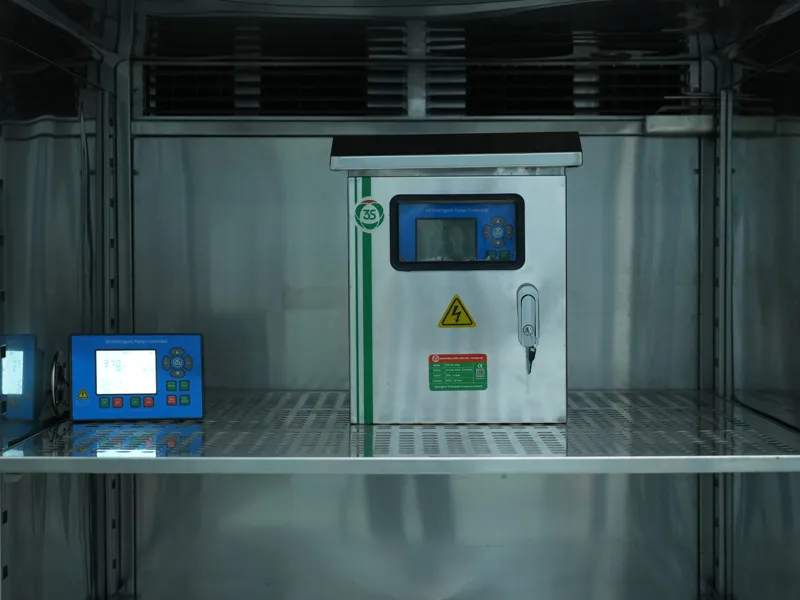
Outdoor water pump controllers are exposed to rain, dust, humidity, temperature fluctuations and direct sunlight. These conditions can affect enclosure integrity, electrical safety and long-term operating reliability.


Before installing an outdoor water pump controller, check five key areas: the installation environment, enclosure protection, electrical connections, heat and moisture management, and commissioning requirements. Correct preparation helps reduce installation errors, prevent avoidable faults and support reliable pump operation.

1. Is the Installation Environment Suitable?

The first step is to assess the actual site conditions rather than treating every outdoor installation as the same.


Check the following factors:

  • Rain and water exposure: Determine whether the controller will face direct rainfall, water splashes, hose cleaning or possible flooding.
  • Ambient temperature: Confirm that the expected operating temperature remains within the controller's specified range, including periods of direct sunlight.
  • Humidity and condensation: Consider seasonal humidity, day-to-night temperature changes and the possibility of moisture forming inside the enclosure.
  • Dust and corrosive substances: Identify exposure to airborne dust, fertilizer, chemicals, salt spray or other substances that may affect enclosure materials and electrical components.
  • Mechanical risks: Check for vibration, impact, accidental contact and potential damage from nearby equipment.

Where practical, install the outdoor water pump controller in a location protected from direct weather exposure while maintaining adequate access for operation and maintenance. If the site presents severe environmental conditions, verify that the selected controller is suitable for those conditions before installation.

2. Does the Enclosure Have the Right Protection Rating?

The enclosure's ingress protection (IP) rating is an important selection criterion for outdoor water pump controllers.


Under IEC 60529, an IP rating classifies protection against access to hazardous parts and the ingress of solid objects and water. However, it does not automatically establish resistance to corrosion, ultraviolet radiation, condensation or extreme temperatures.
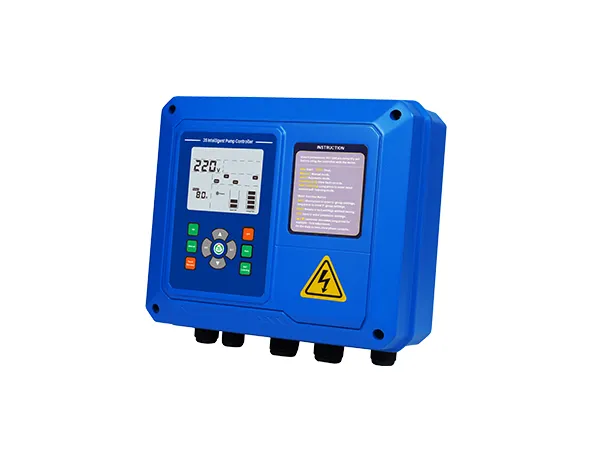
  • #
  • When checking the enclosure, pay attention to three points:


    Match the IP rating to the site. Select a protection level based on actual exposure to dust and water, rather than assuming that any product described as waterproof is suitable for every outdoor environment.


    Check the complete enclosure assembly. The door gasket, cable glands, connectors, conduit entries and mounting arrangement all affect the integrity of the installed enclosure. Poorly sealed cable entries can compromise protection even when the enclosure itself has a suitable rating.


    Verify material durability. For installations exposed to intense sunlight, coastal air or corrosive environments, check the enclosure material, coating and environmental suitability separately from its IP rating.


    For example, an IP65 enclosure provides dust-tight protection and protection against water jets under specified test conditions. It should not be interpreted as proof of resistance to immersion, salt corrosion or prolonged UV exposure.

3. Are the Power Supply and Motor Connections Correct?

Incorrect electrical connections can cause startup failures, abnormal operation, equipment damage and safety hazards. Electrical checks should therefore be completed before the controller is energized.

  • Verify the power supply. Confirm that the controller's rated input voltage, phase configuration and frequency match the available supply and the product specifications.
  • Check motor compatibility. Confirm the motor's rated voltage, rated current and power against the controller's supported operating range. Ensure that the selected controller is suitable for the motor and its starting method.
  • Inspect wiring and terminals. Check conductor sizing, terminal tightness, cable insulation, grounding and cable-entry sealing in accordance with the manufacturer's instructions and applicable electrical regulations.
  • Verify protection and isolation. Confirm that the installation includes the required short-circuit protection, overcurrent protection and means of isolation. Protective devices must be selected and coordinated according to the system design.
  • Check sensor and control wiring. If the application uses float switches, level electrodes, pressure sensors or remote-control signals, verify the correct terminal assignments, signal compatibility and wiring method.

All electrical work should be carried out by qualified personnel with the supply isolated and verified as de-energized. The outdoor water pump controller should not be powered on until the required installation checks have been completed.

4. How Can You Reduce Heat and Moisture Problems?

Outdoor water pump controllers need protection from both external weather and internal environmental changes. A sealed enclosure does not necessarily eliminate condensation, and additional sealing does not automatically solve overheating.


To reduce these risks:

  • Provide adequate heat dissipation. Follow the manufacturer's installation clearances and cooling requirements. Avoid placing the enclosure where heat can accumulate or ventilation openings can become obstructed.
  • Manage direct sunlight. Where necessary, provide a suitable weather shield or shaded location without blocking the controller's required cooling path.
  • Reduce condensation risk. Consider temperature cycling and high humidity. Use only manufacturer-approved condensation-control measures, such as suitable enclosure heaters or rated ventilation accessories where appropriate.
  • Prevent water accumulation. Arrange mounting and cable routing to reduce water tracking into cable entries. Do not drill additional holes or modify the enclosure without confirming that the required protection can be maintained.

For hot, humid or coastal locations, environmental suitability should be assessed alongside the controller's electrical specifications. This is particularly important where the equipment must operate for extended periods with limited on-site supervision.

5. What Should You Check Before Commissioning?

Once installation is complete, commissioning should verify not only that the pump starts, but also that the outdoor water pump controller responds correctly to the intended operating conditions.


Before normal operation, check the following:

  • Electrical status: Confirm that the supply voltage, motor connections, grounding and protective devices have been checked.
  • Operating parameters: Verify the configured motor current, control mode, sensor settings and other parameters against the motor nameplate, system design and manufacturer's instructions.
  • Pump start and stop logic: Test the intended control sequence, including manual and automatic operation where provided. Confirm that the pump starts and stops in response to the correct control signals.
  • Protection functions: Verify applicable protections and fault indications using the manufacturer's approved test procedures. Do not deliberately create hazardous electrical faults to test protection functions.
  • Remote monitoring and alarms: If remote monitoring is installed, confirm communication, status reporting and alarm delivery under the intended operating conditions.
  • Enclosure integrity: Before closing the installation, check that cable entries are sealed, the gasket is correctly positioned, and all covers and fasteners are secured.

Record the commissioning results and resolve any abnormal conditions before putting the system into normal service.

Conclusion

Reliable outdoor water pump controller starts with selecting a controller that matches the site, motor and control requirements. Checking the enclosure's actual protection capability, verifying electrical connections, managing heat and condensation, and completing functional commissioning are all essential steps.


At 3S Global, we focus on intelligent water pump control solutions designed for different pump applications and installation requirements. By evaluating the operating environment and system specifications before installation, customers can make more informed controller selections and build a more reliable pump control system.
Latest News

  • pump dry running protection,dry run protection for water pumps,pump dry run detection methods
    Dry running can quickly damage a water pump by causing overheating, loss of lubrication, and seal failure. Explore the main causes, compare three detection methods using water level, motor current, and pressure or flow signals, and learn how to choose suitable protection settings to reduce unnecessary shutdowns and costly repairs.
  • IP55 vs IP65 for pump controllers,IP65 pump controller for dusty environments,IP55 control panel for indoor use
    Choosing between IP55 and IP65 can affect the long-term protection of your pump controller. Discover how their dust and water protection levels differ, which installation environments suit each rating, and what to consider before selecting an enclosure. Find the right protection level for your pump system.
  • dual pump control mode,pump alternation for dual pumps,duty standby pump control,single pump operation
    Choosing the right control mode is essential for reliable dual-pump operation. Explore three options: pump alternation for balanced running hours, fixed duty/standby for backup support, and single-pump operation when one unit is unavailable. Learn how to match each mode to your system's needs and improve operational reliability.
  • repeated pump trips,pump overload protection,pump controller for frequent tripping,water pump trip causes
    Repeated pump trips can disrupt operations, increase maintenance costs, and damage equipment. Discover five common causes, from power supply faults and motor overload to mechanical problems and improper control settings, along with practical ways to diagnose recurring shutdowns and improve pump system reliability.
  • water pump controller compatibility,pump controller for float switches,pump controller voltage compatibility,adjustable current pump controller
    Choosing the right water pump controller requires more than checking power ratings. Discover 4 key compatibility factors: signal inputs, supply voltage, adjustable current settings, and application requirements. Learn how to match a controller to your pump system for reliable operation and make more informed selection decisions.
What'sapp

May

E-mail to us

E-mail

Wechat

Wechat

wechat