Unmanned Pump Control, Choose 3S


 Language
Language
Shanghai 3S Global Company Limited

The Water Pump Control is the “brain” of any pumping system, directly affecting the reliability of water supply and drainage. In practice, most controller failures fall into four key categories: power supply, signal devices, parameter settings, and environmental factors. By following a logical troubleshooting sequence, you can quickly identify and resolve issues without complex diagnostic tools. Here’s a practical guide for maintaining high-performance Pump Control Panels.
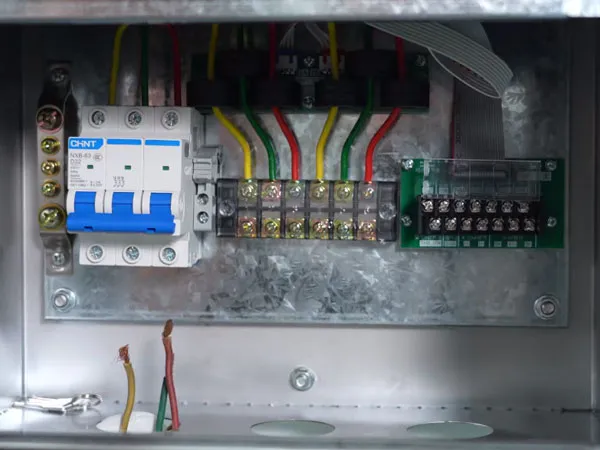
A stable power supply is critical for Water Pump Control operation. Common symptoms of power issues include flickering indicator lights, frequent restarts, or failure to start. Troubleshooting should follow a “from wiring to voltage” approach.
Wiring Check: Inspect all input cables to ensure secure connections and no damage. Loose or oxidized connectors can increase resistance, causing overheating or unstable operation. Clean or replace affected connectors promptly.
Voltage Check: Measure input voltage with a multimeter. Residential controllers typically require 220V ±10%, while industrial units need 380V ±10%. Fluctuations or deviations may indicate aging circuits, overloaded lines, or faulty breakers. Contact a professional electrician for complex issues to protect the Pump Control Panel.
The Water Pump Control relies on sensor signals—such as water level or current—to make control decisions. Abnormal readings, false alarms, or missed detections often point to signal or wiring faults. Focus on three areas: probe, sensor, and wiring.
Device Cleaning & Calibration: Remove scale, debris, or dirt from probes and pressure sensors to maintain accurate signals. Calibrate sensors with a standard signal source to ensure data aligns with real conditions.
Wiring & Interference: Confirm that signal lines are secure and undamaged. Avoid running them alongside high-power cables or near electromagnetic sources like motors or variable frequency drives, which can cause signal distortion. If necessary, add shielding to your Pump Control Panel wiring to enhance interference resistance.
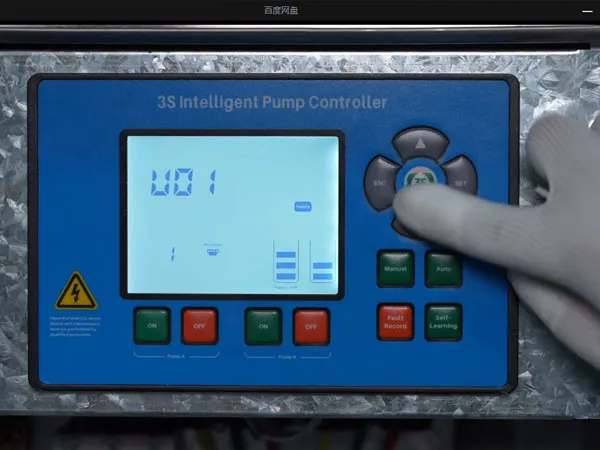
Even flawless hardware can behave unpredictably if Water Pump Control parameters don’t match the operating conditions. Frequent starts/stops, unstable operation, or abnormal pressure and liquid levels often stem from misconfigured settings.
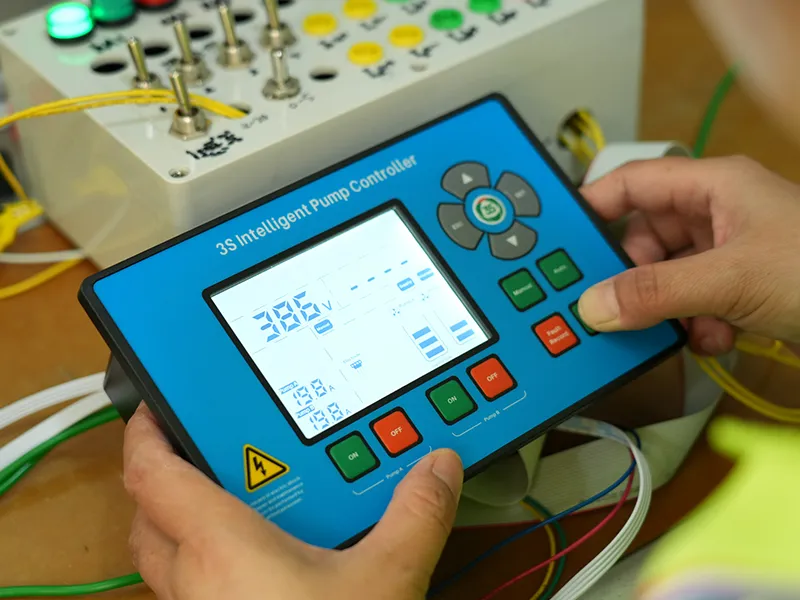
Core Parameter Check: Access the Pump Control Panel and review key settings: pressure differential (pressure-controlled units), liquid level differential (level-controlled units), and current thresholds (pump motor protection). Adjust parameters to align with site conditions for optimal performance.
Many Water Pump Control units are installed in basements or pump rooms with challenging conditions. Heat, humidity, vibration, and dust accelerate wear and can lead to failures. Protecting your environment is essential.
High Temperature Mitigation: Install fans or heat sinks in enclosed, hot spaces (over 40°C) to prevent overheating of the Pump Control Panel. Keep controllers away from heat-emitting equipment to reduce thermal stress.
Humidity Protection: Moisture can cause PCB corrosion or shorts. Use waterproof panels and protective covers. Regularly check for condensation inside the controller and wipe dry.
Routine Maintenance: Remove dust and debris from the panel and surrounding area. Minimize vibration by securing pumps and adding dampers to prevent loosening of wiring or components.
Troubleshooting Water Pump Control systems should follow the principle: “simple to complex, outside to inside.” Prioritize easy-to-check, high-probability areas like power and signals, then optimize parameters and improve environmental conditions. Following this method can resolve over 80% of common faults without specialized repair experience.
Proper maintenance of your Pump Control Panel not only restores reliable operation quickly but also extends equipment life and reduces operational costs. For persistent issues, contact the manufacturer or certified technician for internal inspections. A well-maintained Water Pump Control ensures continuous, efficient water system operation and protects your investment for years to come.
 English
 Español
 русский язык
 Français
 اللغة العربية