Shanghai 3S Global Company Limited

Company & Global Events

ODM Pump Controller,Automatic Water Booster Starter,Modbus Intelligent Pump Controller,Sewage And Irrigation Pump Controller

Steadfast Beneath The Lightning: A Breakthrough Journey From 1 kV To 4 kV

Date: 2025-11-14
  • #
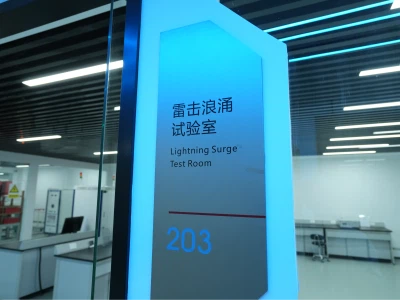
  • Late at night, the laboratory was filled with the faint smell of burnt circuitry. Dozens of charred mainboards were piled in the corner, and the glow of the oscilloscope flickered across Zhang Jun's furrowed brow. As a manager in the R&D department, he was facing one of the toughest challenges of his career.
  • First Victory, Greater Challenge Ahead

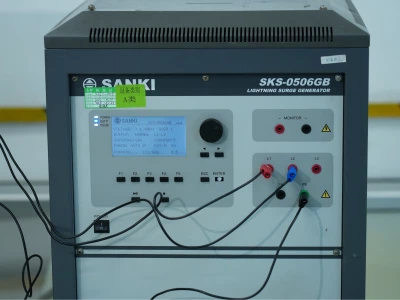
    A few months earlier, Zhang Jun's team had been assigned a daunting task - to develop a water pump controller capable of withstanding 2 kV lightning surge. In the first month, the prototype easily passed the 1 kV surge test, filling the team with confidence. Zhang Jun wrote in his project log: "Progress is smooth; we expect to reach the 2 kV surge resistance target next month."
  • First Victory, Greater Challenge Ahead
Unexpected Setback
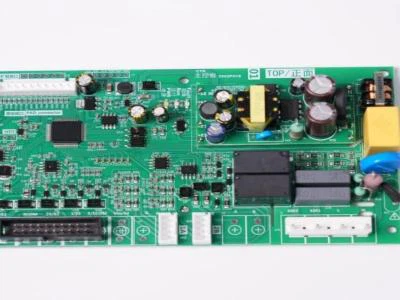
But the first 2 kV surge test ended in failure - the board was burned, copper traces were broken, and protection components destroyed in an instant. The lab filled with the smell of burnt components as silence spread among the team. Examining the board closely, Zhang Jun realized that the protection devices had completely failed. "It's more complicated than we thought," he said calmly. "We need to re-evaluate our protection design."
Relentless Exploration and the Search for Breakthrough
Over the following months, the team refined their design again and again - selecting higher-rated MOVs (Metal-Oxide Varistors) and TVS diodes (Transient Voltage Suppression diodes), optimizing PCB layout and grounding topology, and adding filtering and shielding on critical power and signal lines.
  • #
  • Each redesign led to another surge test - and often another  burnt board. Late into the night, Zhang Jun and his team ran endless tests, logging data and tracing every potential failure path. Finally, in the seventh prototype, the 2 kV surge test passed flawlessly, the core circuitry remained stable, and the software continued running. Applause broke the long silence in the lab.

A New Mandate: The 4 kV Challenge

Just as the team was celebrating, the company announced a new goal - to meet 4 kV surge immunity, driven by tougher market demands. The mood in the lab instantly grew tense.

"4 kV? We barely survived 2 kV - doubling that is impossible!" someone exclaimed.

Zhang Jun remained calm. "If we're going to make a breakthrough," he said, "let's make it count."

Innovative Thinking: The Turning Point

Zhang Jun led the team to rethink the design. They realized that a single protection layer could never handle the complexity of real surge events. Thus, they introduced a multi-stage protection strategy:

Stage 1: High-energy MOVs at the power input absorb the bulk of surge energy.

Stage 2: Fast-clamping devices such as TVS diodes suppress residual surge voltage peaks, protecting the power module and logic circuits.

Stage 3: Filtering, isolation, and PCB zoning prevent surge coupling into the control IC and signal layers.

  • They also optimized the grounding layout and discharge path, ensuring that surge energy was diverted efficiently without back-coupling into sensitive circuits.
  • #
  • Overcoming Barriers, Witnessing Success
  • Overcoming Barriers, Witnessing Success

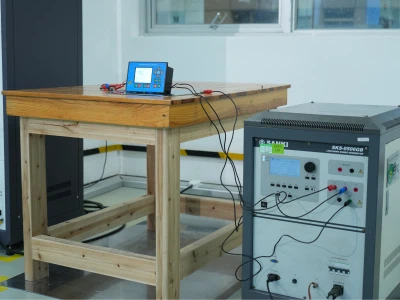
    After two months of calculation and repeated tuning, the new design was ready for testing. 

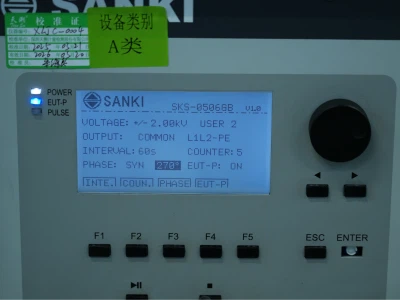
    At 2 kV, the waveform remained smooth. 3 kV - still stable.

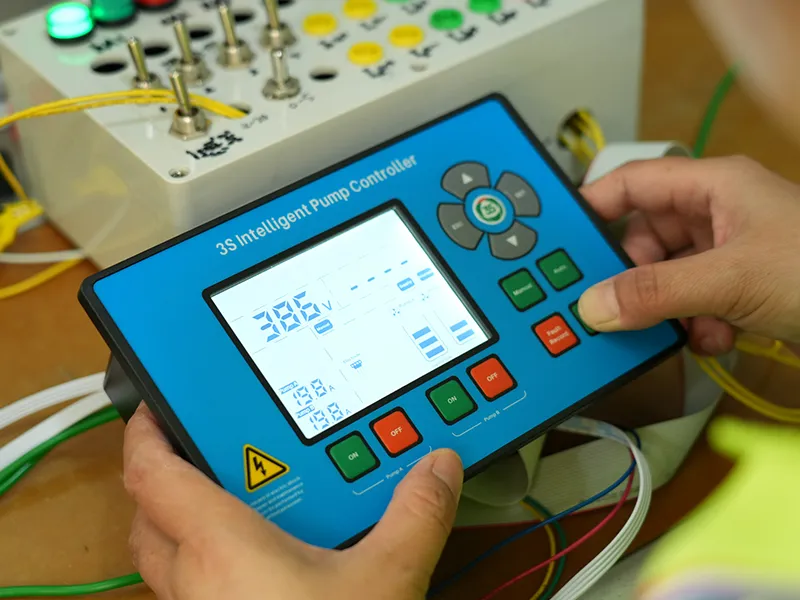
    At 4 kV, after the surge pulse,the controller's indicator lights stayed on and all operational data remained intact.

    Cheers erupted in the lab. Zhang Jun looked at the controller running steadily and finally allowed himself a long-awaited smile.

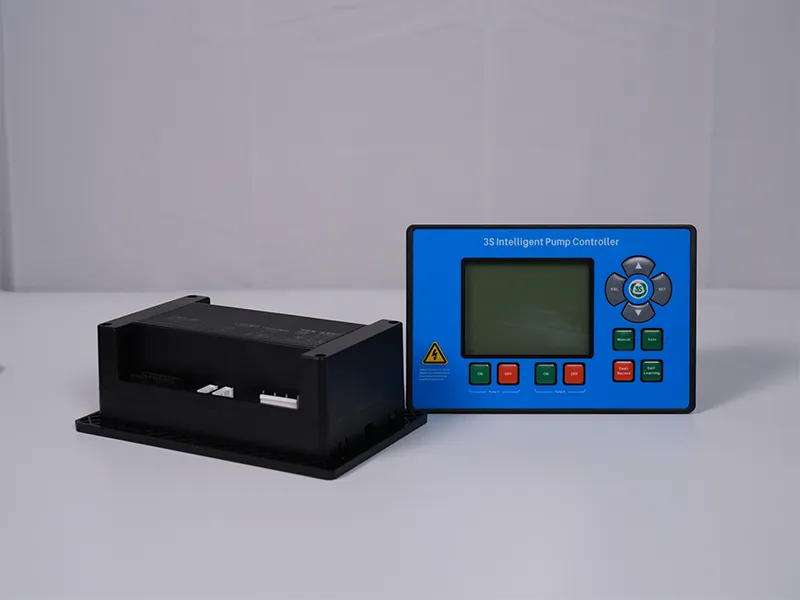
Today, this battle-tested water pump controller has been operating reliably across harsh environments worldwide, quietly safeguarding water systems. Zhang Jun and his team have already moved on to new challenges - for them, every breakthrough is a promise kept: to remain steadfast through every storm.


This spirit also embodies one core value of our "3S" brand philosophy(Summit, Stone, SunRay):

Stone - like solid rock, our products stand firm, upholding our commitment to quality, reliability, and consistency, providing a solid foundation for our customers' success.


"Success," Zhang Jun often says, "is simply holding on a little longer than those who give up." This was the secret behind the team's ultimate success.


This is the story of a journey from 1 kV to 4 kV - a voyage of perseverance, professionalism, and passion written through countless nights of hard work.
Latest News

  • pre-startup checks for pump controllers,pump control mode,rated voltage,rated current,startup conditions
    What should you check before starting a water pump? This article explains three key conditions that can determine whether a pump starts and operates as expected: the control mode, rated voltage and current, and site conditions. Learn what to verify before startup and how a few essential checks can make pump operation more predictable and controlled.
  • automatic rated current learning for pump controllers,current reference for motor protection
    Why does a pump controller need automatic rated current learning? This article explains how learned current references can reduce manual setting errors, reflect actual pump operating conditions, and support current monitoring and motor protection. Learn how automatic learning works, what conditions should be checked, and why the right current reference matters for reliable pump control.
  • phase-loss detection for pump controllers,three-phase voltage monitoring,current imbalance,phase loss protection
    How does a pump controller detect three-phase phase loss? This article explains how voltage and current monitoring, thresholds, and time delays work together to identify phase-loss faults and trigger protection. Discover why reliable detection goes beyond simply checking whether one phase has power during abnormal power conditions.
  • start delay for automatic pump control,stop delay for pump control,pump start stop delay settings
    Start delay and stop delay serve different roles in automatic pump control. This article explains when each delay takes effect, how they help reduce unnecessary pump cycling, and how to set them according to signal fluctuations, response needs, and field conditions. Learn how the right settings can balance stability and response.
  • signal reliability for pump control,pump signal faults,automatic pump control signals,4–20 mA signals
    Reliable signals are the foundation of accurate automatic pump control. This article explains how false triggering, signal loss, fluctuations, and inaccurate inputs can affect pump operation, and how proper signal selection, wiring, installation, and fault handling can improve system stability.
What'sapp

May

E-mail to us

E-mail

Wechat

Wechat

wechat