Unmanned Pump Control, Choose 3S


 Language
Language
Shanghai 3S Global Company Limited

In many water supply systems, maintaining stable pressure while reducing manual intervention remains a key operational challenge. Traditional pump systems often rely on manual inspection or simple start-stop control. This approach is not only inefficient, but may also lead to pressure fluctuations, higher energy consumption, and increased maintenance costs.
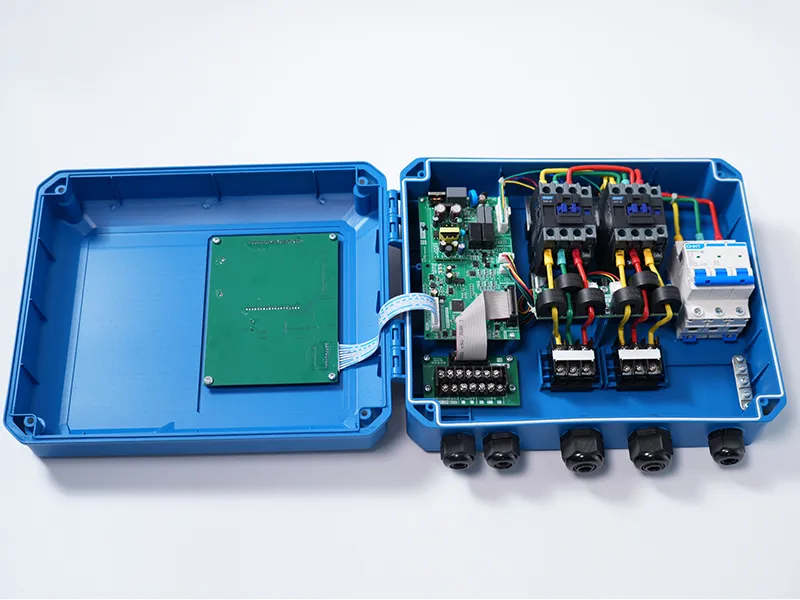
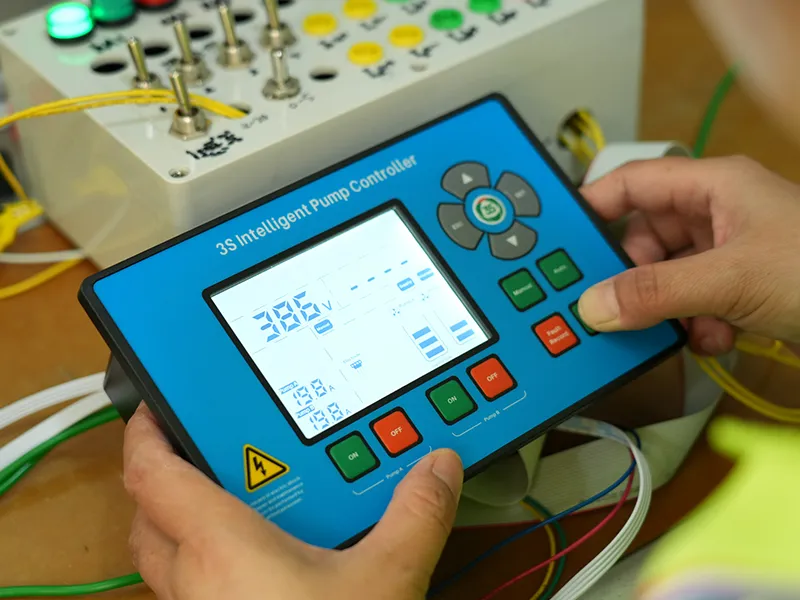
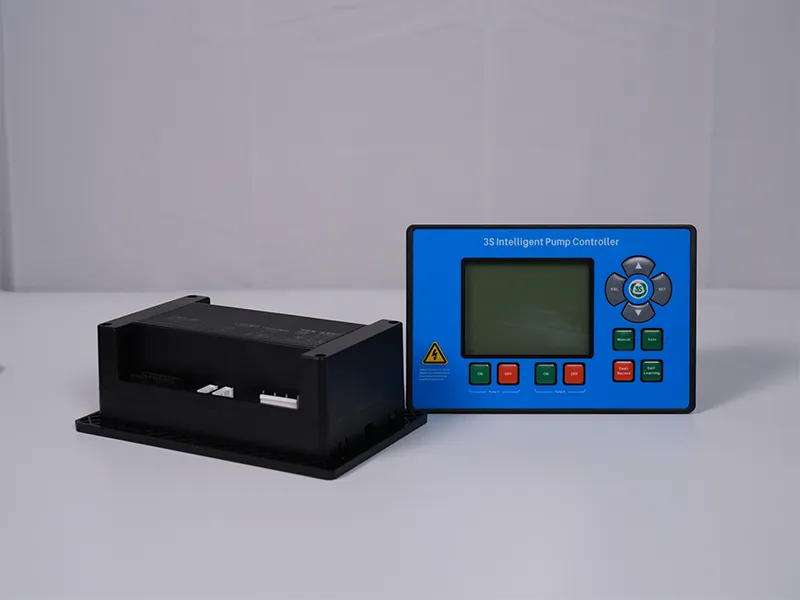
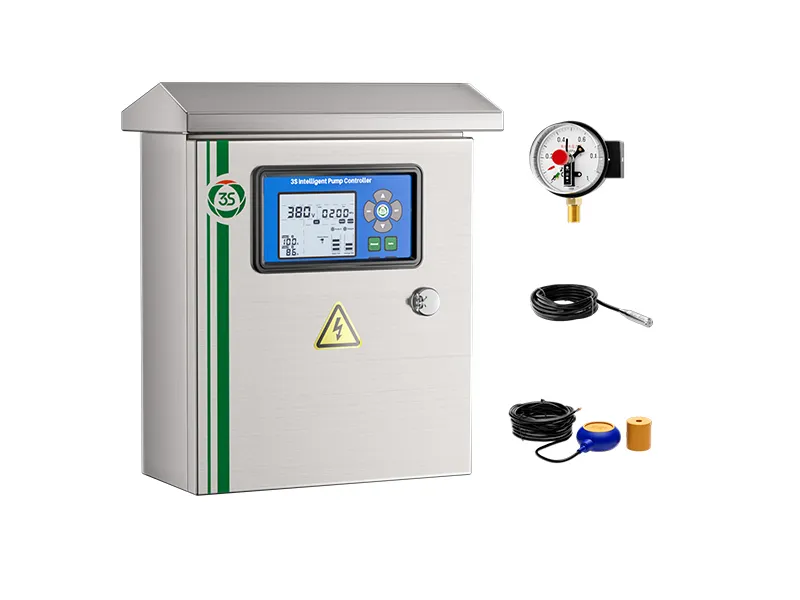
By integrating a pressure transmitter with an intelligent control system such as the 3S Unmanned Smart Motor Starter, pump operations can automatically adjust according to real-time pipeline pressure. This allows the system to maintain stable pressure while gradually moving toward a truly Unmanned Fire Pump Controller-based supply solution.
With proper parameter configuration, two pumps can automatically switch operating modes based on water demand, ensuring reliable and efficient system performance.
The pressure transmitter is installed at the pipeline pressure port. It continuously monitors system pressure and sends a 4–20 mA signal to the control system.
With solutions like the 3S Unmanned Smart Motor Starter, the controller analyzes the incoming pressure signal and determines the current water demand. Based on this data, the system automatically adjusts pump operation to maintain stable pressure.
Under this control logic, the system can automatically switch between different operating states:
During peak water consumption, two pumps run simultaneously
When demand decreases, the system switches to single-pump operation
When the system pressure reaches the preset value, all pumps stop automatically
This strategy ensures stable supply pressure while avoiding unnecessary equipment operation. Systems using an Unmanned Fire Pump Controller can significantly improve overall efficiency and reduce manual monitoring.
In a typical water supply system, dual-pump pressure control can be achieved through parameter configuration in the 3S Unmanned Smart Motor Starter.
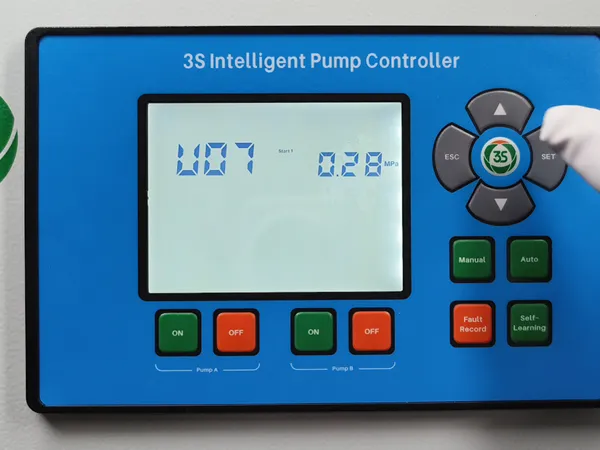
Control Parameter Examples
U01-5: Water supply mode
U05: Sensor range (e.g., 10 MPa)
U06: Dual-pump stop pressure (0.35 MPa)
U07: Single-pump operating pressure (0.28 MPa)
U08: Dual-pump operating pressure (0.22 MPa)
System Operating Logic
Peak demand — When pressure drops to 0.22 MPa, two pumps start simultaneously
Demand decreases — When pressure rises to 0.28 MPa, the system switches to single-pump operation
No demand — When pressure reaches 0.35 MPa, all pumps stop automatically
With this step-by-step control strategy, the 3S Unmanned Smart Motor Starter helps the system automatically match pump operation to real-time demand, reducing frequent start-stop cycles and minimizing equipment wear.
In many applications, an Unmanned Fire Pump Controller can also apply similar pressure-based logic to maintain stable system pressure without continuous human supervision.
To ensure stable signal transmission and reliable system operation, pay attention to the following points during installation:
Add a jumper between SIG1 and COM
Connect the “+” terminal to the 4–20 mA “+”, and the “–” to “–”
If polarity is reversed, the system will trigger an alarm
Install the pressure transmitter at the pipeline pressure port and ensure proper sealing
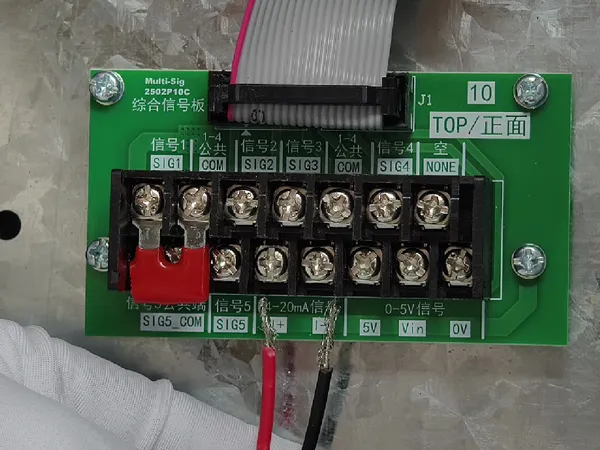
Correct installation ensures stable pressure signal transmission, enabling accurate control decisions in systems powered by the 3S Unmanned Smart Motor Starter and similar intelligent controllers.
Pressure-based automatic pump control systems are widely used in applications that require stable water pressure, including:
Building water supply systems
Agricultural irrigation systems
Fire protection water supply systems
In these applications, integrating an Unmanned Fire Pump Controller allows systems to operate more reliably while reducing manual intervention.
By combining pressure transmitters with intelligent control technologies such as the 3S Unmanned Smart Motor Starter, operators can build highly efficient automated pumping systems.
With the development of automation technology, pressure-based pump control is becoming an increasingly common solution for modern water supply systems.
Through intelligent control devices like the 3S Unmanned Smart Motor Starter, pumps can automatically adjust operation based on real-time demand. In fire protection and industrial applications, the Unmanned Fire Pump Controller concept further enhances reliability by enabling stable operation without constant human supervision.
As automation continues to evolve, more water supply systems will move toward unmanned and intelligent operation, improving efficiency while reducing long-term maintenance costs.
 English
 Español
 русский язык
 Français
 اللغة العربية