Unmanned Pump Control, Choose 3S


 Language
Language
Shanghai 3S Global Company Limited

In real-world operations, many users encounter issues such as sudden pump shutdowns, abnormal start-stop cycles, or even equipment burnout. These problems are often blamed on pump quality or improper selection.
However, field experience shows that the root cause is often not the pump itself, but the control system behind it. This is especially true in an unmanned smart control system, where accurate data is essential for reliable decision-making.
An unmanned smart control system operates on three key steps: sensing, decision-making, and execution.
Sensing: collecting data such as level, pressure, and current
Decision-making: determining actions based on data
Execution: starting, stopping, or adjusting the pump
If the data collected is inaccurate or distorted, the entire system logic becomes unreliable. Even in an advanced unmanned smart control system, poor data quality can lead to incorrect responses and system instability.
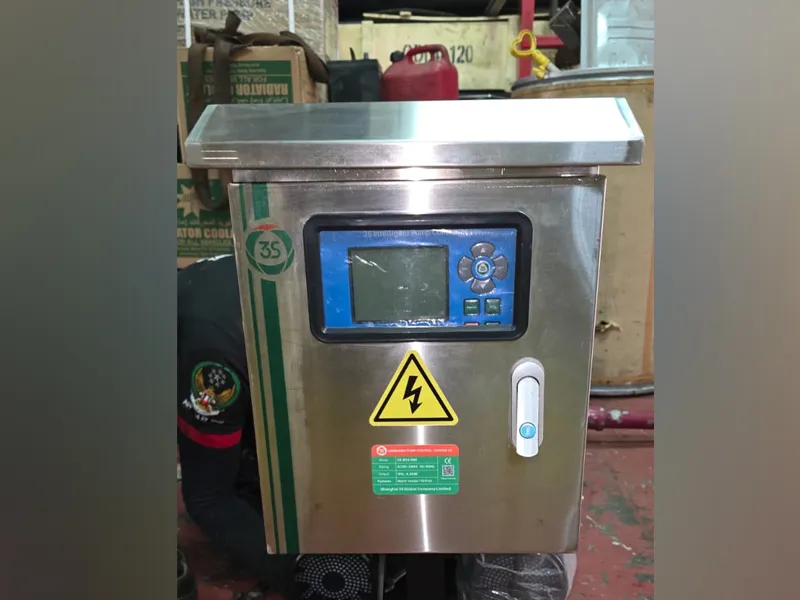
Modern pump controllers are no longer simple switches—they are the brain of the system. Their effectiveness depends on:
High-precision data acquisition
Fast response to changing conditions
Accurate triggering of protection mechanisms
Without reliable data, even the most advanced unmanned smart control system cannot function properly. Inaccurate readings can result in false alarms, missed faults, or unnecessary shutdowns.
To prevent risks caused by data errors, high-quality pump control panels undergo strict factory testing, including:
Sensor calibration
Control logic validation
Fault simulation testing
Long-term stability checks
These measures ensure that the system operates with accuracy and consistency. For any unmanned smart control system, such testing is essential to guarantee dependable performance in real applications.
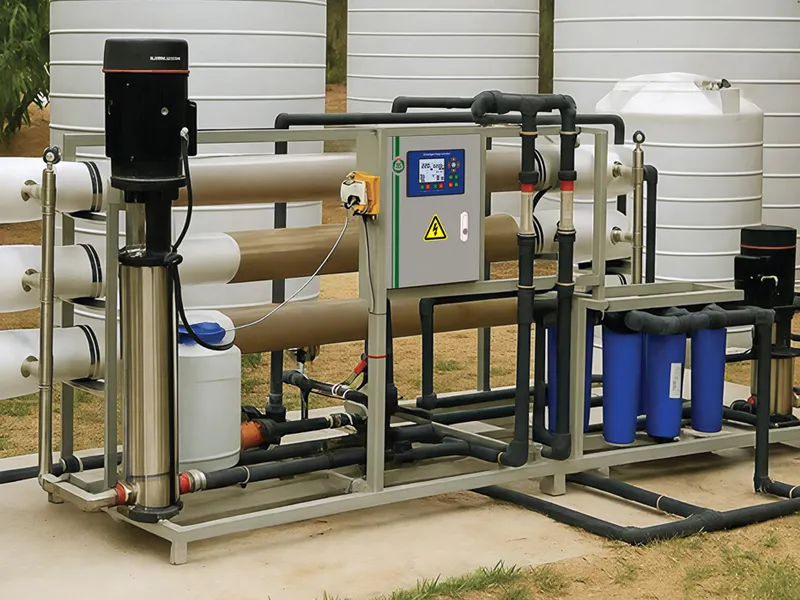
The trend toward automation is driving the adoption of unmanned pump stations. However, achieving this goal requires one critical foundation: Control decisions must be based on accurate, real-time data.
Only then can an unmanned smart control system deliver:
Fully automated operation
Remote monitoring and management
Early fault detection and protection
This not only improves efficiency but also significantly reduces maintenance costs.
When pump issues arise, replacing equipment is not always the solution. Instead, it is important to evaluate:
Is the controller data accurate?
Are signals stable and reliable?
Is the control logic properly configured?
By shifting focus from individual components to the overall system, businesses can unlock the full potential of an unmanned smart control system and achieve long-term stability.
Stable pump operation depends not only on the equipment itself but also on the accuracy of the control system. Reliable data is the foundation of effective automation.
As technology evolves, the importance of data-driven control will continue to grow. In this context, the unmanned smart control system stands out as a key solution—delivering safer, smarter, and more efficient pump management for the future.
 English
 Español
 русский язык
 Français
 اللغة العربية