Unmanned Pump Control, Choose 3S


 Language
Language
Shanghai 3S Global Company Limited

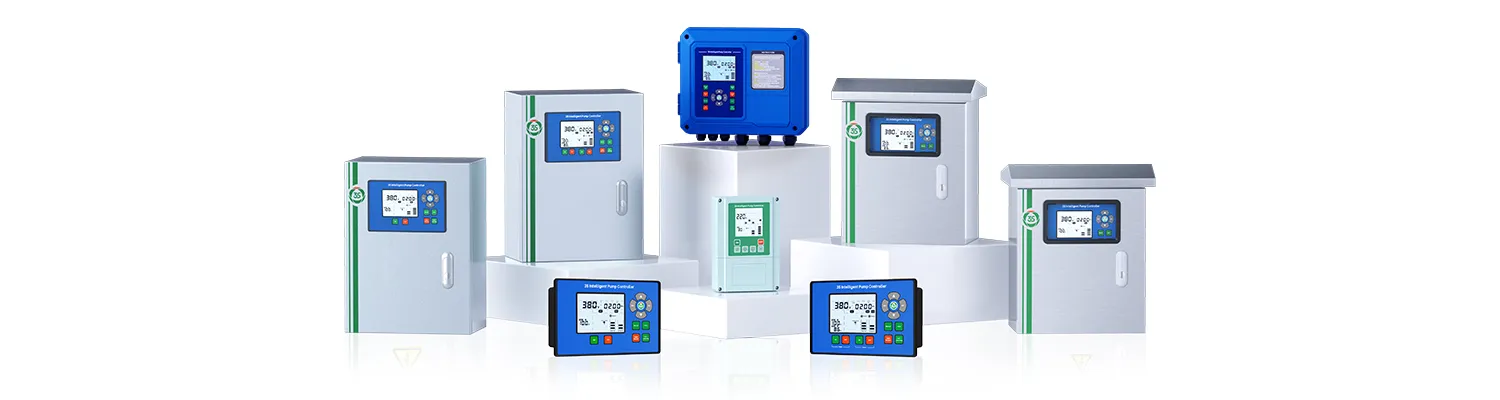
In modern agriculture, irrigation systems not only affect crop growth quality but also directly influence agricultural productivity and water costs. Traditional manual irrigation methods often suffer from low efficiency, water waste, and high labor expenses. As a result, more farms are adopting automated irrigation control systems to achieve precise, efficient, and energy-saving irrigation management.
Today, the most common agricultural irrigation methods include drip irrigation, sprinkler irrigation, and mist irrigation. Different irrigation systems require different levels of pump control and automation performance. This is why choosing the right irrigation pump control panel has become increasingly important in modern smart farming projects.
1. Drip Irrigation: The Leading Water-Saving Solution
Drip irrigation slowly delivers water directly to plant roots through pipelines, significantly reducing evaporation loss and improving water efficiency.
Because drip irrigation requires highly accurate flow control, the system typically needs:
Stable pump output
Precise flow adjustment
Anti-clogging control capability
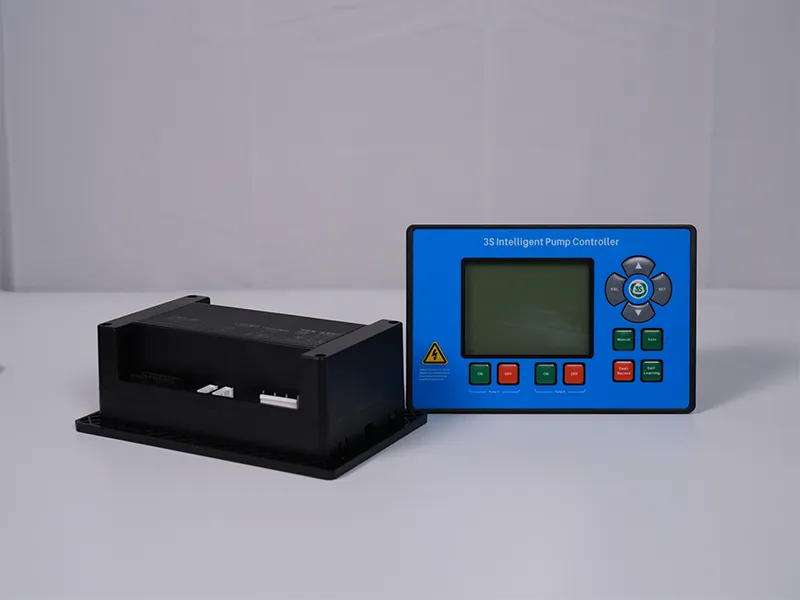
For this reason, a reliable irrigation pump control panel plays a critical role in maintaining stable operation and accurate water delivery in drip irrigation systems.
2. Sprinkler Irrigation: Ideal for Large Agricultural Areas
Sprinkler irrigation distributes water evenly across farmland through spray nozzles. It is widely used for lawns, grain crops, and large-scale agricultural planting.
Since sprinkler systems rely heavily on stable water pressure, pressure fluctuations can directly affect spray coverage and irrigation uniformity.
Therefore, constant pressure control has become one of the core functions of a modern irrigation pump control panel in sprinkler irrigation applications.
3. Mist Irrigation: Suitable for Greenhouses and Seedling Farms
Mist irrigation creates ultra-fine water droplets, making it ideal for:
Greenhouses
Flower cultivation
Seedling nurseries
These systems require more precise pressure and atomization control to maintain uniform humidity while minimizing water waste.
In these applications, an intelligent irrigation pump control panel helps optimize mist consistency and improve overall irrigation performance.
After selecting the irrigation method, choosing the right automation strategy becomes equally important. Modern smart agriculture commonly adopts the following three irrigation control methods.
1. Timed Irrigation Control
Timed irrigation is one of the simplest and most widely used automation solutions.
Users can preset operating schedules, such as:
Automatically starting irrigation at 6:00 AM
Automatically stopping irrigation at 8:00 PM
Its advantages include:
Simple operation
Lower installation cost
Easy management
This method is suitable for:
Areas with stable water supply
Farmland with good soil water retention
However, irrigation schedules should still be adjusted according to seasonal changes to avoid under-watering or unnecessary water consumption.
2. Soil Moisture Sensor-Based Irrigation Control
Compared with traditional timed irrigation, soil moisture control offers a more intelligent solution.
The system uses soil moisture sensors to monitor soil water content in real time:
Irrigation starts automatically when moisture drops below the preset value
Irrigation stops automatically once the target moisture level is reached
This method can:
Reduce water consumption by 25%-30%
Improve crop survival rates
Lower labor costs
It is especially suitable for:
Drought-prone areas
Rainy regions
High-value crops
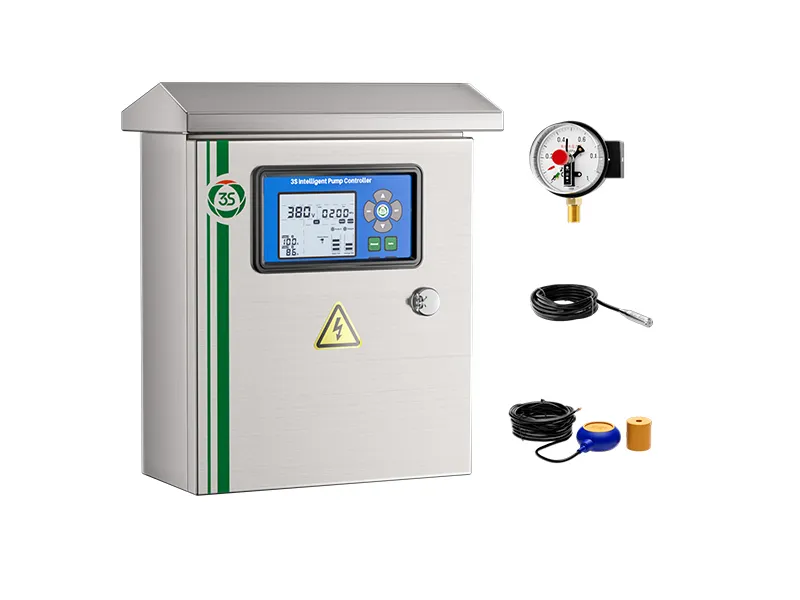
Today, this smart control strategy is becoming a major trend in modern agricultural irrigation systems and is commonly integrated with advanced irrigation pump control panel solutions.
3. Multi-Zone Irrigation Control
For large farms or mixed-crop planting areas, multi-zone irrigation control is extremely important.
The system can independently manage irrigation settings based on:
Crop types
Terrain conditions
Water demand
For example:
Vegetable areas may require short and frequent irrigation
Fruit tree zones may need deep irrigation with lower frequency
This approach improves irrigation efficiency while reducing water waste.
In addition to automation, energy efficiency is another key focus in agricultural irrigation systems.
Off-Peak Electricity Irrigation Strategy
By operating irrigation systems during off-peak electricity hours, such as between 2:00 AM and 6:00 AM, farms can significantly reduce electricity costs.
For large-scale agricultural projects, the long-term savings can be substantial.
Variable Frequency Constant Pressure Irrigation Systems
Variable frequency constant pressure systems automatically adjust pump speed to maintain stable pipeline pressure.
Compared with traditional fixed-speed pumps, the advantages include:
15%-20% energy savings
Reduced risk of pipe bursts
Lower mechanical wear
Improved system stability
As a result, variable frequency systems combined with intelligent irrigation pump control panel technology are now widely used in smart agriculture and modern irrigation projects.
In modern agriculture, irrigation is no longer just about supplying water. It has become a complete solution for improving crop yield, conserving water, and reducing operating costs.
An effective irrigation solution should include:
The right irrigation method based on crop requirements
Intelligent automated irrigation strategies
Energy-saving optimization technologies
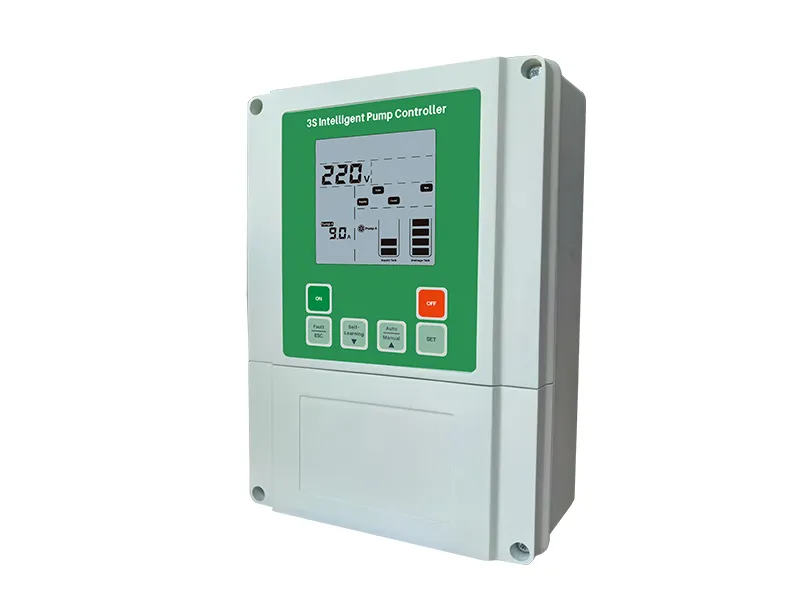
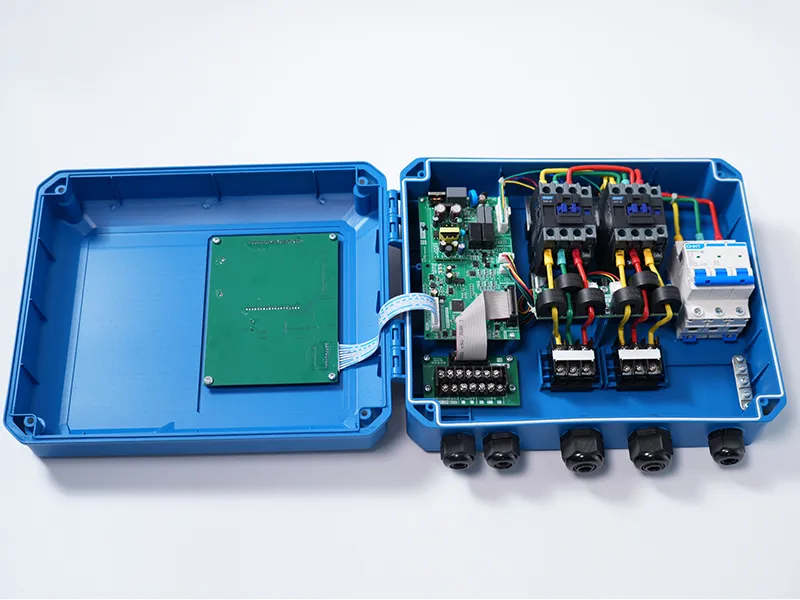
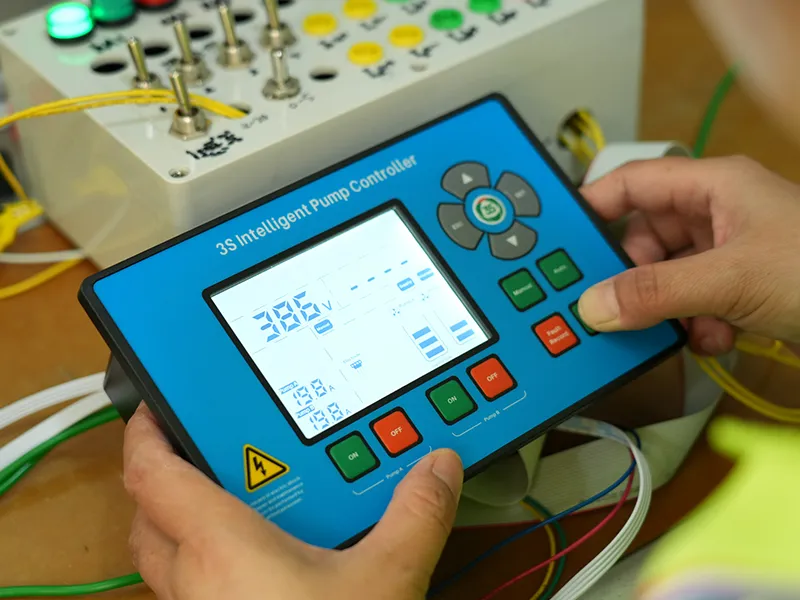
By combining smart automation, precision irrigation, and efficient energy management, farmers can build a more productive, reliable, and sustainable agricultural irrigation system with the support of advanced irrigation pump control panel technology.
 English
 Español
 русский язык
 Français
 اللغة العربية