Unmanned Pump Control, Choose 3S


 Language
Language
Shanghai 3S Global Company Limited

In industrial water pump systems, troubleshooting has long been one of the biggest challenges for engineers and maintenance teams.
Especially in traditional control systems, once equipment fails, technicians often have no choice but to inspect everything manually — wiring, voltage, current, contactors, sensors, and protection devices. The process is time-consuming, inefficient, and highly dependent on experience.
In many cases, a single issue may take hours or even days to fully identify. Yet an experienced engineer can often locate the root cause in just a few minutes.
That is not magic. It comes from years of field experience, strong circuit analysis skills, and the ability to diagnose faults systematically.
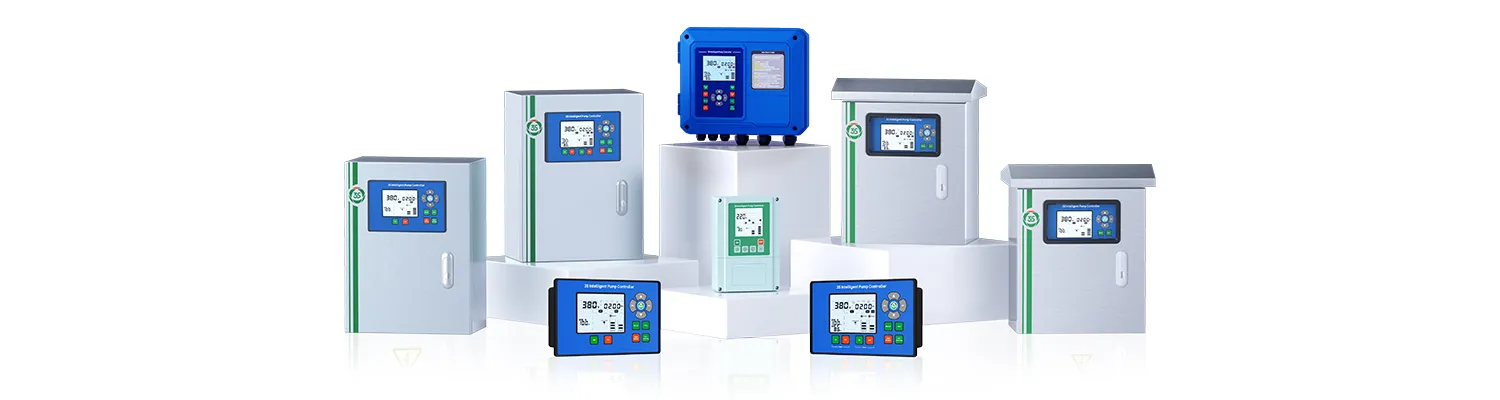
Today, the 3S Unmanned digital pump controller is transforming this expert-level troubleshooting logic into a smarter, more intuitive, and highly efficient digital management experience.
For many industrial sites, pump system failures are often complex and interconnected. Common challenges include:
Complicated fault causes that affect multiple components
Time-consuming manual inspection processes
Lack of real-time alarms and operational feedback
Symptoms that do not directly reveal the real problem
Difficulty for new technicians to diagnose issues quickly
Typical problems may include:
Frequent pump start-stop cycles
Motor overload trips
Phase loss or unstable voltage
Incorrect water level signals
Pipeline pressure abnormalities
Unmanned remote pumping stations
Traditional controllers usually provide only basic alarm lights or vague warning signals. As a result, technicians are forced to rely on experience and trial-and-error troubleshooting.
This not only increases downtime, but can also lead to more serious equipment damage.
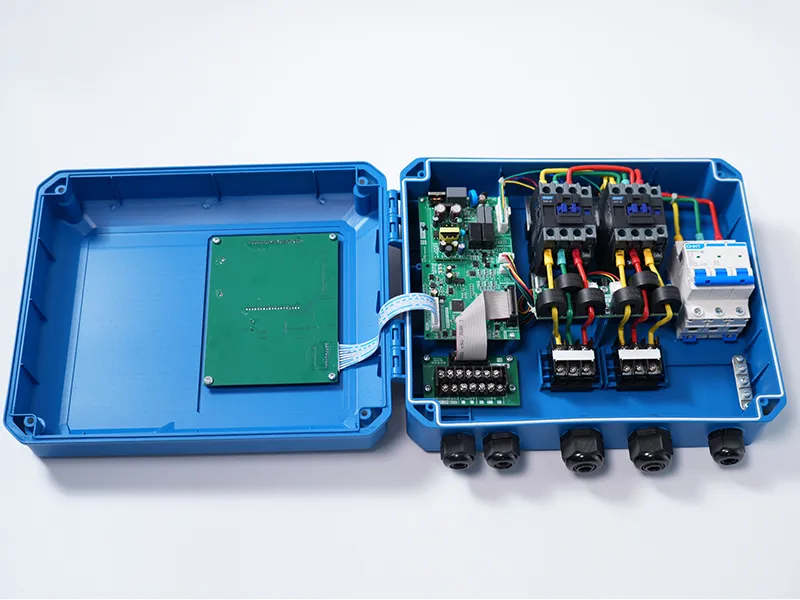
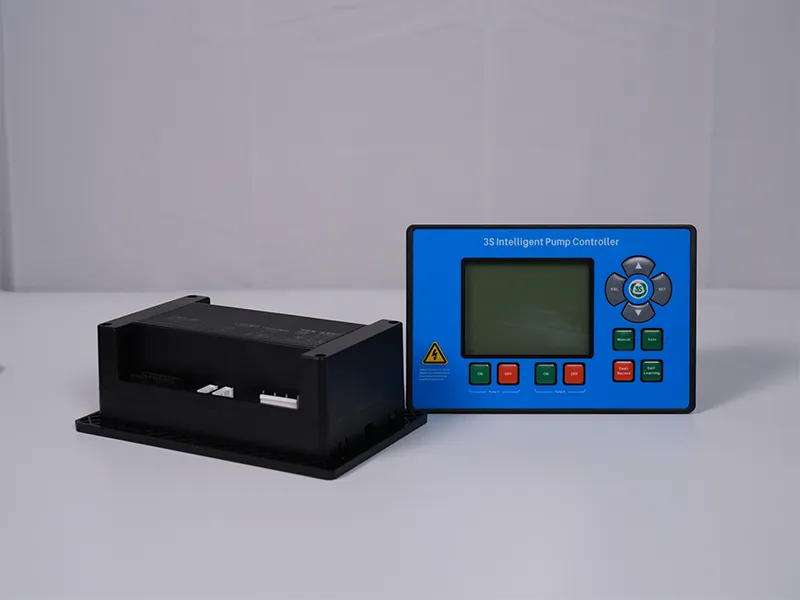
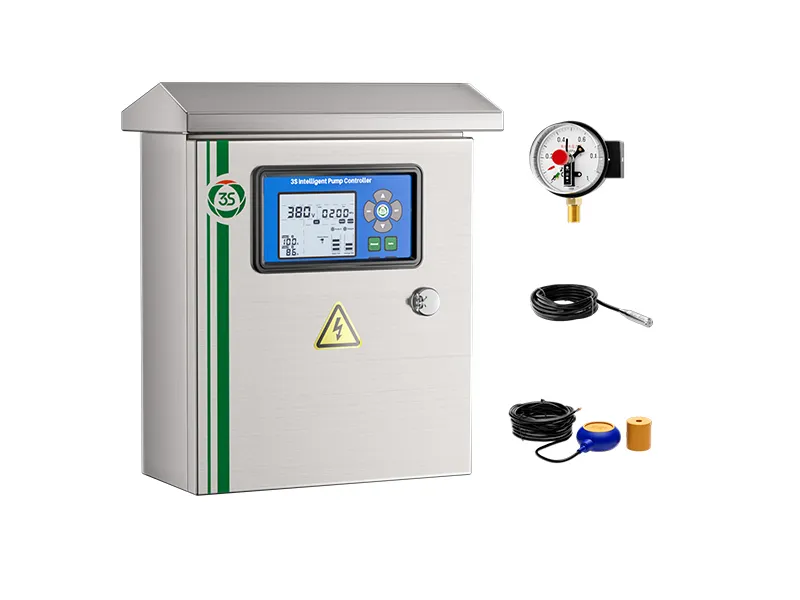
The 3S Unmanned digital pump controller uses intelligent system design to convert complex fault information into clear visual data and actionable alerts, helping users identify problems faster and more accurately.
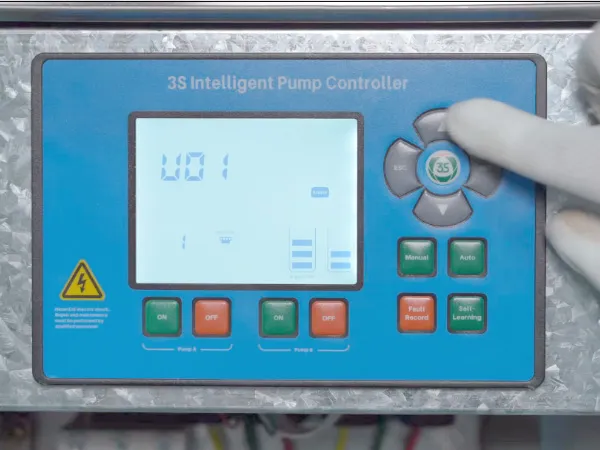
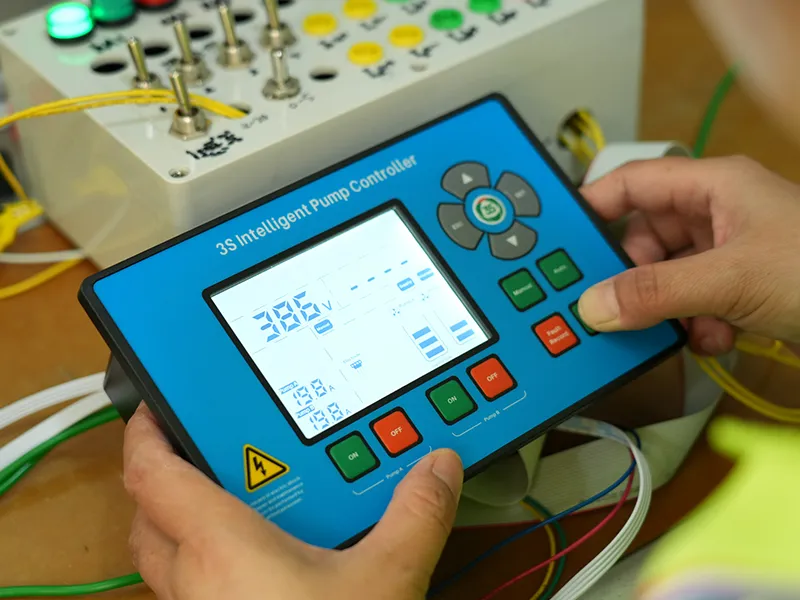
Real-Time Fault Code Display
When abnormal conditions occur, the controller automatically displays corresponding fault codes and operating status information.
Instead of checking components one by one, engineers can instantly understand:
Current fault type
Source of the abnormality
Triggered protection mechanism
Real-time equipment status
This significantly reduces troubleshooting time and improves maintenance efficiency.
With the 3S Unmanned digital pump controller, fault diagnosis is no longer based on guesswork — the problem becomes immediately visible.
Beyond fault visualization, the controller also integrates multiple intelligent protection functions, including: Over-voltage protection, Under-voltage protection, Over-current protection, Dry-run protection,Water level protection, Motor overload protection, etc.
When abnormal operating conditions are detected, the system automatically activates protective logic to prevent further damage.
Compared with conventional control methods, the 3S Unmanned digital pump controller helps reduce equipment wear, minimize maintenance costs, and extend the service life of both pumps and motors.
In many industrial projects, the biggest challenge is not the equipment itself, but the varying technical skill levels of operators and maintenance personnel.
The 3S Unmanned digital pump controller simplifies operation through clearer interfaces, guided debugging processes, and intuitive system prompts.
Even first-time users can quickly complete tasks such as:
Parameter configuration
System commissioning
Fault identification
Operational recovery
For engineering companies, system integrators, and agricultural irrigation projects, this means:
Lower training costs
Fewer human errors
Faster project delivery
Higher maintenance efficiency
As industrial automation and unmanned pump station management continue to expand, traditional maintenance methods that rely heavily on human experience are gradually becoming outdated.
Smart pump control systems are becoming increasingly valuable in applications such as:
Agricultural irrigation
Deep well water supply
Water treatment systems
Industrial circulation systems
Municipal water supply
Remote pump station management
Today, businesses are focusing more on:
Reducing system downtime
Lowering maintenance costs
Enabling remote management
Improving operational stability
Intelligent fault diagnosis has become one of the key technologies driving higher efficiency across modern pumping systems.
For traditional pump station management, troubleshooting often means repeated testing, uncertain judgments, and long periods of downtime. The 3S Unmanned digital pump controller changes that by combining intelligent fault visualization with advanced protection mechanisms, making complex problems easier to identify and resolve. Even without years of experience, users can perform professional-level diagnostics quickly and efficiently. From “guessing the problem” to “precise fault positioning,” the 3S pump controller is redefining how modern pump systems are managed. If you are looking for a smarter, more reliable, and more efficient pump control solution, 3S pump control technology is worth serious consideration.
 English
 Español
 русский язык
 Français
 اللغة العربية