Unmanned Pump Control, Choose 3S


 Language
Language
Shanghai 3S Global Company Limited

In water pump systems, DOL (Direct-On-Line) starting and VFD (Variable Frequency Drive) control are two common methods of motor control.
A common question when selecting a control method is: Is VFD always better than DOL?
Not necessarily. Both methods have their own suitable applications. What really matters is choosing the right solution based on the pump's operating conditions, flow requirements, and control needs.
Simply put:
Therefore, the key difference between the two is: DOL is suitable for relatively fixed operating conditions, while VFD is suitable for applications that require variable speed control.
If a system maintains relatively stable flow and pressure over a long period, DOL can often meet the basic control requirements.
If flow or pressure frequently changes and the pump speed needs to be adjusted according to actual demand, VFD can offer greater flexibility.
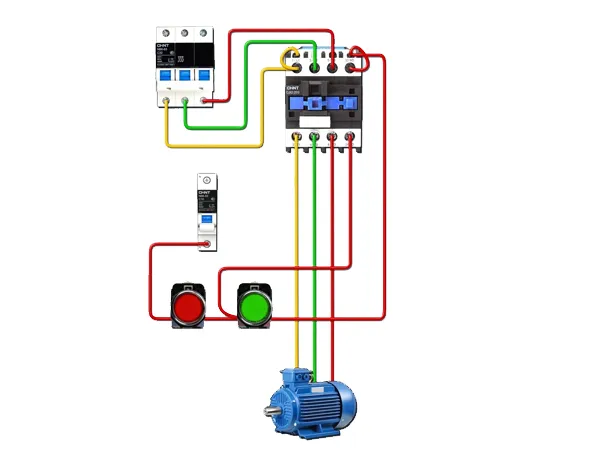
The main advantages of DOL are simplicity and direct control.
It is suitable for:
l Fixed-flow water supply systems
l Pumps operating under relatively stable conditions
l Systems that mainly require automatic start/stop control
l Applications that do not require continuous pump speed adjustment
For example, a drainage system may only need to start and stop the pump according to water level, without changing the pump speed.
In this case, DOL can be a simple and effective solution.
If the system does not require variable speed control, there may be no need to add the extra control complexity of a VFD.
The main advantage of a VFD is its ability to adjust pump speed.
When system demand changes, the VFD can adjust pump speed based on feedback signals such as pressure or flow.
For example:
l Higher water demand → Increase pump speed
l Lower water demand → Decrease pump speed
This makes VFD control particularly suitable for:
l Variable-flow water supply
l Constant-pressure water supply
l Systems with frequently changing pressure requirements
l Applications that require pump speed to be adjusted according to actual demand
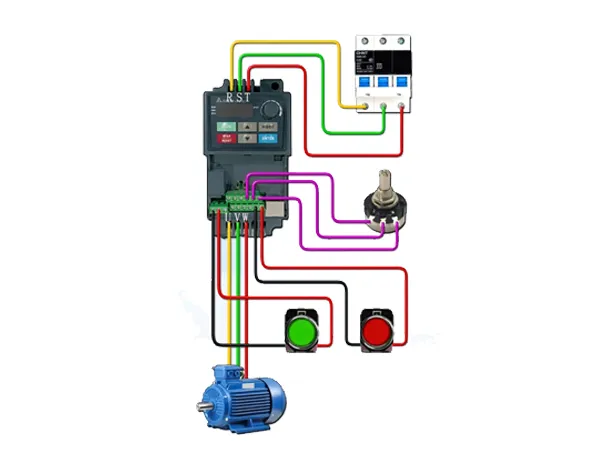
For centrifugal pumps, reducing speed under appropriate variable-demand conditions can also provide energy-saving potential.
However, it is important to note:
Using a VFD does not automatically mean the system will save energy.
The actual result still depends on the pump type, system operating conditions, and control strategy.
Before choosing a control method, consider the following:
Does the system require a fixed flow rate?
If the system operates under relatively stable conditions for a long time, DOL may be sufficient.
Do flow and pressure change frequently?
If pump speed needs to be adjusted according to actual demand, VFD may be worth considering.
Does the system require constant-pressure control?
If the system needs to automatically adjust pump speed based on pressure feedback, VFD is generally more suitable.
Does the system only require simple automatic start/stop control?
If the control requirements are relatively simple, DOL can provide a direct and straightforward control solution.
Therefore, it is not accurate to simply think:
A more accurate way to look at it is: Different operating conditions require different control methods.
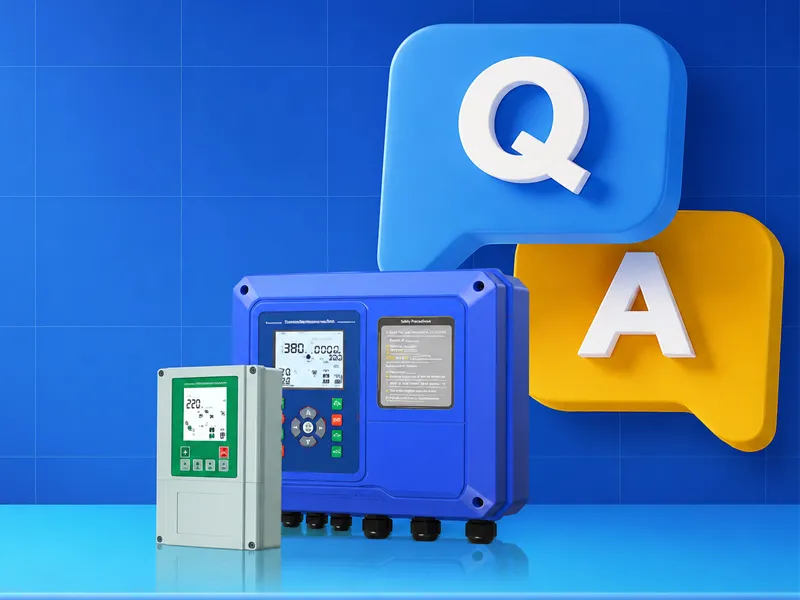
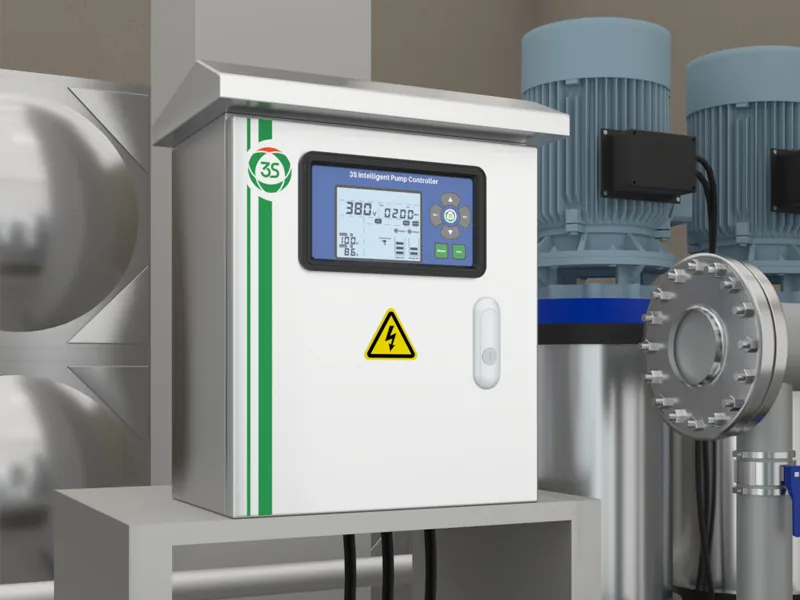
The 3S Pump Controller uses DOL starting and is mainly designed for pump systems that require simple and reliable automatic start/stop control.
Through signals such as water level, pressure, and float switches, the 3S Smart Pump Controller can automatically start and stop the pump according to system requirements while providing corresponding fault protection functions.
Typical control logic includes: Level/Pressure Signal → Automatic Pump Start → Normal Operation → Fault Detection → Protective Shutdown
For pump applications that operate at a fixed speed for extended periods and mainly require automatic start/stop control and equipment protection, DOL smart pump controller can provide a direct and practical solution.
Therefore, if your system does not require continuous pump speed adjustment, choosing DOL does not mean choosing a “less advanced” solution. Instead, it means selecting a control method that matches the actual operating conditions.

 English
 Español
 русский язык
 Français
 اللغة العربية