Unmanned Pump Control, Choose 3S


 Language
Language
Shanghai 3S Global Company Limited

When contractors work across agricultural irrigation, building water supply, and wastewater treatment projects, they face a common challenge: every project has different control requirements. What they need is not a larger inventory of controllers, but a flexible solution that can adapt to different applications.
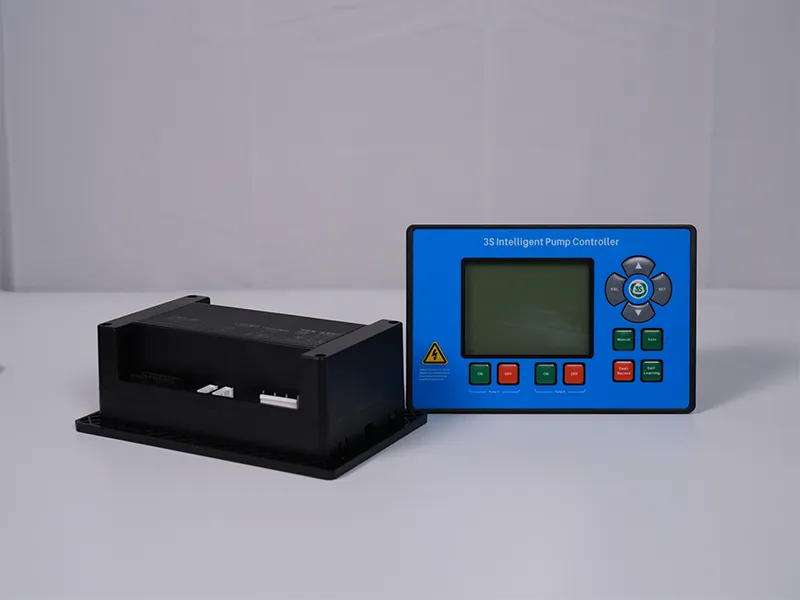
Recently, another shipment of 3S Connected Pump Controller units was completed and delivered to Indonesia.
The order came from one of our long-term customers—an Indonesian engineering contractor specializing in a wide range of water-related projects, including irrigation systems, commercial water supply, and wastewater treatment. Because every project differs in site conditions, pump configurations, and control requirements, selecting the right pump controller has become an increasingly important part of project execution.
For contractors like him, the real challenge is not the pump itself, but finding a control solution that can handle changing project requirements without increasing complexity.
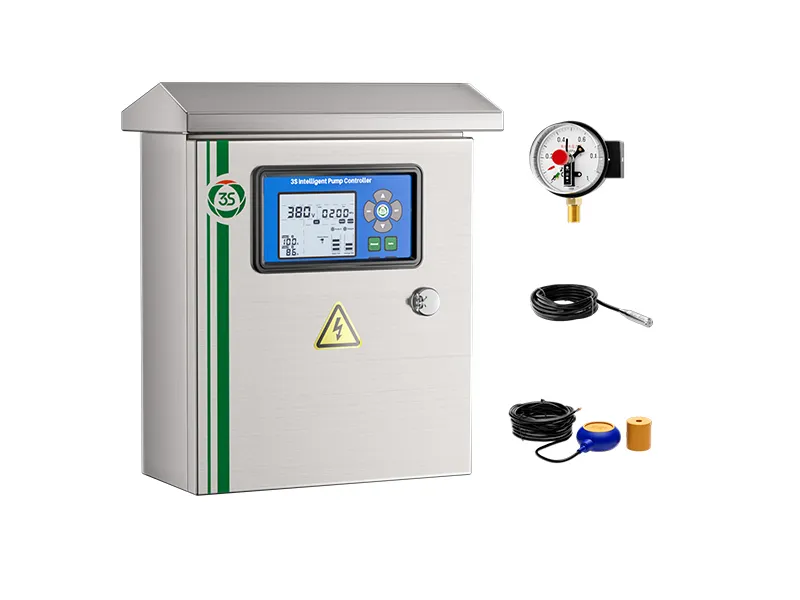
In real-world pumping applications, signal devices vary significantly from one project to another.
For example:
Although these differences may seem minor, they directly affect controller selection.
Before starting each project, contractors must confirm which signal devices are installed on site and ensure that the selected controller is fully compatible. If project specifications change during implementation, they may need to replace the controller or redesign part of the control system, resulting in additional costs and delays.
As the number of projects grows, these technical differences gradually become operational challenges involving inventory management, engineering efficiency, and project delivery.
Before working with 3S, this Indonesian contractor faced a common industry problem.
Many conventional pump controllers support only one or two types of signal inputs. As a result, contractors often need to stock multiple controller models to match different project requirements.
This leads to several practical challenges:
For engineering contractors, managing multiple controller models often becomes a bigger burden than the hardware itself.
This is where the 3S Connected Pump Controller provides a practical advantage by reducing complexity rather than adding features.
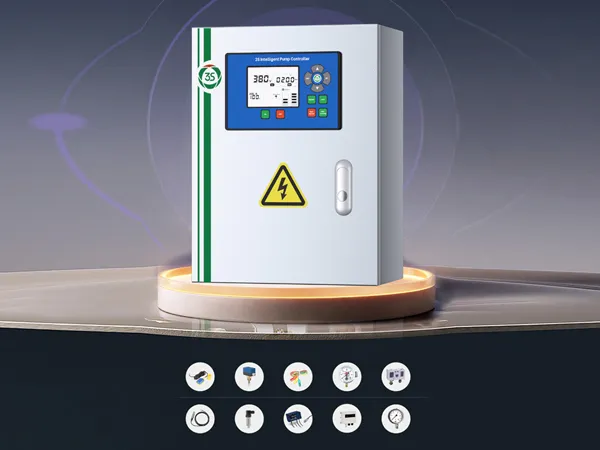
To address the diverse control requirements found in modern pumping systems, the 3S Connected Pump Controller supports compatibility with 10 commonly used pump control signal devices, including: Float switches, Pressure switches, Pressure transmitters, 4–20 mA analog sensors and other widely used control signal devices.
With a single controller capable of supporting multiple signal types, contractors no longer need to prepare different controller models for different projects.
Instead of simply offering more functions, this compatibility gives engineering teams greater flexibility throughout project planning, installation, and commissioning.
After adopting a unified control platform, our Indonesian customer has significantly simplified day-to-day project management.
The benefits include:
For contractors managing multiple water projects simultaneously, these improvements translate into faster project delivery and more efficient resource allocation.
Rather than serving only as a control device, the 3S Connected Pump Controller has become an important part of helping engineering teams standardize operations and improve project execution.
At 3S, every shipment represents more than delivering pump controllers.
Behind every order is a customer managing real engineering challenges, balancing project schedules, controlling inventory costs, and pursuing new business opportunities.
Our goal is not simply to supply a controller, but to provide a complete pump control solution that helps customers improve operational efficiency, simplify project management, and strengthen their competitiveness in local markets.
As pumping applications continue to evolve worldwide, the 3S Connected Pump Controller will continue to support contractors with a more flexible, reliable, and intelligent approach to pump control—helping them deliver successful projects with greater confidence.
 English
 Español
 русский язык
 Français
 اللغة العربية