Unmanned Pump Control, Choose 3S


 Language
Language
Shanghai 3S Global Company Limited

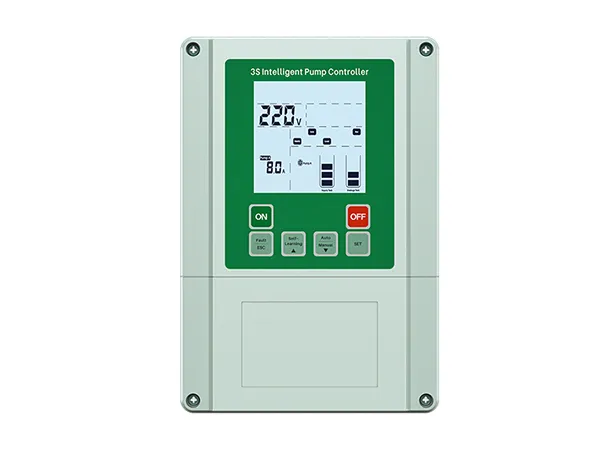
Single-Phase Pump Controller: A Cost-Effective Choice for Light-Duty Scenarios
Designed to be compatible with 220V civil power supplies, single-phase controllers feature a compact structure and low cost, making them ideal for small-power water pumps. Their key advantages include easy installation without the need for specialized industrial power supply configurations, making them highly suitable for light-duty scenarios such as domestic water pressure boosting, water heater supply, small garden irrigation, and villa swimming pool water circulation. These scenarios have modest power requirements for water pumps and flexible single-operation durations, and the simple design of single-phase Smart Pump Control Starter can fully meet the stable control needs.
3 Phase Pump Control Panel: A Reliable Guarantee for High-Power Scenarios
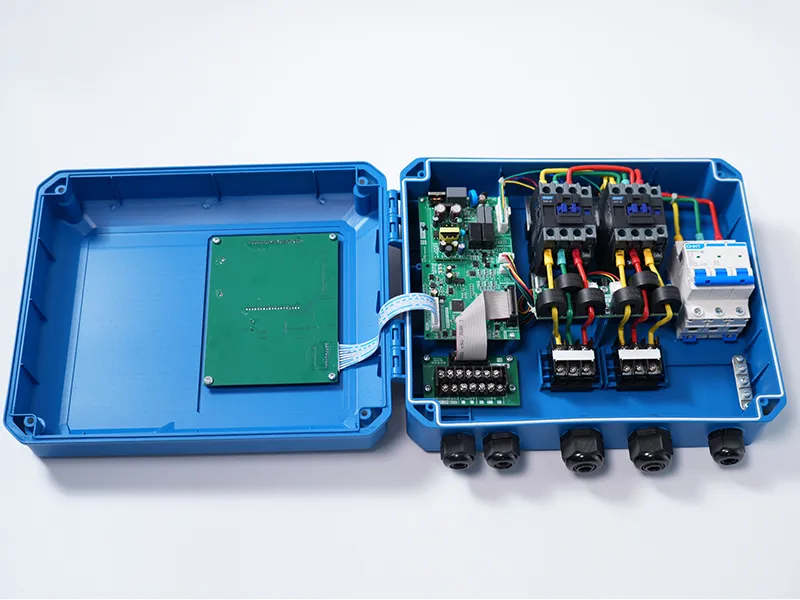
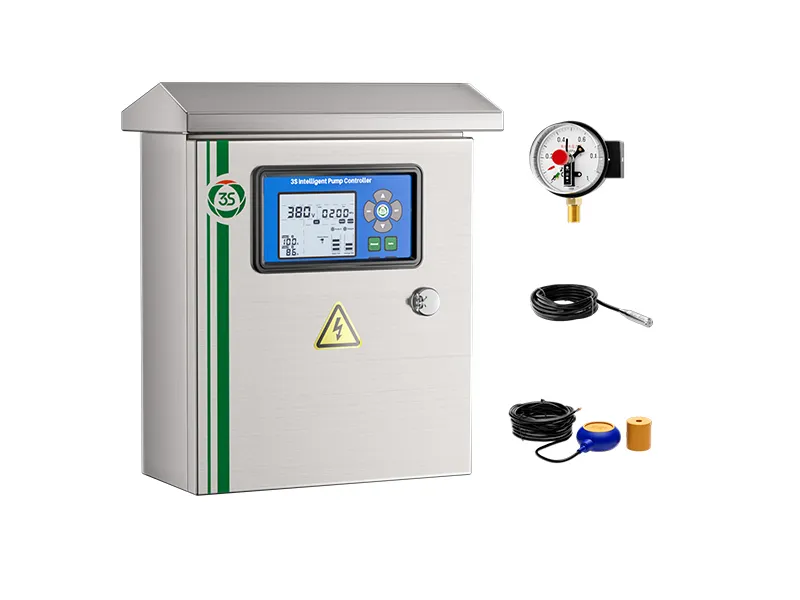
Compared with single-phase controllers, 3 Phase Pump Control Panel is compatible with 380V industrial-grade power supplies, boasting stronger power-bearing capacity and power supply stability, thus serving as the "perfect partner" for high-power water pumps. In scenarios like industrial production (e.g., factory cooling water circulation, production line water supply), large-scale agricultural irrigation (e.g., farmland drip irrigation systems, large reservoir water supply), and municipal facilities (e.g., urban sewage treatment, waterworks booster stations), water pumps often need to operate continuously for long periods with high power demands. 3 Phase Pump Control Panel ensures stable three-phase power supply, avoiding pump wear caused by voltage fluctuations and guaranteeing the continuous and efficient operation of the system.
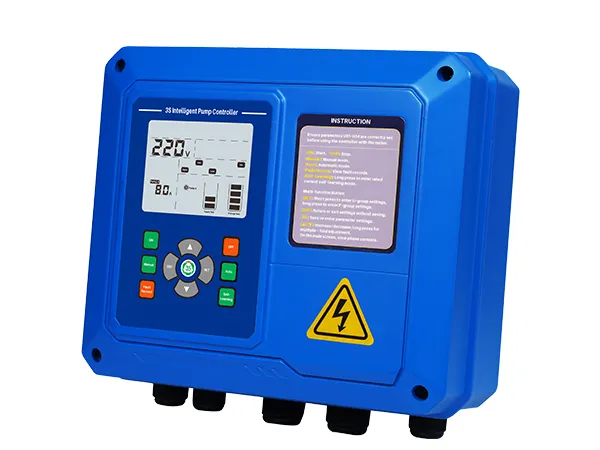
With the development of automation technology, pump controllers have evolved from "simple start-stop" functions to "intelligent regulation" capabilities, and different control methods correspond to varying precision requirements of application scenarios.
Traditional Pump Controller: A Practical Option for Basic Scenarios
Centered on mechanical switches or knobs for control, traditional controllers focus on the basic start-stop functions of water pumps. They feature a simple structure, low failure rate, and convenient maintenance. These controllers do not require complex parameter settings and are easy to operate, making them suitable for basic scenarios with low control precision requirements, such as small-scale farm flood irrigation systems, simple reservoir water replenishment devices, and basic water supply systems in small workshops. In these scenarios, the pump operation logic is straightforward, and the "on-demand start-stop" function of traditional controllers can fully meet the core needs.
Smart Pump Control Starter: A High-Efficiency Tool for High-Precision Scenarios
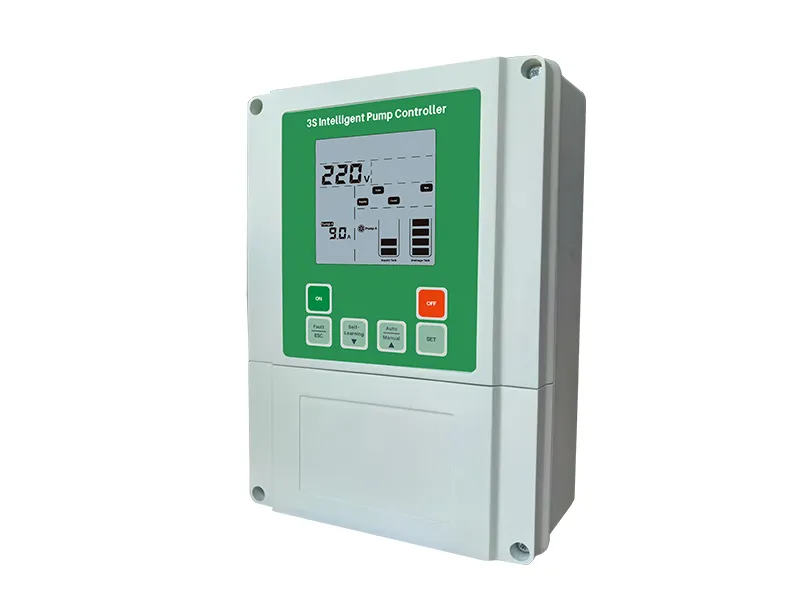
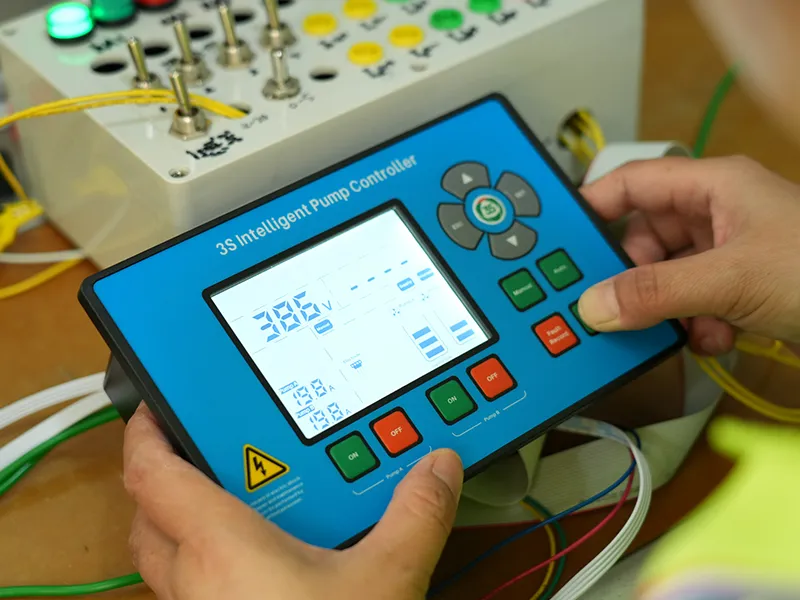
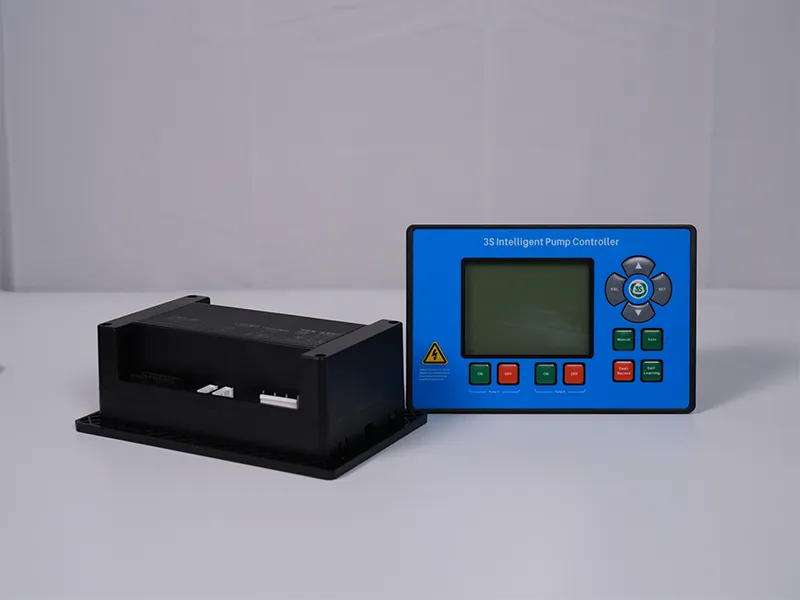
The smart pump controller is the core product of technological upgrading, and its biggest advantage lies in the integration of a complete signal feedback and automatic regulation mechanism. Equipped with various sensors, Smart Pump Control Starter can real-time monitor key operating parameters of water pumps, such as temperature, pressure, and flow rate, and automatically adjust the operating status according to preset thresholds-it will automatically start water replenishment when the pressure is too low and trigger protective shutdown when the temperature is excessively high, achieving "unmanned" intelligent management. This high-precision control capability makes Smart Pump Control Starter the preferred choice for high-end scenarios including industrial production, municipal water supply, and secondary pressure boosting in high-rise buildings, as it can not only ensure water supply stability but also reduce unnecessary energy consumption through precise regulation.
In summary, there is no "one-size-fits-all optimal solution" for pump controller selection-only the "most suitable" one. For light-duty, small-power scenarios, single-phase + traditional controllers offer higher cost performance; for high-power, continuous-operation scenarios, 3 Phase Pump Control Panel is the basic guarantee; and for high-end scenarios requiring high precision and automation, Smart Pump Control Starter can exert its maximum value.
If you are still unsure about which type of controller to choose for your scenario, please leave your requirements (such as scenario type, pump power, etc.), and our technical team will provide you with customized recommendations.
 English
 Español
 русский язык
 Français
 اللغة العربية