Unmanned Pump Control, Choose 3S


 Language
Language
Shanghai 3S Global Company Limited

The problems 3S solves for customers in the pump control industry fall into two broad categories. The first involves the technical pain points that end users and engineering teams encounter during equipment operation — such as frequent pump cycling, three-phase electrical faults causing motor burnout, shortened control cabinet lifespan in harsh environments, and unstable water supply in high-rise buildings. The second involves the business pain points that brand owners and distributors face in their market operations — such as long product customization cycles, inconsistent quality, and a lack of local market support. Backed by intelligent monitoring technology, a six-step quality control system, and end-to-end ODM service capabilities, 3S provides corresponding products and partnership solutions for each of these problems.
A pump control system may look like a supporting component, but it directly determines the stability and operating cost of an entire water supply, drainage, or industrial water system. Below are some of the most common issues in the industry — and the ones 3S focuses on solving:
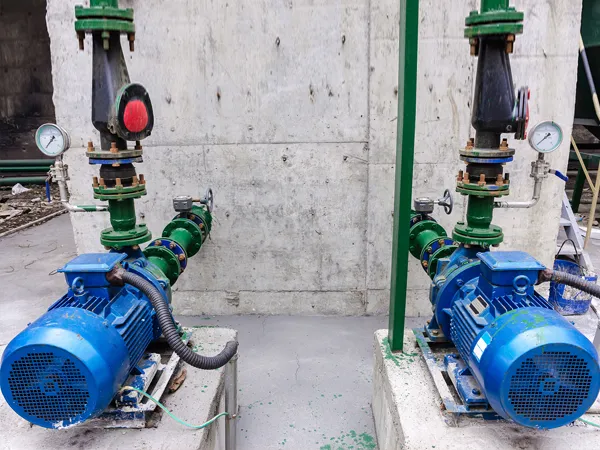
1. Frequent Pump Cycling and Unexpected Shutdowns
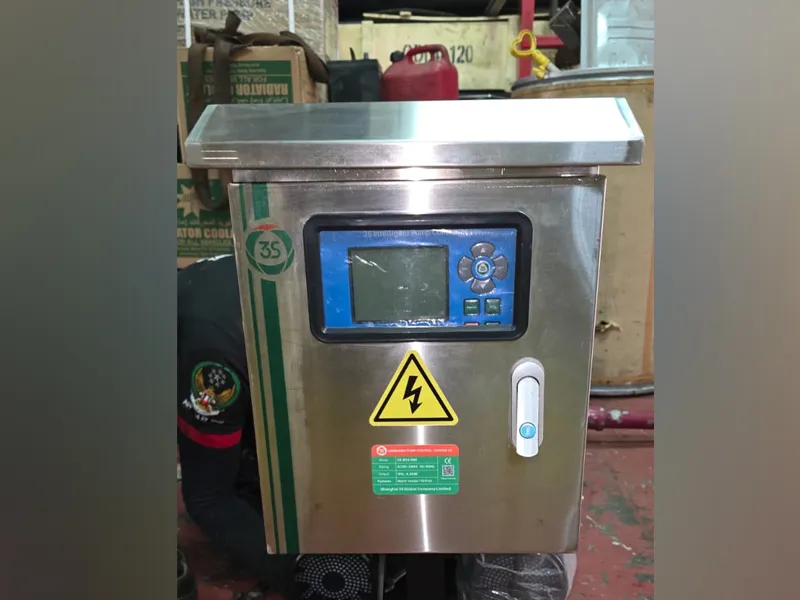
Pump failures are often not caused by the pump itself, but by inaccurate controller data leading to misjudgment, which in turn triggers sudden shutdowns, frequent start-stop cycles, and even equipment burnout. 3S's unmanned intelligent control system uses precise data collection and logic-based judgment to reduce false shutdowns and frequent cycling, improving the overall stability of system operation.
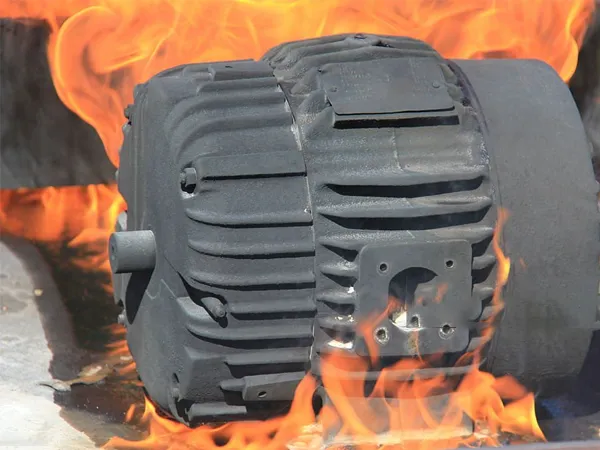
2. Three-Phase Electrical Faults Causing Motor Burnout
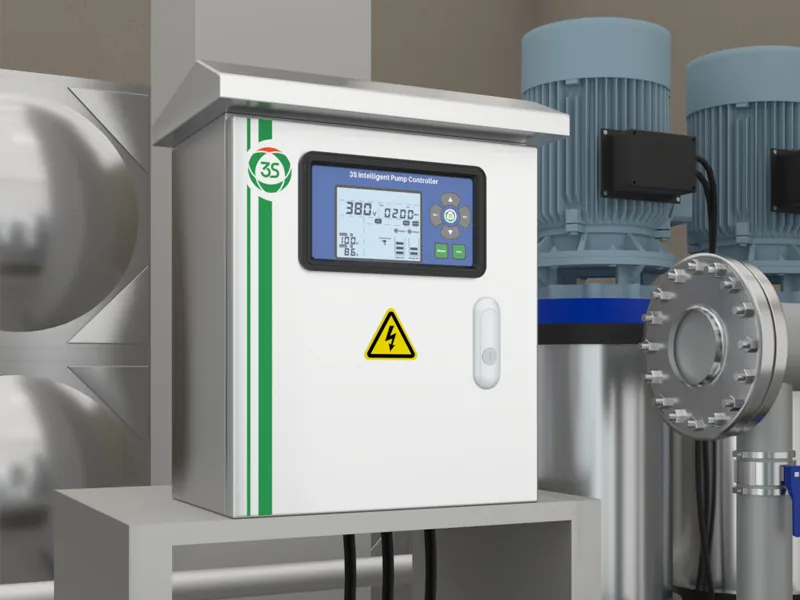
Phase loss and three-phase imbalance are common causes behind industrial pump shutdowns and motor burnout, and they often go undetected until it's too late. 3S's intelligent controllers provide 24/7 fault monitoring, emergency protection, and remote alarm functions, helping industrial pump systems remain stable, efficient, and safe even in demanding environments.
3. Harsh Environments Shortening Equipment Lifespan
In sewage treatment applications, corrosive gases generated in wastewater pits can attack relay contacts and corrode circuit boards, while high humidity can lead to controller short circuits and electrical failures — significantly shortening the lifespan of control cabinets. 3S's intelligent sewage pump controllers are purpose-built for pump stations at sewage treatment plants, sludge return systems, and dewatering processes, improving equipment reliability in harsh environments through integrated automatic control, smart pump rotation, remote monitoring, and multi-level protection.
4. Unstable Water Pressure and High Energy Costs in High-Rise Buildings
High-rise buildings commonly face the dual challenge of unstable water pressure and high energy costs. 3S helps building water supply systems maintain stable pressure while reducing energy consumption through intelligent control, automatic water-level management, and dynamic pressure adaptation.
5. Equipment Issues That Are Hard to Detect Early, Leading to Costly Reactive Maintenance
Traditional controllers are often only able to flag a problem after it has already occurred, with no ability to provide advance warning. 3S's intelligent pump controllers can track core operating parameters such as current, voltage, and pressure in real time. Once a parameter exceeds the preset safe range, an alarm is triggered immediately — shifting maintenance from a reactive, after-the-fact process to a proactive, preventive one, and reducing overall equipment maintenance costs.
6. Poor Equipment Compatibility Making System Integration Difficult
In projects involving pumps from multiple brands and models, insufficient controller compatibility can significantly increase the difficulty and cost of system integration. 3S's highly compatible pump controllers support a wide range of pump types, brands, voltages, and signal standards, simplifying the integration process and reducing overall project costs.
Beyond the end-use side, 3S also focuses on the challenges that brand owners, system integrators, and distributors face in product development and market operations:
ODM services with full support from requirement consultation through mass production and delivery
Product training, marketing materials, sales support, and local market resources for distributors
A complete product matrix covering single-phase/three-phase, simplex/duplex, intelligent controllers, IP55/IP65-rated control boxes, and dedicated controllers (submersible, sewage, booster, and firefighting pumps)
A modern manufacturing base with an annual capacity of over 200,000 units and automated production lines to ensure stable delivery
Business Pain Point
How 3S Addresses It
No dedicated R&D team, making it hard to bring customized products to market quickly
Concerns about inconsistent quality or batch-to-batch variation in contract-manufactured products
Six-step quality control system + 13 factory tests per product + ISO9001 quality management system
Lack of localized marketing and sales support when entering new markets
Lack of differentiated product solutions for different application scenarios
Concerns about insufficient supplier capacity or unpredictable lead times
Since its founding in 2008, 3S has focused on the independent R&D and manufacturing of unmanned pump control systems, with a core team that brings more than 20 years of experience in pump control technology, product development, and application engineering. 3S's products have reached over 100 countries and regions, including Europe, South Africa, the Middle East, and South America, allowing the company to continuously build up practical adaptation experience across different climates, power grid conditions, and operating environments — the foundation of its ability to systematically address the technical and business problems described above.
Q1: Does 3S mainly solve product problems, or does it also cover service problems?
Both. On the product side, 3S addresses equipment stability issues through technical means such as intelligent monitoring, fault protection, and ingress protection design. On the service side, 3S addresses customers' challenges around product customization, quality assurance, and market expansion through its ODM partnership model, quality control system, and distributor support system.
Q2: Is frequent pump cycling always a problem with the pump itself?
Not necessarily. In many cases, the root cause of frequent cycling or unexpected shutdowns is inaccurate data collection or improper parameter settings in the controller, rather than a fault in the pump itself. Replacing or upgrading to an intelligent control system with precise data collection can typically improve this significantly.
Q3: If my project involves a particularly challenging environment (such as high corrosion or high humidity), can 3S provide a tailored solution?
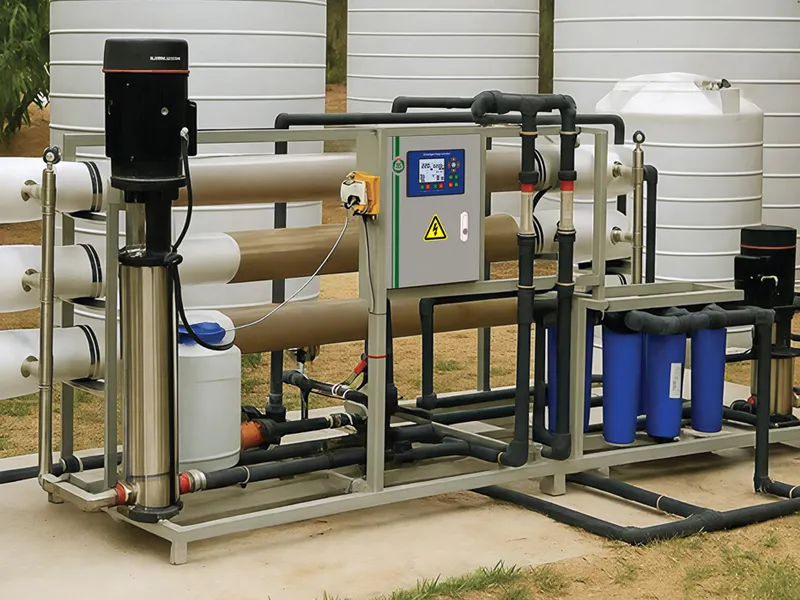
Yes. 3S offers products with different ingress protection ratings, including IP55 and IP65, and has developed dedicated controllers and solutions for specialized scenarios such as sewage treatment and seawater desalination, allowing for adapted designs based on specific environmental conditions.
Q4: As a distributor, what support can I get beyond the products themselves?
Distributors receive product training, marketing materials, sales support, and local market resources, helping them develop new customers, serve existing ones more effectively, and build competitiveness in their local markets.
Q5: How can I confirm that 3S's product quality is consistent and reliable?
3S has established a six-step quality control system covering everything from incoming material inspection to 100% functional testing. Every product undergoes 13 factory tests, and the company strictly follows the ISO9001 quality management system, ensuring that every step from raw materials to finished product remains under control.
Whether it's the equipment stability issues faced by end users or the product customization and market expansion challenges faced by brand owners and distributors, 3S is committed to providing targeted solutions through its technical capabilities and service system. If you're facing a technical challenge related to pump control, or looking for a business partnership opportunity, feel free to reach out to the 3S team through the official website to find a solution suited to your specific scenario.

 English
 Español
 русский язык
 Français
 اللغة العربية