Unmanned Pump Control, Choose 3S


 Language
Language
Shanghai 3S Global Company Limited

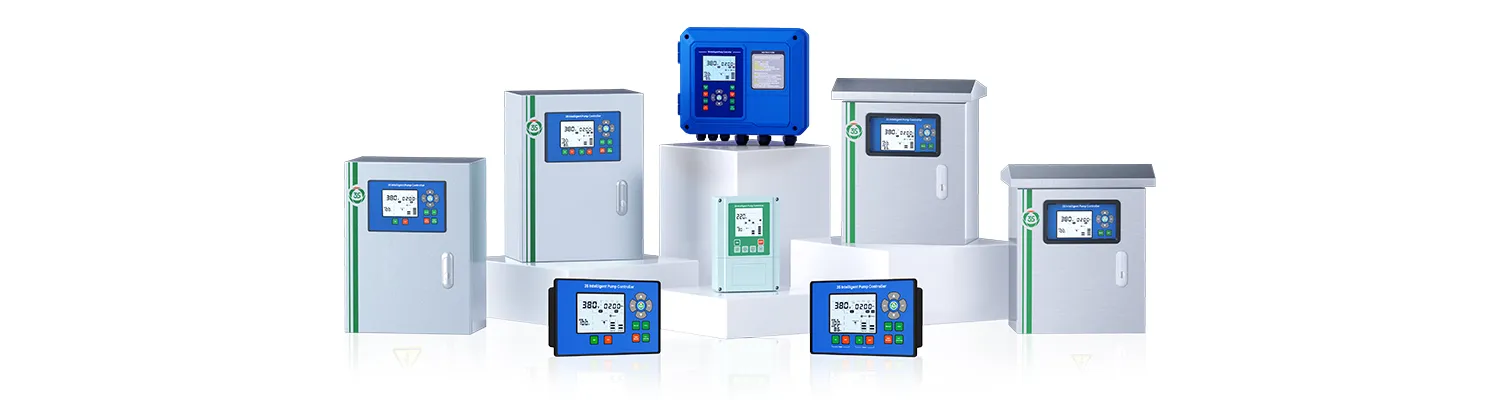
When selecting a pump starting method for industrial water supply, agricultural irrigation, wastewater treatment, or building services, one question comes up time and again:
"If the budget allows, should I always choose a Variable Frequency Drive (VFD)?"
The answer is not necessarily.
While VFDs offer benefits such as variable speed control, soft starting, and potential energy savings, they are not the ideal solution for every pumping application. For many systems operating at a constant flow rate and fixed speed, a DOL (Direct-On-Line) pump controller can provide greater reliability, lower investment costs, and simpler maintenance.
The best solution isn't the most advanced one—it's the one that best matches your application's requirements.
A VFD is an excellent choice when a pump system requires:
For applications such as large municipal water supply systems, HVAC circulation, and industrial process control, a VFD can significantly improve operational flexibility and system efficiency.
However, these conditions do not apply to every project.
In reality, a large number of pump applications operate under stable, fixed conditions, including:
These applications typically do not require continuous speed regulation.
In such cases, a DOL pump controller offers several practical advantages:
For many users, a pump system that operates reliably for years is far more valuable than one with features they rarely need.
Whether a pump is started by a VFD or a DOL pump controller, the long-term reliability of the system depends far more on the pump controller than on the starting method itself.
A professional DOL pump controller should provide much more than basic start/stop control. Essential functions include:
In other words, DOL doesn't mean "basic." Modern DOL pump controllers can deliver intelligent automation, comprehensive protection, and reliable system management—without the added complexity of variable speed control.
This is an important point that is often overlooked during system design.
If your application genuinely requires variable speed control, a VFD is the right choice.
However, if your pump operates under relatively constant conditions, investing in a high-quality DOL pump controller often delivers a better balance of reliability, cost, and long-term performance.
For the majority of small and medium-sized water supply, irrigation, and drainage systems, simplicity, reliability, and durability are often more valuable than advanced speed control features.
VFDs and DOL pump controllers are not competing technologies—they are designed for different applications.
A VFD provides outstanding flexibility for systems that require variable-speed operation and precise process control. A DOL pump controller, on the other hand, remains a proven, reliable, and cost-effective solution for the many pump systems that operate at a constant speed.
Rather than choosing the most complex solution, engineers and system designers should focus on selecting the right solution for the application. For fixed-speed pumping systems, pairing a reliable DOL pump controller with comprehensive protection and intelligent control functions can deliver dependable performance, lower lifecycle costs, and years of trouble-free operation.
 English
 Español
 русский язык
 Français
 اللغة العربية