Unmanned Pump Control, Choose 3S


 Language
Language
Shanghai 3S Global Company Limited

In industrial pumping systems, stable equipment operation is critical not only for production efficiency, but also for maintenance costs, equipment lifespan, and overall system safety.
However, in many industrial environments, three-phase electrical faults remain one of the leading causes of unexpected pump shutdowns, motor burnout, and system failures. Among them, phase loss and three-phase unbalance are especially common. These issues are often difficult to detect in the early stages, yet they can quickly lead to severe equipment damage if left unaddressed.
This article explains how three-phase faults impact industrial pump systems and how intelligent control technology helps achieve proactive protection through a modern 3 phase water level controller.
Phase loss occurs when one phase of a three-phase power supply suddenly disconnects or experiences abnormal voltage. Common causes include aging cables, loose wiring, damaged contactors, blown fuses, and unstable utility power supply conditions.
When phase loss happens during pump operation, motor current can rise rapidly, causing excessive heat, reduced torque, lower pump efficiency, and in severe cases, complete motor burnout.
One of the biggest dangers is that some motors may continue operating even after phase loss occurs. Because the issue is not always immediately visible, operators may fail to notice the fault in time, resulting in more serious equipment damage and costly downtime.
To reduce these risks, many industrial facilities are now upgrading their automation systems with a reliable 3 phase water level controller that can respond instantly to electrical abnormalities.
Compared with phase loss, three-phase unbalance is often more difficult to detect. It occurs when voltage, current, or phase angles become uneven across the three phases.
Even a small voltage imbalance can lead to continuous motor overheating, increased energy consumption, shortened bearing life, and higher vibration levels.
Over time, these hidden electrical problems accumulate and eventually cause unexpected shutdowns, motor failures, and reduced system efficiency. For unattended pump stations, agricultural irrigation systems, industrial circulation systems, and remote water supply projects, this type of hidden fault can significantly increase maintenance costs and operational risks.
This is why more industries are upgrading to intelligent monitoring systems equipped with a 3 phase water level controller capable of detecting abnormal electrical conditions in real time.
Many conventional control panels still rely on thermal relays, standard circuit breakers, and manual inspections for equipment protection.
While these methods provide basic protection, they usually respond only after a fault has already occurred. Real-time monitoring and predictive protection are often missing.
In addition, traditional systems typically lack remote alarms, automatic response functions, and intelligent protection logic. In unattended sites, problems may remain unnoticed for extended periods, increasing the risk of severe equipment failure.
Frequent manual inspections also raise labor costs and make it difficult to meet the growing demands of modern industrial automation, smart water management, and energy-efficient pump operations.
Modern facilities increasingly require a smart 3 phase water level controller that combines fault monitoring, automation, and remote management into a single intelligent solution.
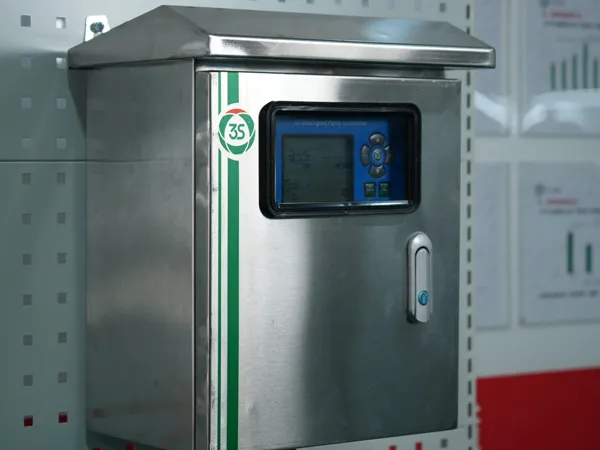
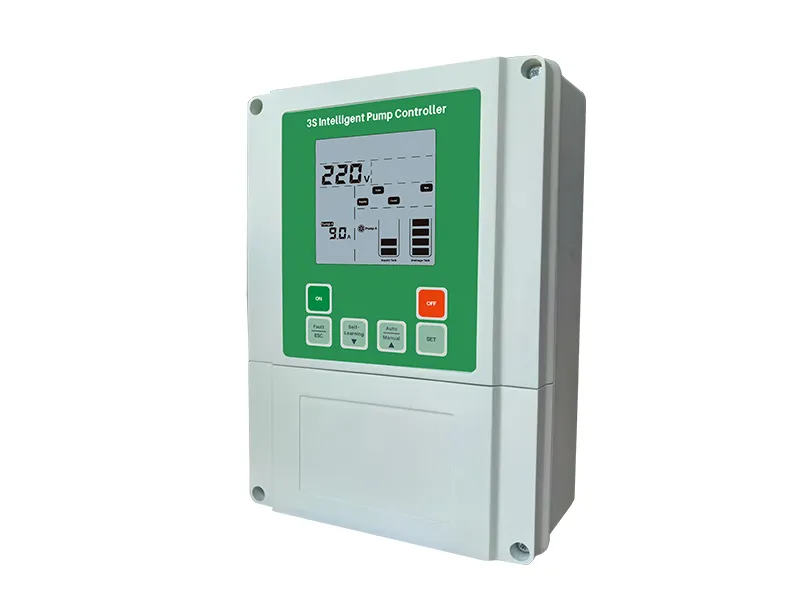
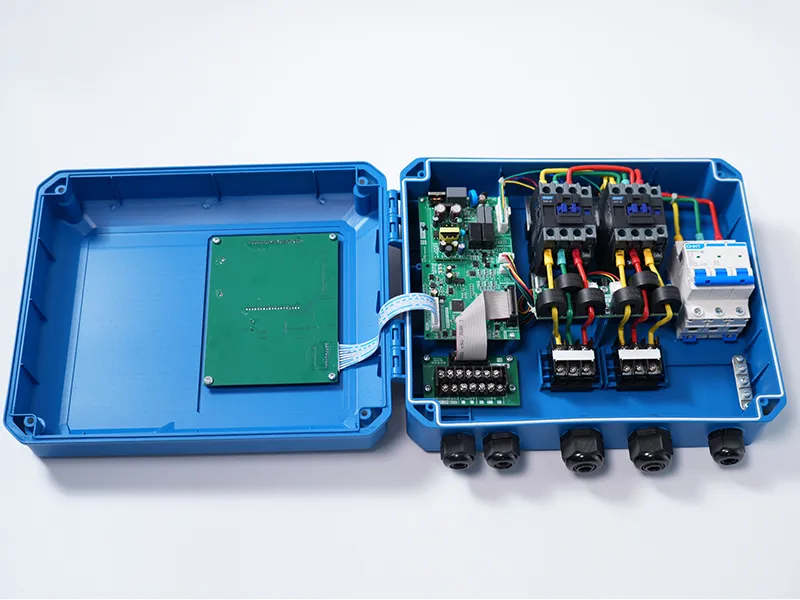
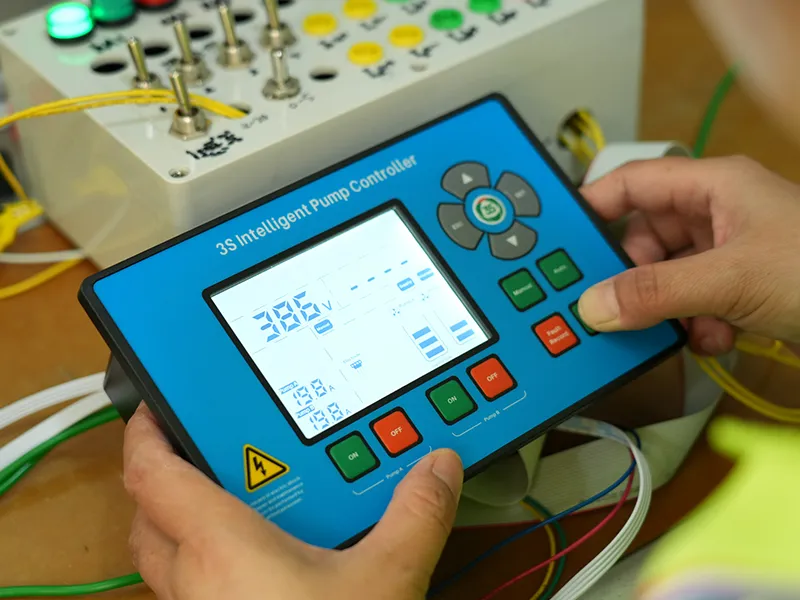
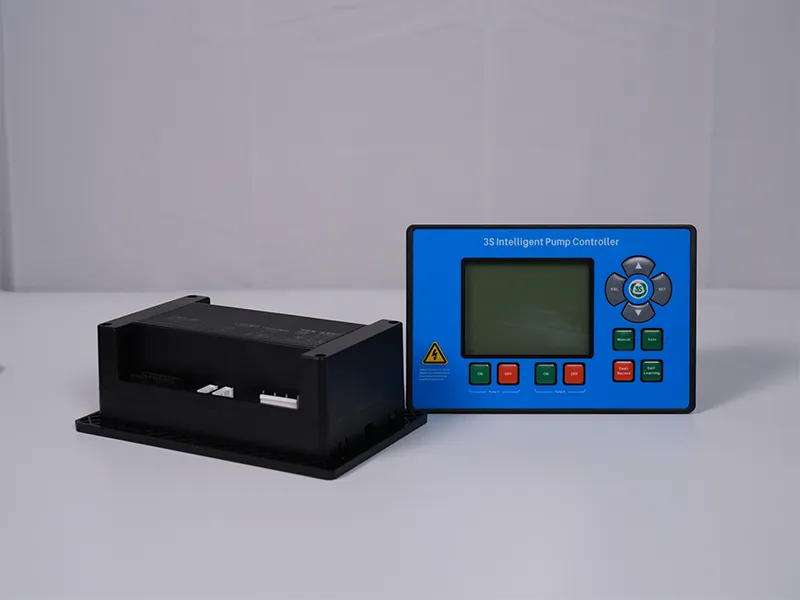
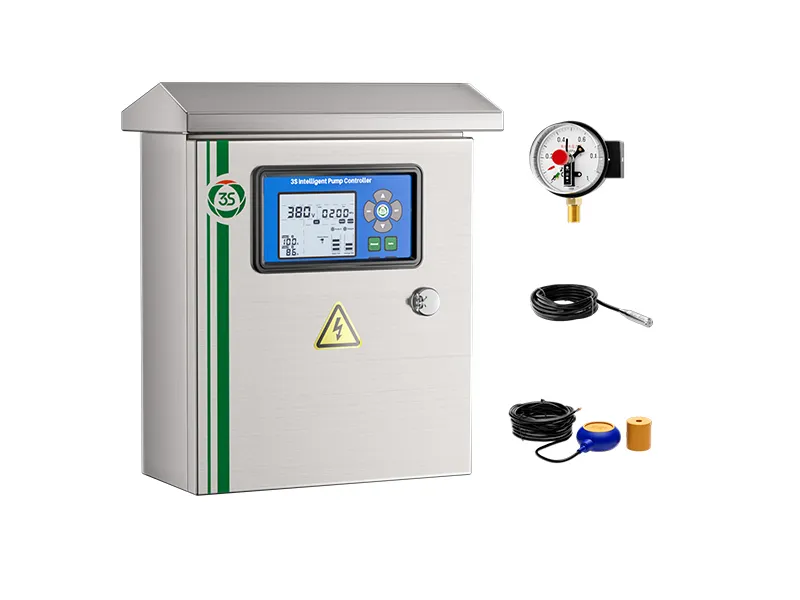
To address the growing risks associated with industrial pump systems, 3S intelligent controllers provide a more advanced and complete protection solution.
The system continuously monitors critical operating conditions such as:
Phase loss
Voltage abnormalities
Three-phase unbalance
Overcurrent
Overload
Dry running
Once abnormal conditions are detected, the controller immediately activates protective actions to prevent further equipment damage.
When dangerous electrical conditions occur, the 3S controller can quickly trigger an emergency shutdown, helping prevent motor burnout and severe pump system failures. Compared with manual intervention, the response is faster, smarter, and far more reliable.
In addition, the controller supports customizable protection logic, allowing engineers to configure alarm thresholds, automatic restart delays, multi-pump coordination, and remote-control strategies based on project requirements.
For remote pump stations, agricultural irrigation systems, municipal water supply projects, and industrial circulation systems, a smart 3 phase water level controller can also enable fully automatic operation and remote fault alerts, greatly reducing on-site inspection workloads while improving automation efficiency and lowering maintenance costs.
By integrating intelligent electrical protection and water management functions, a controller helps ensure stable pump performance even in demanding industrial environments.
As industrial automation and smart water management continue to evolve, modern pump systems are no longer limited to simple start-and-stop functions.
More companies are focusing on:
Real-time equipment monitoring
Predictive maintenance
Energy optimization
Remote operation and maintenance
Intelligent fault protection
Among these technologies, reliable three-phase electrical protection remains one of the most important foundations for stable pump system operation.
Through intelligent monitoring and automatic protection, companies can reduce operational risks, improve equipment lifespan, minimize downtime, and optimize overall system performance with the help of an advanced 3 phase water level controller.
Although phase loss and three-phase unbalance are common electrical issues, they remain major causes of industrial pump failures and unexpected downtime.
By implementing intelligent real-time monitoring and automatic protection, companies can identify potential risks earlier and prevent costly equipment damage before it occurs.
With 24/7 fault detection, rapid emergency protection, and flexible automation logic, 3S intelligent controllers provide a safer, more reliable, and more efficient solution for modern industrial pump systems — helping businesses achieve truly stable unattended operation.
 English
 Español
 русский язык
 Français
 اللغة العربية