Unmanned Pump Control, Choose 3S


 Language
Language
Shanghai 3S Global Company Limited

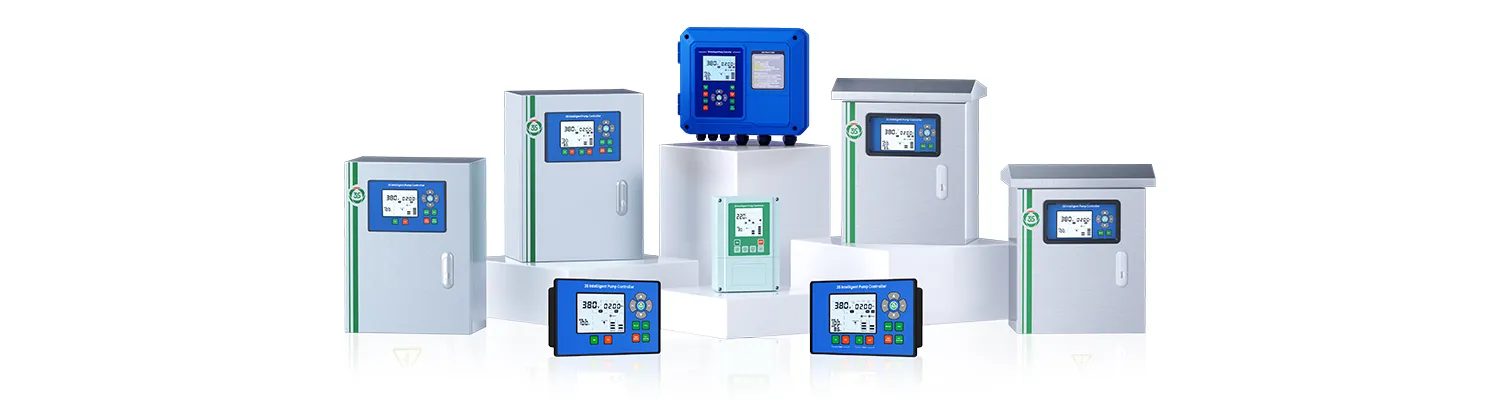
As urban skylines continue to expand, modern high-rise buildings are placing greater demands on water supply systems. Residential towers, commercial complexes, hotels, and industrial facilities now require not only stable water delivery, but also energy efficiency, intelligent automation, and long-term operational reliability.
Traditional water supply methods are no longer sufficient for handling the constantly changing demands of modern buildings. Intelligent variable-frequency systems are rapidly becoming the standard solution for high-rise water supply applications. At the center of this transformation is the unmanned smart municipal pump controller, which helps optimize pressure stability, reduce maintenance workloads, and improve overall system efficiency.
Compared with ordinary buildings, high-rise structures experience greater fluctuations in water demand and pressure distribution. During morning and evening peak hours, water consumption rises sharply, while nighttime demand drops significantly.
At the same time, building height differences create complex pressure balancing issues. Without proper control, systems may experience unstable pressure, frequent pump cycling, excessive energy consumption, pipeline shock, and water hammer problems.
To maintain stable operation under these conditions, many modern projects rely on the unmanned smart municipal pump controller to automatically regulate pump performance according to real-time demand changes.
Most modern high-rise buildings now use constant-pressure variable-frequency water supply systems. These systems automatically adjust pump speed based on real-time pressure data, ensuring stable water delivery throughout the building.
When water demand increases, the pump accelerates automatically. When demand decreases, operating frequency is reduced to minimize unnecessary energy consumption.
Compared with traditional fixed-speed systems, variable-frequency control improves energy efficiency while reducing pressure fluctuations. More importantly, the unmanned smart municipal pump controller enables fully automatic pressure regulation without requiring continuous manual supervision.
This intelligent control not only improves user comfort but also helps reduce wear on pumps, motors, and pipelines.
Nighttime is usually the lowest water consumption period in most buildings. Running pumps at full operating capacity during these hours wastes electricity and increases equipment wear.
To solve this issue, modern systems often include intelligent nighttime energy-saving modes. The system automatically lowers target pressure settings and reduces pump speed during low-demand periods, allowing the entire water supply system to operate more efficiently.
Some large-scale projects also adopt interval operation and pump rotation strategies to reduce continuous operating hours and extend equipment lifespan.
With the support of the unmanned smart municipal pump controller, buildings can automatically optimize energy usage around the clock while lowering long-term operational costs.
Most high-rise buildings use water tanks or reservoirs as part of their secondary water supply systems. Intelligent controllers continuously monitor water levels and automatically manage the refill process.
When water levels fall below the preset limit, the system automatically starts refilling. Once the target level is reached, operation stops automatically.
The system also monitors high water levels, low water levels, and ultra-low water conditions to ensure safe and stable operation.
If overflow, water shortage, or abnormal conditions occur, the controller immediately activates alarms and protection functions. This automated water level management significantly reduces manual inspection requirements and improves overall system reliability.
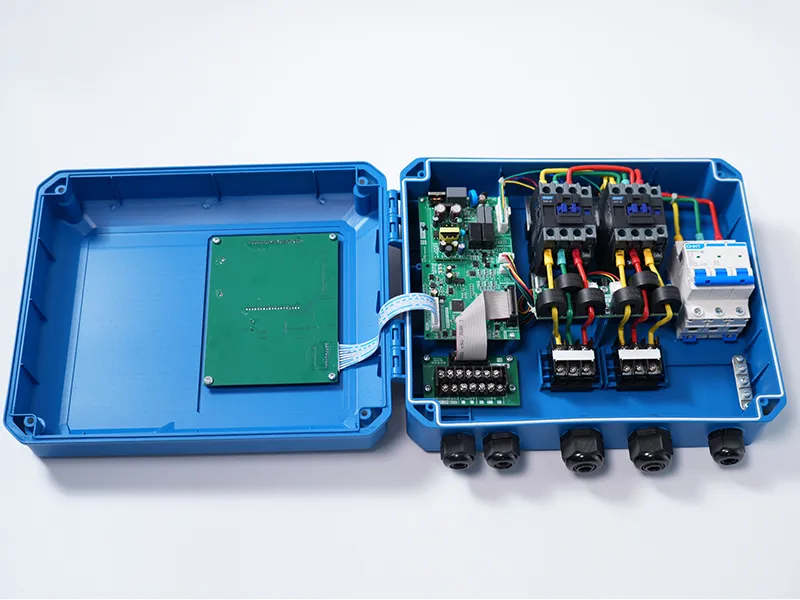
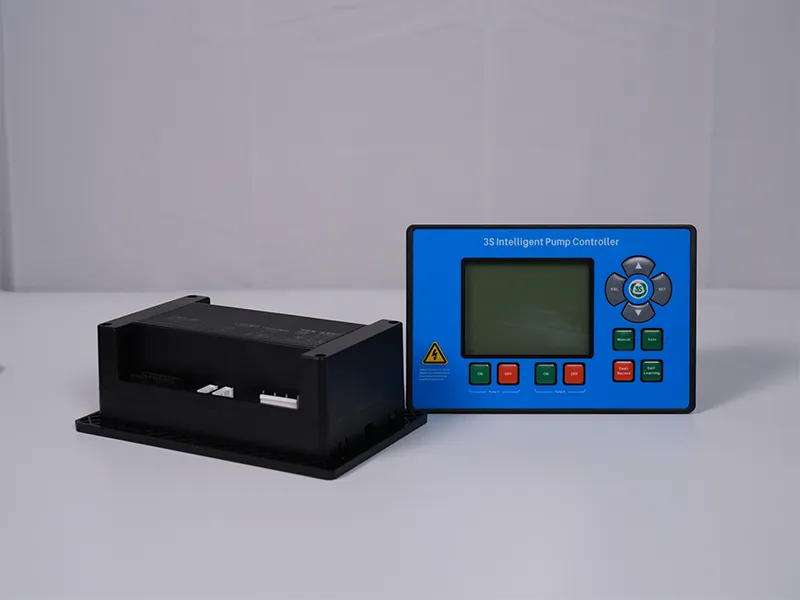
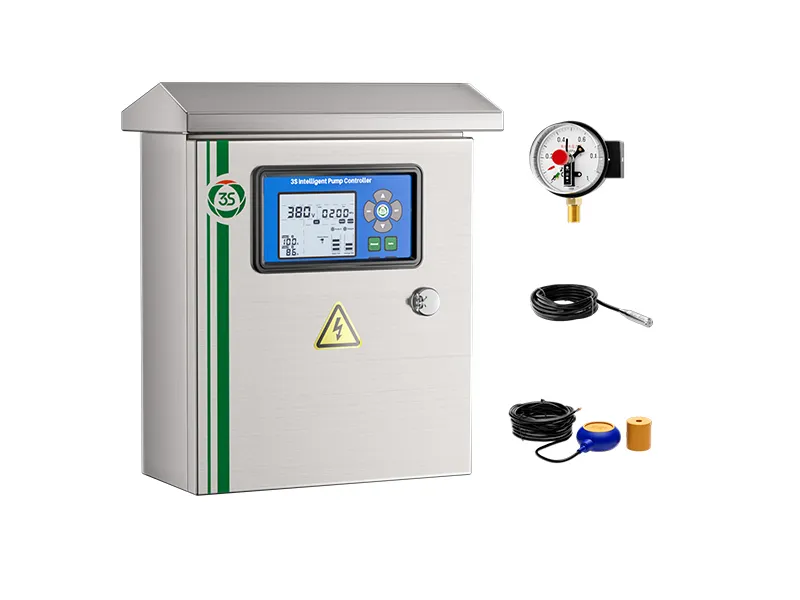
In many smart building projects, the unmanned smart municipal pump controller plays a key role in integrating water level monitoring, pump automation, and fault protection into a single intelligent solution.
In real engineering applications, water supply stability is influenced not only by internal building systems but also by fluctuations in municipal pipeline pressure.
Municipal pressure often changes due to peak demand periods, regional load variations, seasonal consumption patterns, and pipeline scheduling adjustments. Without adaptive control capability, sudden pressure changes may lead to water hammer, vibration, and unstable water supply.
Modern intelligent systems solve this challenge through dynamic pressure adaptation technology.
When municipal pressure becomes too high, the system automatically lowers operating frequency to reduce pipeline stress and save energy. When pressure drops, the system increases output capacity to maintain stable target pressure.
Advanced systems also include delay control and rate-of-change protection functions to prevent sudden pressure fluctuations from causing hydraulic shock.
Through intelligent automation provided by the unmanned smart municipal pump controller, high-rise buildings can achieve safer, smoother, and more energy-efficient water supply operation under constantly changing conditions.
As smart buildings and intelligent water management technologies continue to develop, modern water supply systems are evolving far beyond simple pump start-and-stop control.
Today’s systems focus on stable pressure control, energy-efficient operation, automatic protection, intelligent linkage, remote monitoring, and unmanned operation capability.
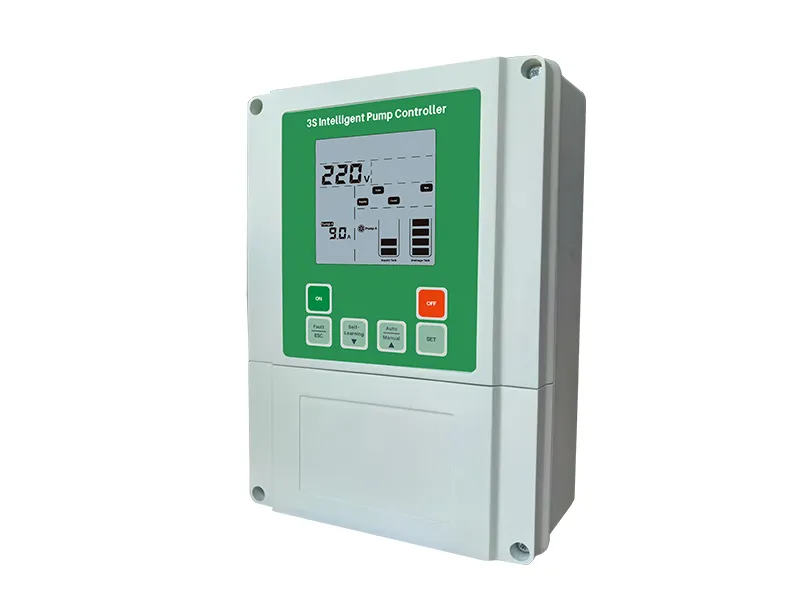
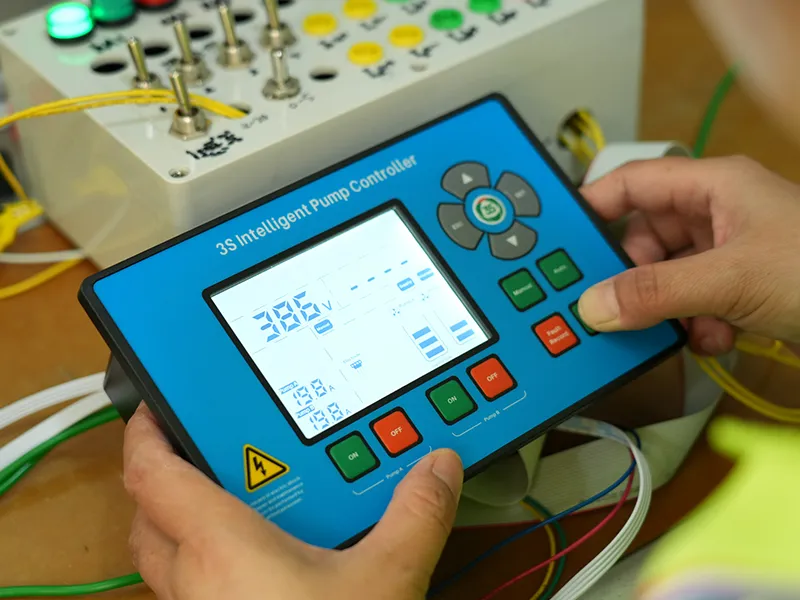
The unmanned smart municipal pump controller is becoming one of the key technologies driving this transformation, helping buildings achieve smarter and more reliable water supply management.
The future of high-rise water supply lies in intelligent automation rather than traditional manual control. Technologies such as constant-pressure variable-frequency control, nighttime energy-saving modes, automatic water level linkage, and dynamic pressure adaptation are reshaping how modern buildings manage water systems.
By integrating advanced automation and intelligent protection, modern water supply systems can deliver stable operation, lower energy consumption, reduced maintenance costs, and improved long-term reliability for residential, commercial, and industrial buildings alike.
 English
 Español
 русский язык
 Français
 اللغة العربية