Unmanned Pump Control, Choose 3S


 Language
Language
Shanghai 3S Global Company Limited

Rewind to a sales & R&D meeting on a morning in August 2024.
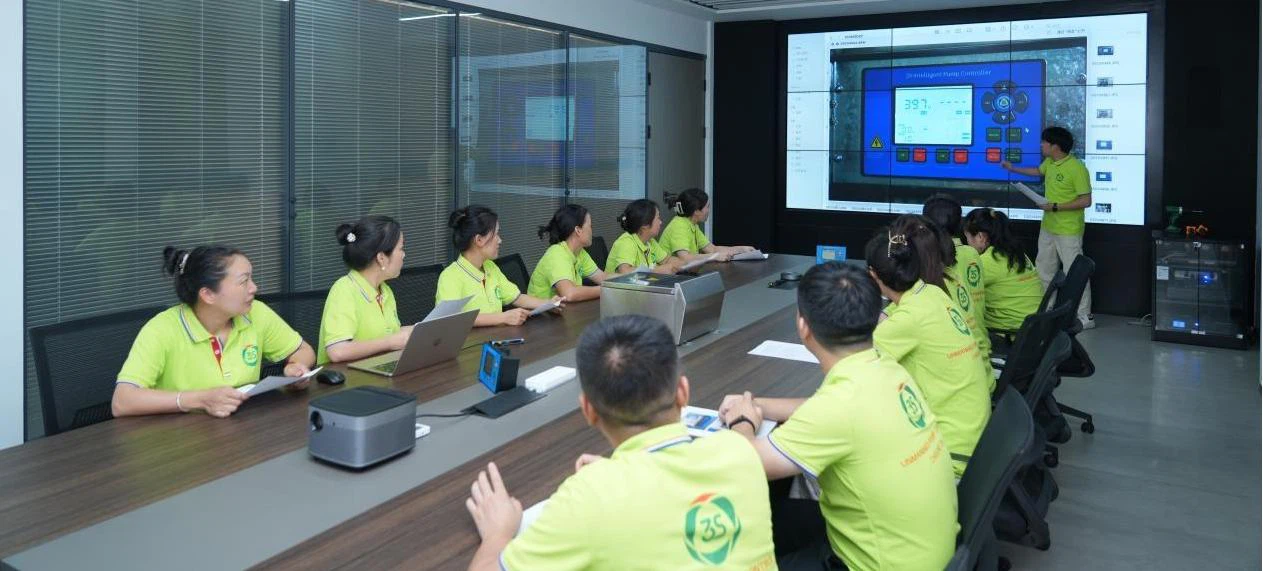
Peter, the Sales Manager of 3S, opened a shared screen showing customer feedback collected over the past three months from major overseas markets.
"Dear R&D colleagues, today, let's forget about technical specs for a moment and listen to the real voices of our global customers."
Inventory and Spare Parts Pressure
Distributor in Dubai, Middle East: "Our clients handle all kinds of projects. Hotels prefer cost-effective and reliable float switches, but municipal projects mandate 4–20mA pressure transmitters for remote monitoring. We have to stock multiple controllers for the market. Do you know how high global logistics and storage costs are?"
Commissioning and Maintenance Barriers
Engineer from São Paulo, Brazil: "Our system already includes electrode probes (for clean water tanks) and flow switches (for dry-run protection). Now the client wants to use humidity sensors in greenhouse. Every new signal means learning new wiring and commissioning methods - the training cost is just too high!"
Project Integration and Flexibility
Contractor from Penang, Malaysia: "Look at this old factory renovation project - it originally used pressure switches, but new regulations require pressure transmitter. The client wants to save costs. Is there a controller that can handle both the old switch signals and the new analog sensors, so future upgrades don't require replacing controllers or rewiring?"
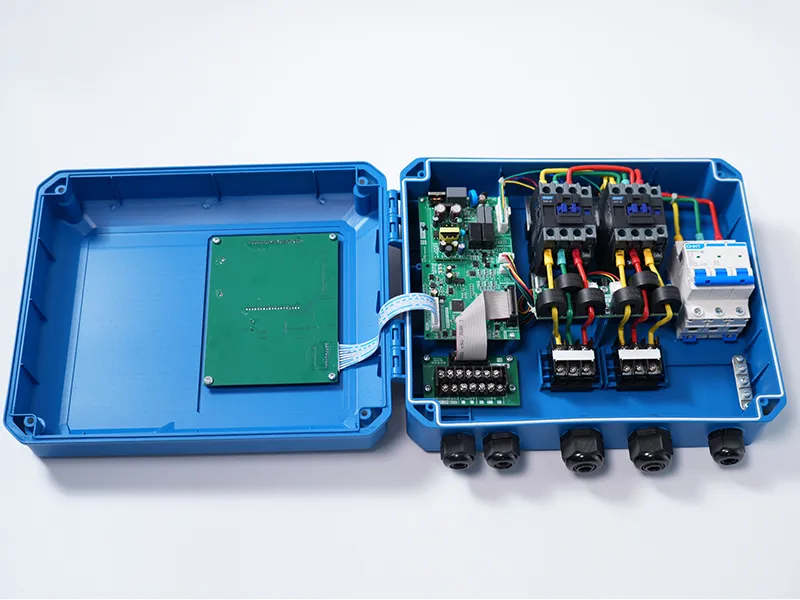
Integrating It All on One Board
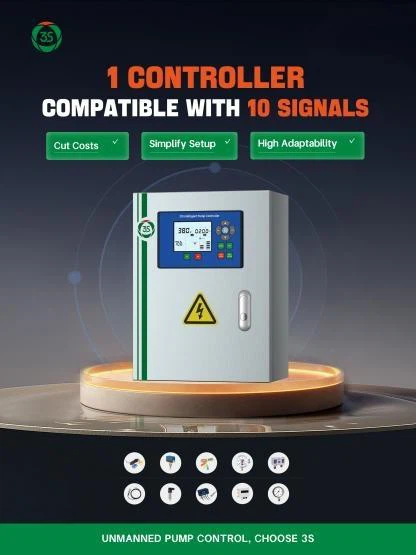
Peter turned to the R&D team: "Our customers don't just want a cheaper controller - they want an ultimate solution that ends all their headaches! Can we create a 'All-in-one Controller' compatible with all mainstream signal types?"
Chief Software Engineer Mr. Chen listened carefully as the needs were "translated" into technical terms, his expression growing increasingly focused.
"Peter, I got it. This isn't just about stacking functions - it's about creating an intelligent signal-adaptation platform."
Mr. Chen knew this was no ordinary task:
Switch signals are binary - "on or off" - while analog signals are continuous. Making them communicate seamlessly is like enabling two people who speak entirely different languages to converse fluently.
He wrote 10 common signal types on the whiteboard:
Float switch, electrode, electric contact pressure gauge, pressure switch, flow switch, level transmitter, pressure transmitter, remote pressure gauge, temperature sensor, humidity sensor.
"Our goal is to make them all coexist on the same signal board of a single controller."And so began a three-month technical battle.
First Challenge: Revolutionary Hardware Design
"We're not just building a circuit board - we're building an intelligent signal hub," Chen emphasized during a technical meeting.
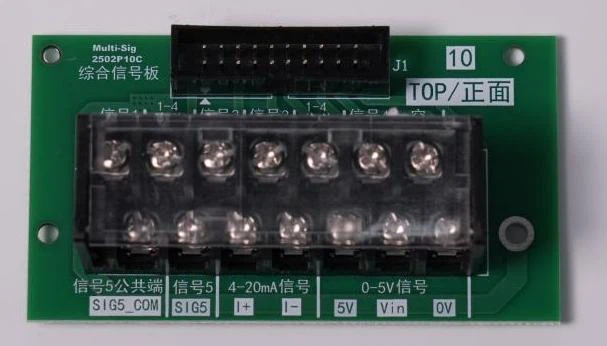
The team innovatively adopted programmable gain amplifier technology, enabling one interface to automatically detect and precisely handle:
| 1 | Intelligent debouncing and isolated acquisition of switch signals |
| 2 | High-precision sampling of 4–20 mA current signals |
| 3 | Anti-interference measurement of 0–5 V voltage signals |
"It's like creating a universal socket - any plug can fit in safely and reliably."
Second Challenge: Breakthrough in Software Algorithms
The toughest challenge lay in the signal auto-identification algorithm.
Mr. Chen recalled: "It took us three full months and dozens of failures before the controller could accurately recognize the signal type within 100 milliseconds. When we first saw the system automatically identify a 4–20 mA pressure transmitter, the entire lab erupted in cheers."
Third Challenge: Multi-Signal Interference Protection
In demanding environments such as oil field operations, the system adopts a dual-signal redundancy design to ensure uninterrupted operation. During testing, the R&D team discovered interference between the two signal channels.
By introducing dynamic filtering technology and an adaptive shielding algorithm, they ultimately achieved complete independence between the signals-ensuring that the rapid switching of the flow switch does not affect the precise readings of the pressure transmitter.
Distributors said:
"1 3S controller = 10 regular controllers. Procurement lists simplified instantly, and inventory costs plummeted."
Commissioning engineers said:
"Plug and play, instant adaptation. No more learning different manuals - setup time dropped from hours to minutes."
Maintenance managers said:
"Unified equipment means drastically reduced failure rates - no more taking the blame for compatibility issues. Maintenance costs fell by over 50%."
Project contractors said:
"Whether irrigation, firefighting, water supply, or HVAC - one device handles it all. Future upgrades need only new sensors, not new controllers, maximizing investment value."
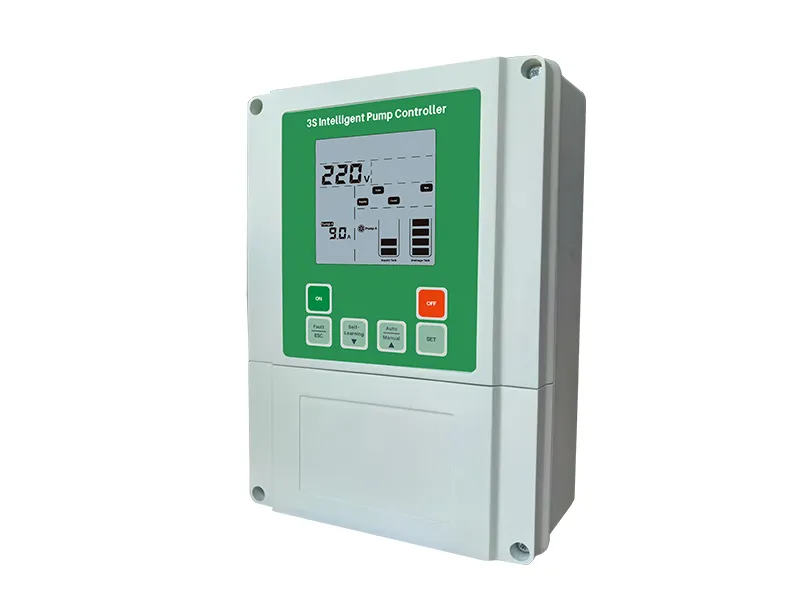
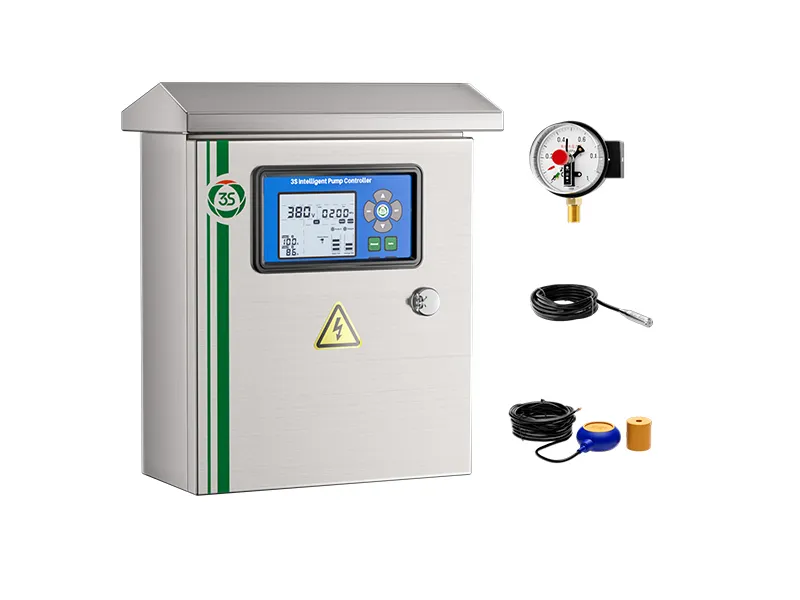
Today, the 3S all-signal compatible controller has become the new industry standard.
But for us, it's more than just a product success - it's the best embodiment of our "customer-centric" philosophy.
In this era full of challenges, we firmly believe: true innovation comes from deep understanding of user needs, and true value lies in the real benefits we create for customers.
The story of the 3S Universal Controller continues - and the bright future we build together with our customers has only just begun.
 English
 Español
 русский язык
 Français
 اللغة العربية