Shanghai 3S Global Company Limited

Product Technology & Quality

Industrial Water Pump Control Module,Dry Run Protection Pump Control Box,3 Phase Water Pump Controller,Salt Spray Corrosion Control Panel

A Brief Introduction To Water Pump Controller Enclosure Materials

Date: 2025-10-29
Today, let's talk about an important component of water pump controllers-the enclosure material. As the first line of defense for protecting internal precision components, the choice of enclosure material directly affects the controller's service life and performance. Understanding the characteristics of different materials can help you choose the most suitable product for your project.
Common Types of Enclosure Materials

Currently, water pump controller enclosures on the market are mainly divided into two categories: plastic enclosures and metal enclosures, each with its own advantages and disadvantages.


1.Ordinary Plastic Enclosure (PC)

Advantages:

Lightweight and easy to transport and install

Good corrosion resistance, suitable for humid environments

Disadvantages:

Low mechanical strength, susceptible to external damage

Long-term exposure to sunlight can cause aging and brittleness


2.Metal Enclosure

Metal enclosures, mainly made of iron or stainless steel, are commonly used in industrial-grade equipment.

Advantages:

High strength, capable of withstanding significant external impact

Good heat dissipation, suitable for high-load operating environments

Long service life and strong stability

Disadvantages:

Heavyweight, inconvenient for transportation and installation

Ordinary iron enclosures may rust if not properly protected against moisture
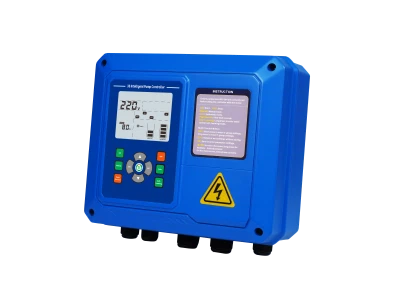
Three Enclosure Materials of 3S Control Boxes
The 3S controller is designed with a focus on strength, safety, and environmental adaptability, offering three mainstream enclosure versions to meet different usage needs:
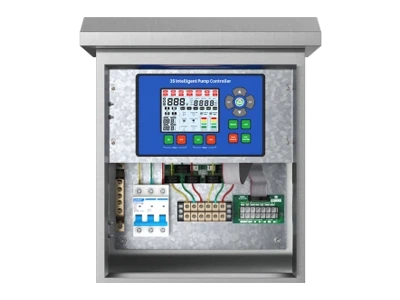
  • High-Strength ABS Engineering Plastic Enclosure
  • High-Strength ABS Engineering Plastic Enclosure

    Flame-retardant and heat-resistant, with strong impact resistance.

    Aesthetically pleasing, lightweight, and easy to install.

    Suitable for residential, agricultural, and light industrial

    applications.

  • Cold-Rolled Steel Spray-Painted Iron Enclosure

    Durable and robust with high structural strength.

    Surface-coated with anti-rust paint for effective moisture and corrosion resistance.

    Suitable for industrial sites and long-term semi-outdoor use.
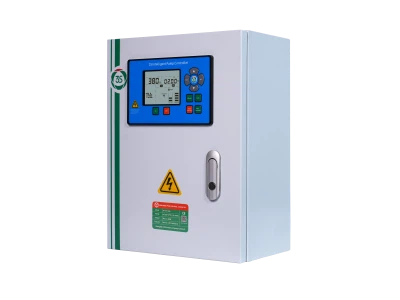
  • Cold-Rolled Steel Spray-Painted Iron Enclosure
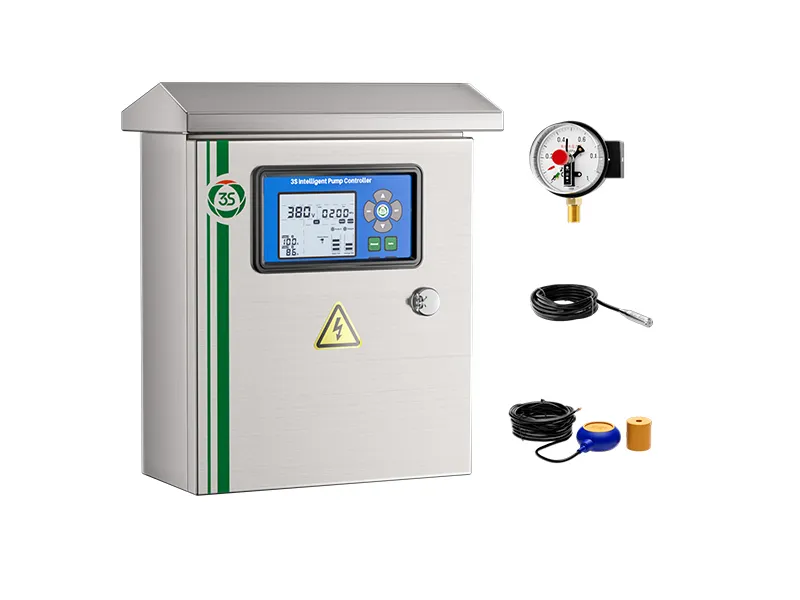
  • Stainless Steel Enclosure
  • Stainless Steel Enclosure

    Excellent rust and corrosion resistance.

    Ideal for coastal, high-humidity, and high-salinity environments.

    Long service life with simplified maintenance.

Conclusion

When selecting a water pump controller, the choice of enclosure material should not be overlooked:

If you prioritize cost-effectiveness and convenience, choose the ABS engineering plastic enclosure.

If you require high strength and industrial stability, the cold-rolled steel iron enclosure is recommended.

If the environment is harsh and highly corrosive, the stainless steel enclosure is the best choice.


With its multi-material design, the 3S controller provides reliable, durable, and safe solutions for various application scenarios, ensuring more stable and longer-lasting control system operation.
Latest News

  • pre-startup checks for pump controllers,pump control mode,rated voltage,rated current,startup conditions
    What should you check before starting a water pump? This article explains three key conditions that can determine whether a pump starts and operates as expected: the control mode, rated voltage and current, and site conditions. Learn what to verify before startup and how a few essential checks can make pump operation more predictable and controlled.
  • automatic rated current learning for pump controllers,current reference for motor protection
    Why does a pump controller need automatic rated current learning? This article explains how learned current references can reduce manual setting errors, reflect actual pump operating conditions, and support current monitoring and motor protection. Learn how automatic learning works, what conditions should be checked, and why the right current reference matters for reliable pump control.
  • phase-loss detection for pump controllers,three-phase voltage monitoring,current imbalance,phase loss protection
    How does a pump controller detect three-phase phase loss? This article explains how voltage and current monitoring, thresholds, and time delays work together to identify phase-loss faults and trigger protection. Discover why reliable detection goes beyond simply checking whether one phase has power during abnormal power conditions.
  • start delay for automatic pump control,stop delay for pump control,pump start stop delay settings
    Start delay and stop delay serve different roles in automatic pump control. This article explains when each delay takes effect, how they help reduce unnecessary pump cycling, and how to set them according to signal fluctuations, response needs, and field conditions. Learn how the right settings can balance stability and response.
  • signal reliability for pump control,pump signal faults,automatic pump control signals,4–20 mA signals
    Reliable signals are the foundation of accurate automatic pump control. This article explains how false triggering, signal loss, fluctuations, and inaccurate inputs can affect pump operation, and how proper signal selection, wiring, installation, and fault handling can improve system stability.
What'sapp

May

E-mail to us

E-mail

Wechat

Wechat

wechat