Unmanned Pump Control, Choose 3S


 Language
Language
Shanghai 3S Global Company Limited

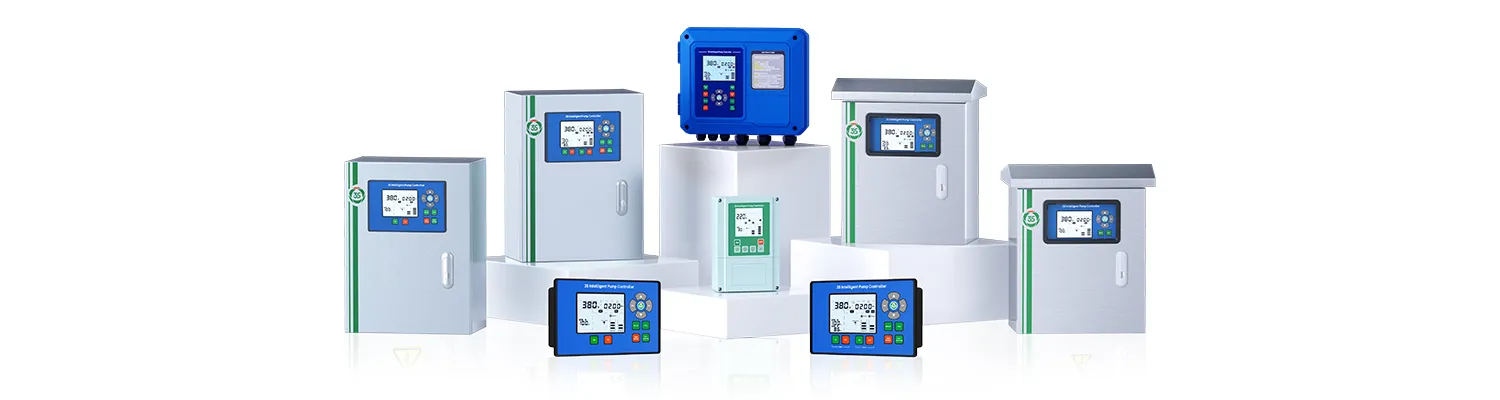
As severe winter weather continues to spread and ambient temperatures drop to -20°C or even lower, pump stations responsible for critical missions such as urban water supply, district heating, and wastewater discharge face unprecedented operational challenges. Low temperatures can freeze pipelines and disrupt unit operation, but more critically, they can severely impact the core control systems of pump stations. Traditional controllers often experience startup failure, signal disorder, and performance degradation in cold environments—directly threatening continuous and safe operation.
Under extreme low-temperature conditions, the limitations of standard controllers become evident. Reduced component activity can lead to cold-start failures, abnormal logic operations, signal delays or drift, frequent false alarms, and in severe cases, complete system shutdown. As pump stations serve as the “lifeline” of winter public services—supporting residential water supply, central heating, sewage treatment, and flood control—any downtime may trigger a chain reaction of public inconvenience and production interruption. Equipment stability in cold climates has become a fundamental requirement for industrial-grade applications.
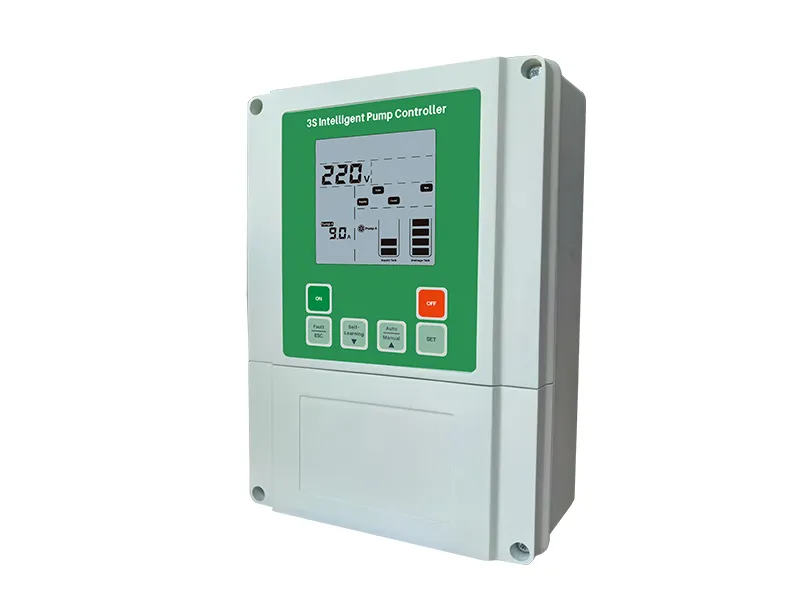
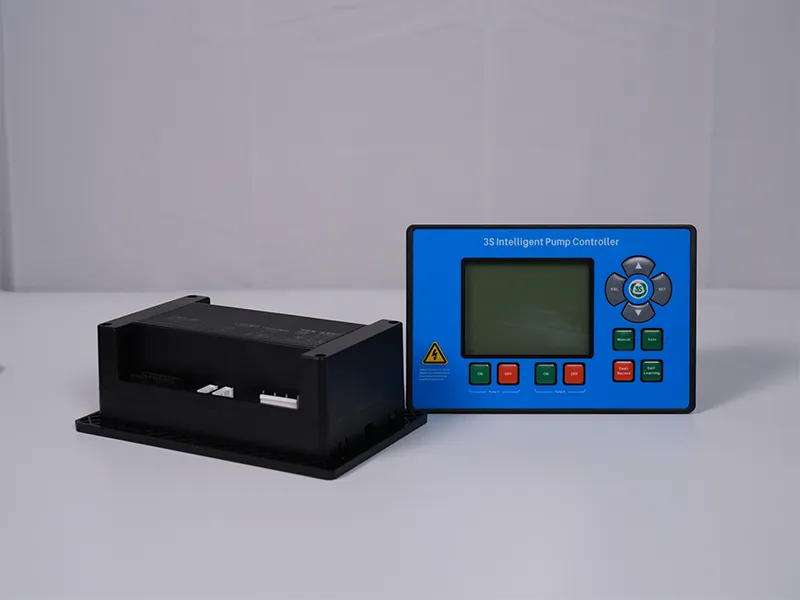
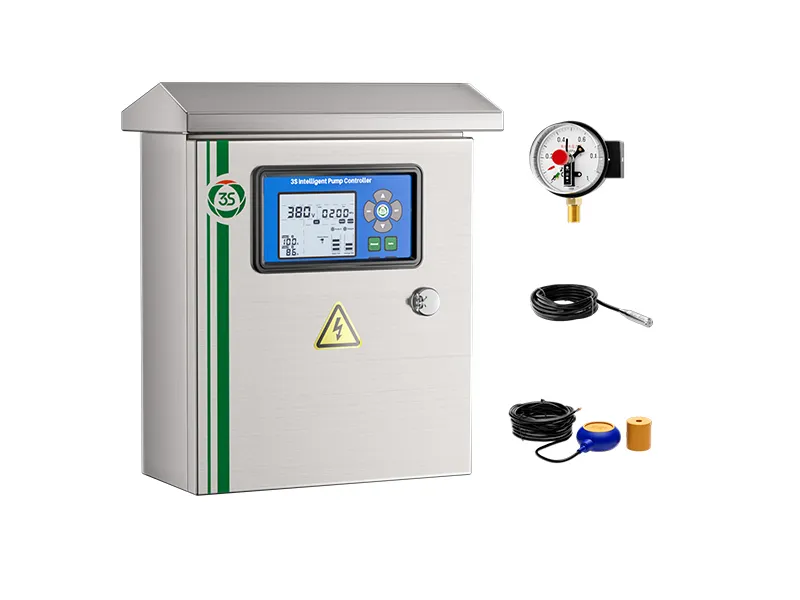
Facing the challenge of -20°C extreme cold, how can pump stations ensure 24/7 stable and efficient operation? The 3S Automatic Duplex Water Pump Controller provides a powerful answer. With a wide operating temperature range from -20°C to 70°C, it performs reliably in both freezing winters and scorching summers, delivering year-round protection for pump station stability.
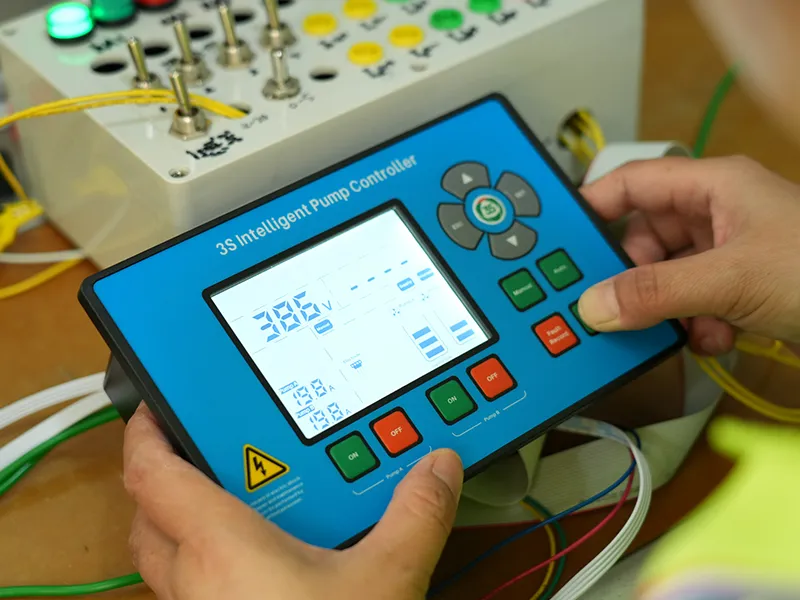
Stable operation in winter depends on rigorous testing and validation. At 3S, wide-temperature adaptability is a core development priority. Every 3S Automatic Duplex Water Pump Controller undergoes comprehensive high- and low-temperature aging tests before leaving the factory.
Beyond standard high-temperature verification, special low-temperature simulation tests replicate prolonged winter operating scenarios. This proactive screening process eliminates potential risks in advance, ensuring that each controller delivered to customers demonstrates exceptional cold resistance and reliable cold-start performance.
Validated by 3S internal environmental stress testing laboratories, the 3S Automatic Duplex Water Pump Controller operates steadily between -20°C and 70°C. In extreme cold, it ensures normal cold startup and continuous stable performance without concerns about frozen components or signal instability. During summer heat waves, it withstands temperatures up to 70°C, enabling uninterrupted, all-season operation and eliminating temperature-related limitations for pump station control systems.
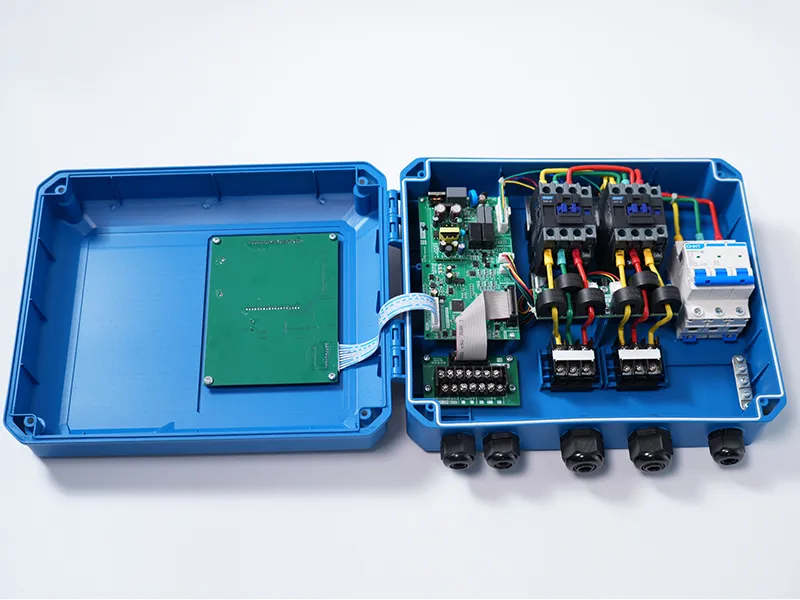
Reliable operation in sub-zero environments is not achieved by testing alone—it begins with robust industrial design. The 3S Automatic Duplex Water Pump Controller is built using industrial-grade, high- and low-temperature-resistant components throughout the system. From the core processor to external interfaces, every component is selected for superior thermal endurance, effectively preventing low-temperature brittleness, circuit faults, and signal distortion.
Its control logic has been specially optimized to maintain accuracy even under sustained -20°C load conditions. Pump start-stop sequences, speed regulation, and protection commands are executed precisely without signal drift or logic disorder. Compared with conventional controllers that suffer performance decline in cold weather, the 3S Automatic Duplex Water Pump Controller delivers consistent results—no system crashes, no lag, and no control deviation—providing dependable support for continuous winter operation.
For pump stations operating in winter, stability under extreme temperatures is not optional—it is essential for public welfare and industrial productivity. The 3S Automatic Duplex Water Pump Controller, with its -20°C to 70°C wide temperature adaptability, breaks through the limitations of traditional control systems and integrates reliability into every design detail and every testing procedure.
By eliminating risks such as cold-start failure and unexpected shutdowns, the 3S Automatic Duplex Water Pump Controller ensures pump stations remain fully operational even in the harshest winter conditions.
Looking ahead, 3S will continue focusing on reliability in extreme environments, delivering more targeted wide-temperature pump control solutions to help pump stations achieve safe, efficient, and stable year-round operation—safeguarding both public infrastructure and industrial performance.
 English
 Español
 русский язык
 Français
 اللغة العربية