Unmanned Pump Control, Choose 3S


 Language
Language
Shanghai 3S Global Company Limited

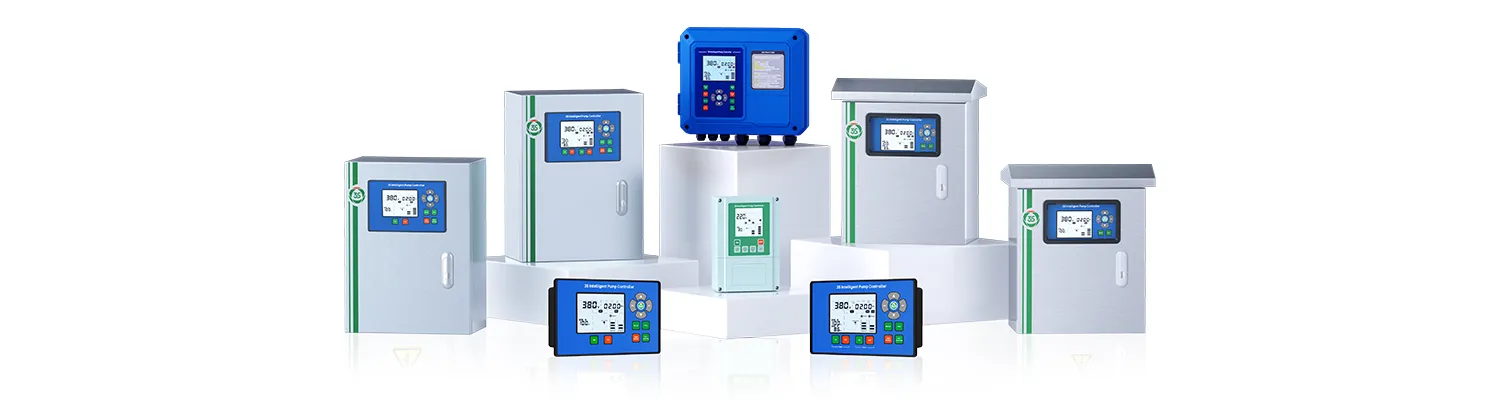
In industrial automation, PLCs (Programmable Logic Controllers) have long been the backbone of machine and process control. Meanwhile, in applications such as water supply, wastewater treatment, agricultural irrigation, booster systems, and pump stations, Dedicated digital pump controllers are becoming the preferred solution for engineering contractors, system integrators, and equipment manufacturers.
This raises a common question during project planning: Should you control your pump with a PLC or a dedicated pump controller?
Some engineers believe a PLC is the most powerful option and therefore suitable for every project. Others prefer dedicated pump controllers because they are simpler to deploy and purpose-built for pumping applications.
So, what's the real difference? And which solution is the right fit for your project?
A Programmable Logic Controller (PLC) is a general-purpose industrial control device designed to automate a wide variety of machines and industrial processes.
Unlike a dedicated digital pump controller, a PLC is not specifically designed for pump applications. Instead, it can be programmed to control virtually any type of equipment, including:
The greatest advantage of a PLC is its flexibility. Engineers can write custom control programs to meet the specific requirements of each project, making it ideal for complex automation systems.
In essence, a PLC is best thought of as an industrial computer that can be programmed to perform almost any control task.
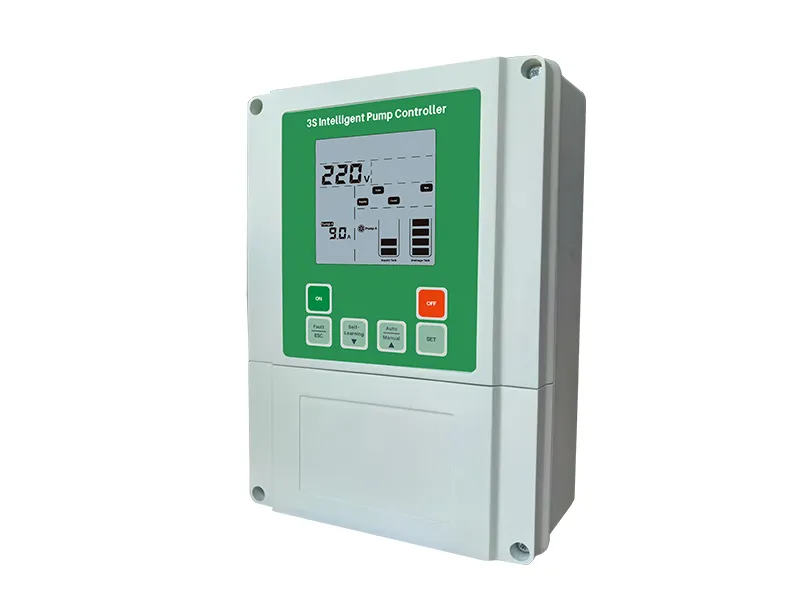
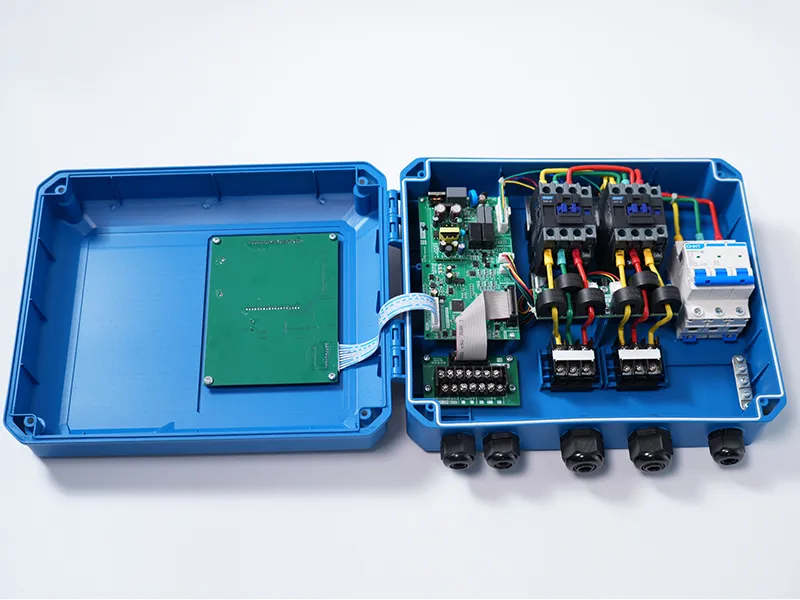
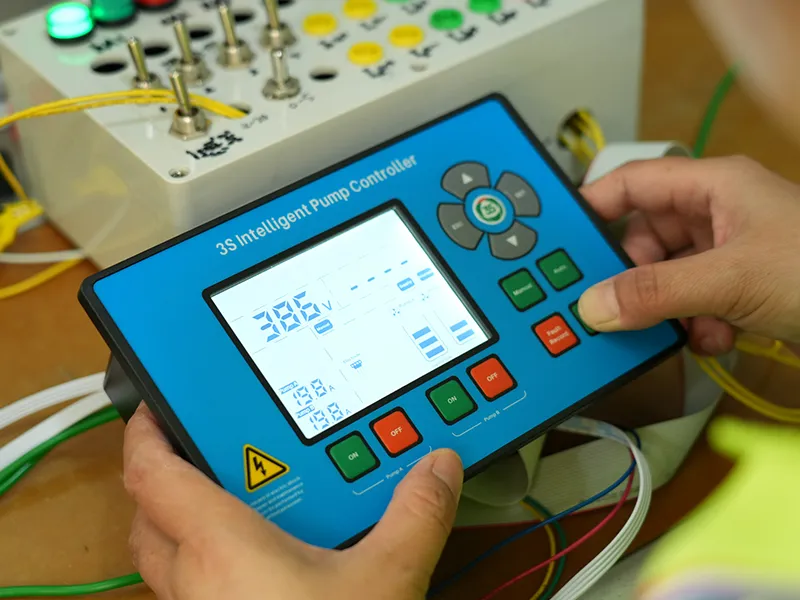
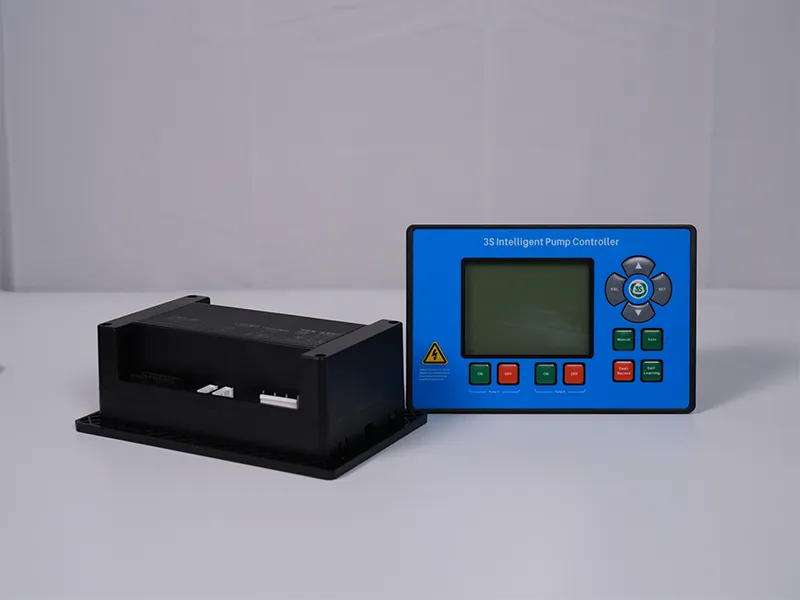
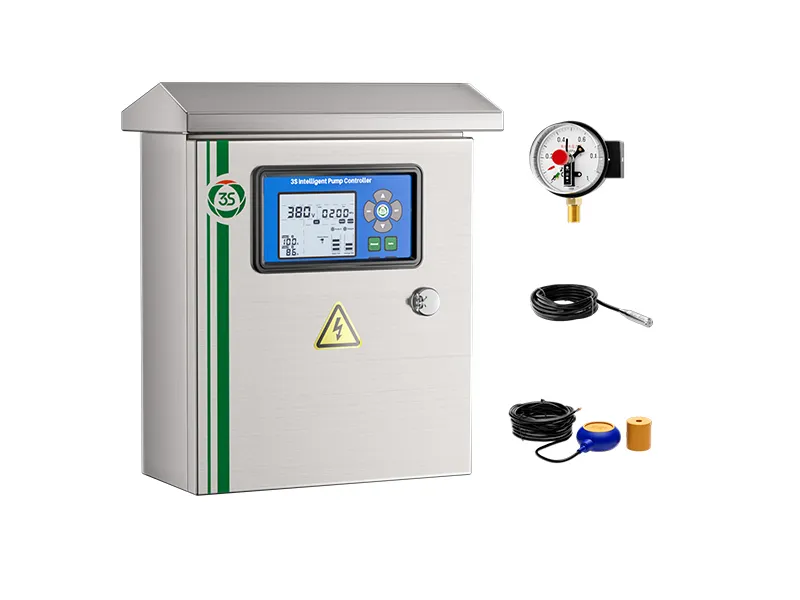
A dedicated pump controller is an intelligent control device designed specifically for water pump applications.
Instead of requiring users to develop control logic from scratch, manufacturers integrate years of pumping experience, operational strategies, and protection algorithms directly into the controller. As a result, users typically only need to configure operating parameters rather than write software programs.
Modern smart pump controllers commonly include built-in functions such as: automatic pump start and stop, water level control, pressure control, multi-pump sequencing and alternation, duty/standby pump switching, phase loss protection, overload protection, dry-run protection, locked rotor protection, fault alarms, remote monitoring and operating data logging.
For most water supply, wastewater, irrigation, and pumping applications, these built-in functions are sufficient to meet daily operational requirements.
The biggest difference isn't simply the number of functions—it is the design philosophy.
|
PLC |
Dedicated Pump Controller |
|
General-purpose industrial control platform |
Designed specifically for pump control |
|
Requires programming |
Ready to use after parameter configuration |
|
Ideal for complex automation systems |
Optimized for fast pump station deployment |
|
Longer engineering and commissioning time |
Faster installation and simpler commissioning |
|
Highly expandable and customizable |
Specialized pump protection and control functions |
In simple terms:
A PLC answers the question: How can different industrial equipment be controlled?
A dedicated digital pump controller answers the question: How can a pump operate more safely, reliably, and efficiently?
Choose a PLC if your project involves:
In these situations, a PLC offers the flexibility needed to build sophisticated automation solutions.
Choose a dedicated digital pump controller if your project focuses on:
Thus, dedicated water pump controllers can often complete projects with lower development costs, faster deployment speeds, and more comprehensive protection functions.
In many large-scale pumping projects, a PLC and a dedicated pump controller are not competing solutions—they complement each other.
A common system architecture is: The PLC manages overall system automation, process coordination, and communication between multiple pieces of equipment. The dedicated digital pump controller handles each pump's automatic start/stop, protection functions, operational monitoring, and fault management.
This layered control approach combines the flexibility of a PLC with the specialized expertise of a pump controller, resulting in a more reliable and efficient pumping system.
 English
 Español
 русский язык
 Français
 اللغة العربية