Unmanned Pump Control, Choose 3S


 Language
Language
Shanghai 3S Global Company Limited

Water pumps often operate under changing demand conditions. In traditional systems, pumps may continue running at full capacity even when actual water demand is low, resulting in unnecessary energy consumption, frequent start-stop cycles, and increased mechanical wear.
Intelligent pump control improves efficiency by matching pump operation more closely to actual system demand.
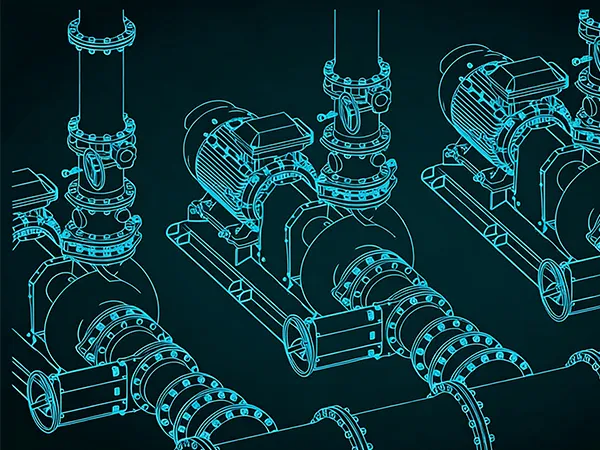
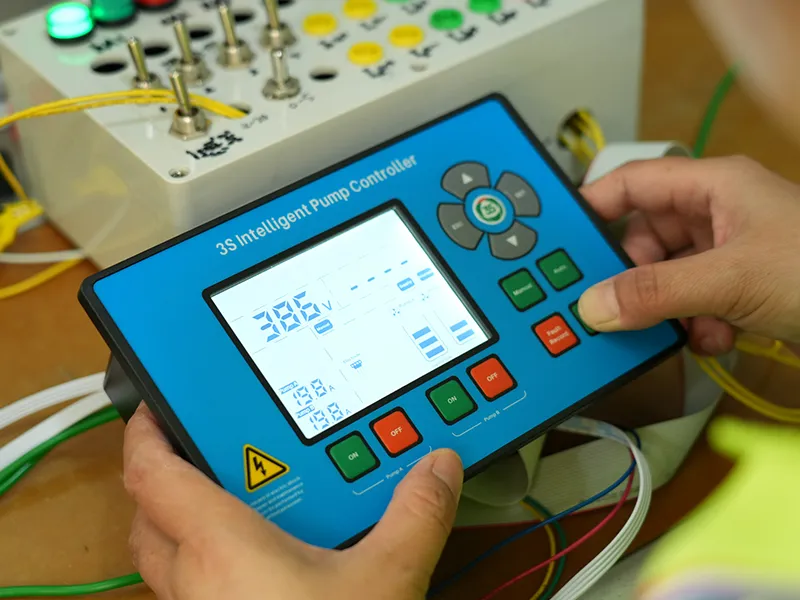
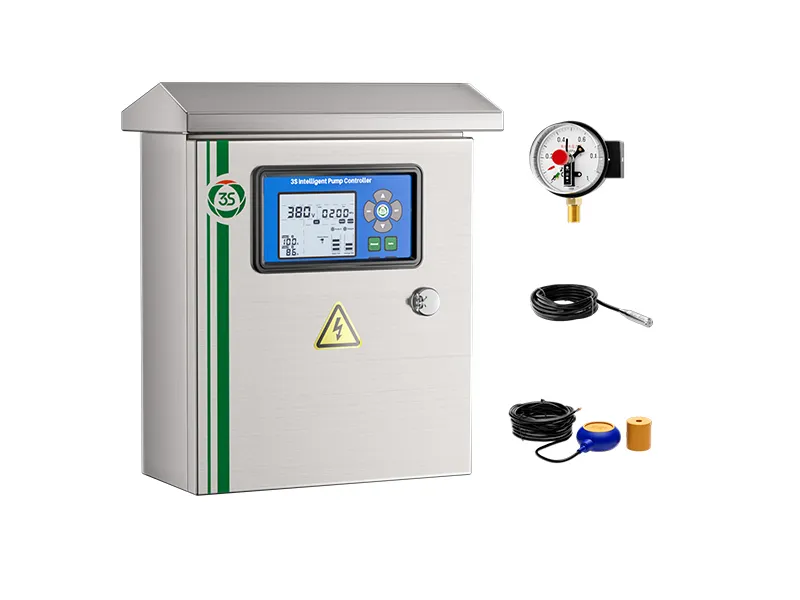
In a multi-pump system, intelligent controllers can automatically determine how many pumps should operate based on pressure, water level, flow requirements, or external control signals.
During low-demand periods, the system can operate a single pump. When demand increases, additional pumps can be activated automatically. This avoids running multiple pumps unnecessarily and helps maintain more efficient system operation.
In practical application scenarios, the advantages of this solution are particularly prominent: during daytime peak water usage periods, the Automatic Pump Controller responds quickly, starting multiple pumps to work collaboratively, ensuring stable water supply pressure and sufficient flow to meet the concentrated water demand of industrial production, residential life and commercial operations; when entering the nighttime trough of water usage with a sharp decrease in water consumption, the system will automatically reduce the number of operating pumps, keeping only a few pumps running at low load, thus avoiding energy loss caused by the long-term inefficient operation of a single large pump.
Data shows that the intelligent regulation of multi-pump parallel operation not only improves the flexibility of the water pump system by more than 30%, but also achieves 10%-30% energy savings. At the same time, it effectively avoids the loss of water pumps operating in the inefficient range, extends the service life of equipment, and significantly improves the operational reliability of the entire system.
Operating the same pump continuously can result in uneven wear and inefficient maintenance planning.
Duty rotation balances operating hours and start frequency across multiple pumps. This helps distribute the workload, maintain standby readiness, and extend the service life of the overall pump system.
Pump operation can be scheduled according to daily demand patterns, irrigation periods, production cycles, or building occupancy.
Appropriate start-stop settings, pressure setpoints, and water-level thresholds can reduce unnecessary operation while maintaining stable water supply or drainage performance.
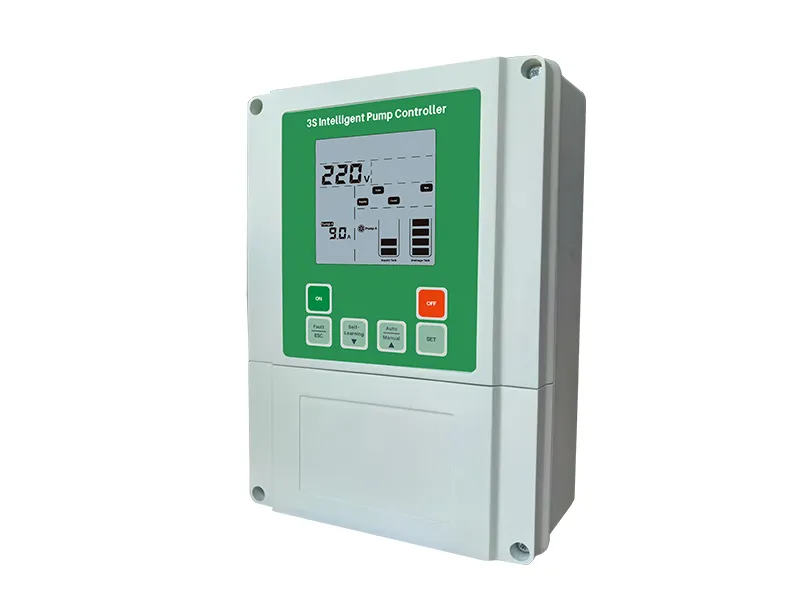
When integrated with a compatible variable-frequency drive, an intelligent pump controller can regulate pump speed according to real-time pressure or flow demand.
Variable-frequency control can be particularly useful in systems with significant and frequent load variations. However, the actual energy performance depends on pump characteristics, operating conditions, system design, and control settings.
Operating data can help engineers identify excessive run time, frequent cycling, abnormal load conditions, and inefficient control settings.
Controllers equipped with compatible communication functions can support remote monitoring and system optimization through RS485, Modbus, Wi-Fi, or other optional communication solutions.
Actual energy performance varies depending on:
Therefore, energy-saving results should be evaluated based on the actual application rather than a universal percentage.
Intelligent pump control does not reduce energy consumption through a single function. Its value comes from coordinating pumps, matching operation to demand, optimizing schedules, and improving system visibility.
For a more accurate efficiency assessment, operating parameters, pump specifications, system demand, and existing control methods should be evaluated together.

 English
 Español
 русский язык
 Français
 اللغة العربية