Unmanned Pump Control, Choose 3S


 Language
Language
Shanghai 3S Global Company Limited

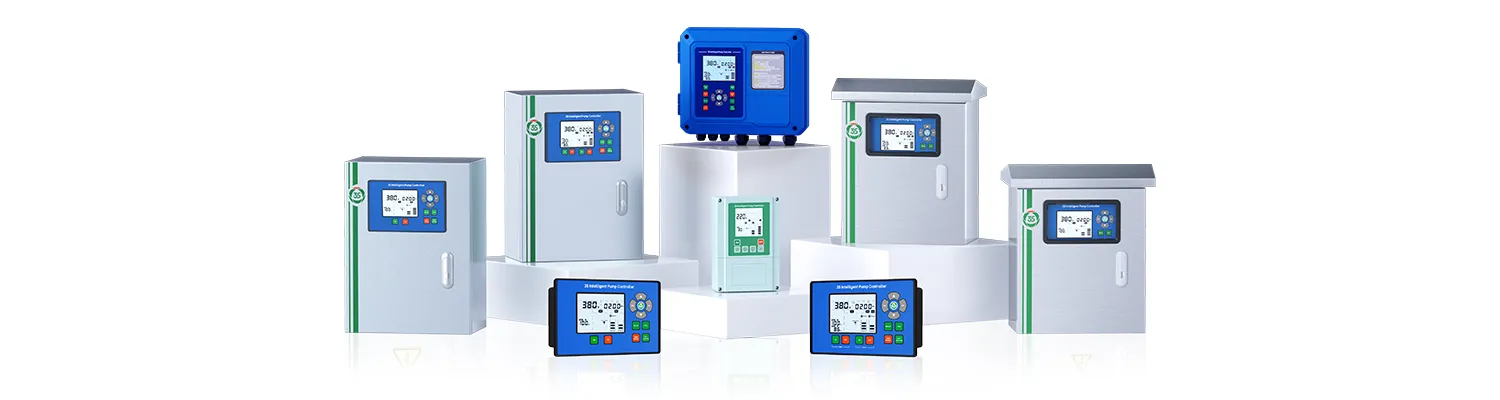
The control method of a Intelligent Pump Controller directly determines operational convenience and applicable scenarios. Currently, the mainstream types are manual, automatic, and remote control, each corresponding to different usage needs and requiring precise selection based on actual scenarios.
1:Manual Control: Simple and Intuitive, Suitable for Small-Scale Scenarios
Manual control is the most basic control method, which requires manual real-time operation of the controller to start, stop the water pump or adjust its operating status. This method does not require complex technical support, and its operation logic is clear and easy to understand, making it very suitable for scenarios such as personal home garden irrigation and small swimming pool water circulation. These scenarios feature flexible water usage time, short single operation duration, and low manual intervention costs.
Its core advantages lie in intuitive operation and low equipment cost, while the disadvantage is its strong dependence on manual labor. It cannot achieve unattended operation and is not suitable for scenarios requiring long-term continuous operation.
2:Automatic Control: Intelligent Regulation, Suitable for Long-Term Stable Operation Scenarios
The Automatic Pump Controller realizes regulation by using signal devices such as pressure sensors and flow sensors to monitor the operating status of the water pump (e.g., pressure, flow rate, water level) in real time, and automatically adjusts the operating indicators of the water pump, such as start-stop and rotation speed, according to preset parameters. This "no manual intervention required" feature not only greatly improves operational convenience but also avoids energy waste through precise regulation, effectively saving operating costs.
Scenarios that require long-term stable operation, such as agricultural field irrigation, municipal water supply systems, and industrial circulating water systems, are the core application areas of the Automatic Pump Controller. For example, in agricultural irrigation, the controller can automatically start irrigation based on data from soil moisture sensors, which not only avoids the tediousness of manual inspection but also accurately controls the irrigation volume, helping to save water and increase production.
3: Remote Control: Centralized Management, Suitable for Large-Scale Complex Scenarios
Remote control is an advanced control method realized by relying on industrial communication protocols such as RS485 and MODBUS, or wireless communication technologies such as the Internet of Things (IoT) and Wi-Fi. With such technologies, users can conduct centralized monitoring, parameter setting, and remote control of single or multiple water pumps through computer-based management platforms or mobile phone apps, easily breaking through spatial limitations.
For large-scale complex scenarios such as sewage treatment plants, large industrial parks, and cross-regional water supply projects, the advantages of remote control are particularly prominent: staff can view the operating data of each water pump (e.g., current, voltage, fault information) in real time without going to the site, achieving centralized and intelligent management. The Intelligent Pump Controller supporting IoT technology can also generate operating data reports, providing data support for equipment maintenance and system optimization, and further improving operation and maintenance efficiency.
In addition to control methods, the functional configuration of the Automatic Pump Controller also needs to be "selected on demand" based on usage scenarios. Among them, functions such as intelligent monitoring and alarm, and timing control are the keys to improving system safety and intelligence level.
1:Intelligent Monitoring and Alarm: Early Warning to Avoid Fault Risks
A high-quality Intelligent Pump Controller should have comprehensive intelligent monitoring capabilities, which can track core operating parameters of the water pump in real time, such as current, voltage, temperature, and pressure. When parameters exceed the preset safe range (e.g., pump overload, abnormal voltage, excessive bearing temperature), the controller can immediately trigger sound and light alarms or push alarm information to mobile phones, reminding staff to handle the situation in a timely manner.
This "detect problems in advance" feature can effectively prevent small faults from evolving into major damages, reduce equipment maintenance costs, and ensure the safe and stable operation of the entire water pump system. In scenarios with high requirements for equipment reliability, such as industrial production and municipal water supply, this function can be called a "must-have configuration".
2:Timing Function: Precise Scheduling to Achieve Unattended Operation
The timing function allows users to preset the start and stop times of the water pump according to their needs, and the controller automatically executes the operations at the specified time, truly realizing "unattended pump control". This function is widely used in scenarios such as agricultural irrigation, community secondary water supply, and landscape fountains. For example, in agricultural irrigation, users can preset irrigation times in the early morning and evening every day according to the growth needs of crops, and the Automatic Pump Controller automatically completes the start and stop without the need for manual on-duty at all times; in community water supply systems, pump start-up periods can be preset according to water consumption peaks (e.g., meal times in the morning, noon, and evening), ensuring stable water supply pressure while avoiding energy waste.
There is no "optimal solution" for pump controller selection, only the "most suitable solution". For personal home scenarios, priority should be given to the convenience of manual control; for long-term stable operation scenarios, focus on choosing the controller to improve efficiency; for large-scale complex scenarios, remote control is needed to achieve centralized management. In terms of functional configuration, industrial and municipal scenarios are recommended to prioritize the Intelligent Pump Controller with intelligent monitoring and alarm functions, while agricultural and civil scenarios can focus on the timing function.
By combining the control needs and functional preferences of actual scenarios to select a precisely matched pump controller, the water pump system can be both "stable and reliable" and "energy-efficient", providing a solid guarantee for production and life. If you are still unsure how to make a choice, please contact us for one-on-one exclusive selection suggestions.
 English
 Español
 русский язык
 Français
 اللغة العربية